science and discovery
Plasma treatment helps perovskite solar cells combine efficiency and durability
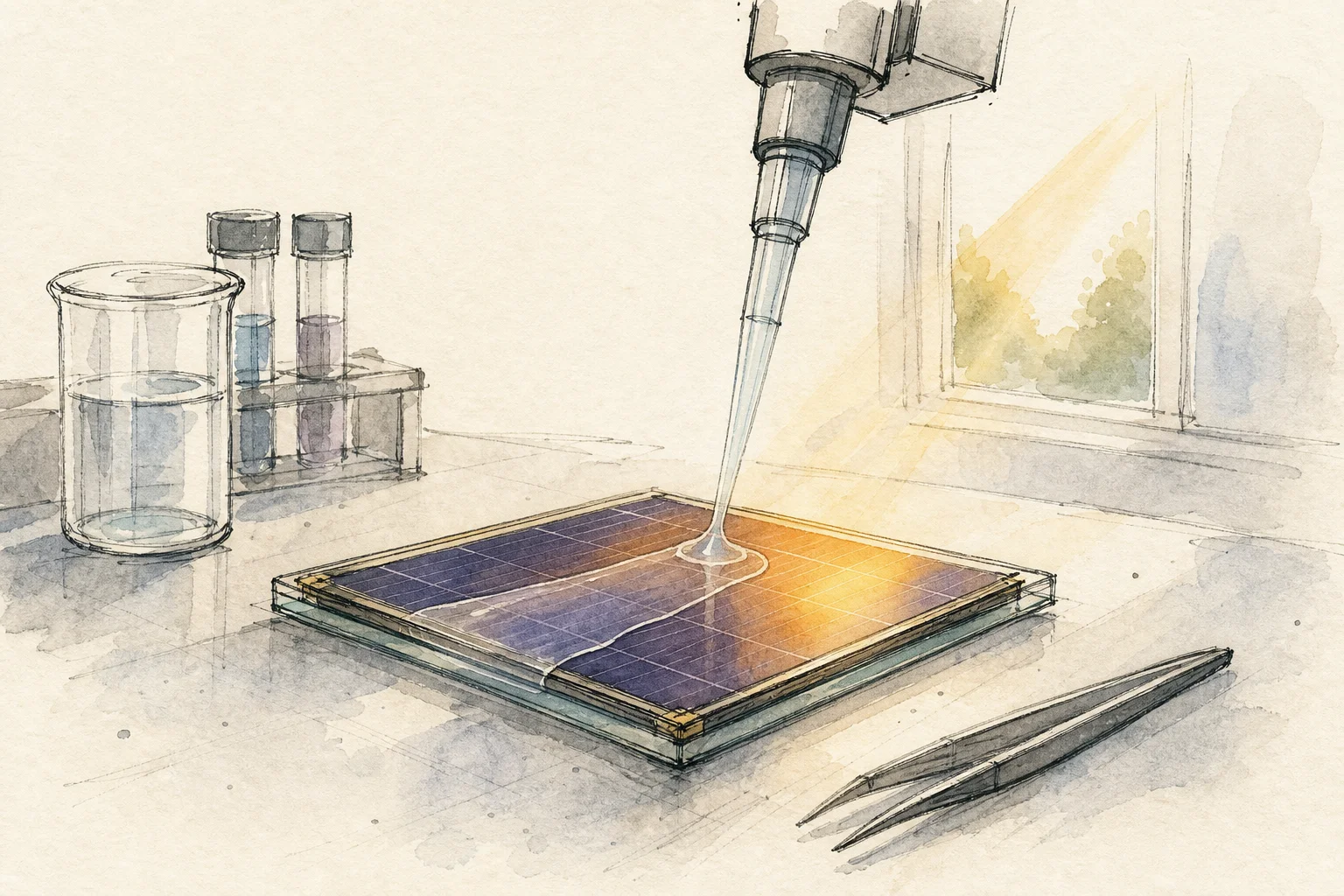
A plasma-based surface treatment has enabled perovskite solar cells to maintain high power-conversion efficiency while resisting degradation in demanding tests. Developed by a Peking University team, the treatment reduced defects at a critical interface by roughly an order of magnitude. A small-area cell reached 27.2% efficiency, while a 100-square-centimetre module achieved 24.0%, with a certified efficiency of 23.5%.
Perovskites are promising photovoltaic materials because they absorb light efficiently, can be processed at relatively low temperatures and may be used in flexible devices. Their comparatively soft crystal lattice, however, is prone to surface defects that waste energy, disrupt ion movement and hasten performance losses.
The researchers first used argon plasma to remove the defect-rich surface layer. Fluorine species activated by a second plasma then reacted with exposed lead ions, forming a continuous protective layer of lead fluoride just 4 to 7 nanometres thick without damaging the underlying crystal structure.
In stability testing, a small cell retained 98.1% of its initial efficiency after 2,000 hours at 85°C under simulated sunlight. A sealed module retained 99.3% after 1,600 hours at 65°C. The devices also passed ultraviolet, thermal, reverse-bias and day-night cycling tests. Longer-term field performance remains to be demonstrated, but the work offers a more controllable route toward durable, larger-area perovskite modules.