Science and discovery
Quantum experiment turns chaos into order across 100 qubits
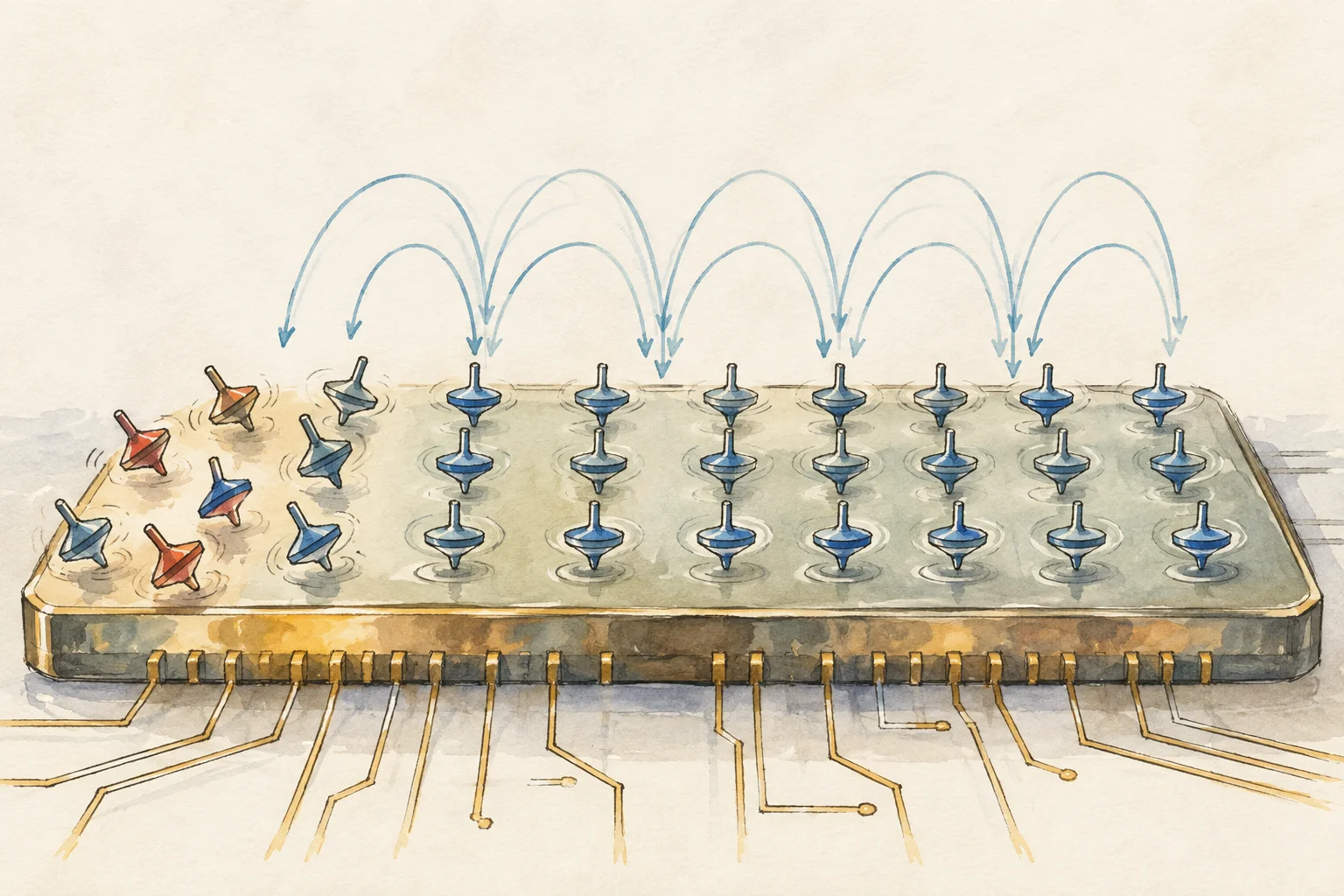
Researchers from Rutgers University, IBM and partner institutions have steered a deliberately chaotic quantum system towards an orderly state using up to 100 qubits, the basic units of a quantum computer. They demonstrated repeated measurement and feedback while the processor kept running, testing an important capability for more dependable machines.
The study, published in Nature Physics on October 9, used IBM’s Quantum Heron processor. The team alternated between operations that scrambled information among neighbouring qubits and measurements followed by resets that pushed selected qubits towards a chosen state. The largest circuits combined about 5,000 operations linking pairs of qubits with about 5,000 resets.
When scrambling dominated, the system remained chaotic. Once control operations became frequent enough, it shifted sharply towards order. This transition became clearer as the researchers tested larger systems, matching their theoretical predictions.
The distinction matters: this was not yet a demonstration of error correction protecting a calculation. Resetting qubits into a selected state is different from preserving useful quantum information, which is easily disturbed by interference and imperfect operations.
What the experiment showed is that current hardware can coordinate thousands of operations, measurements and resets across a sizeable quantum system. Combining that feedback capability with methods that protect information throughout a calculation remains a task for future research.