science and discovery
Rare 1,700-year-old Odyssey fragment identified in Dutch library
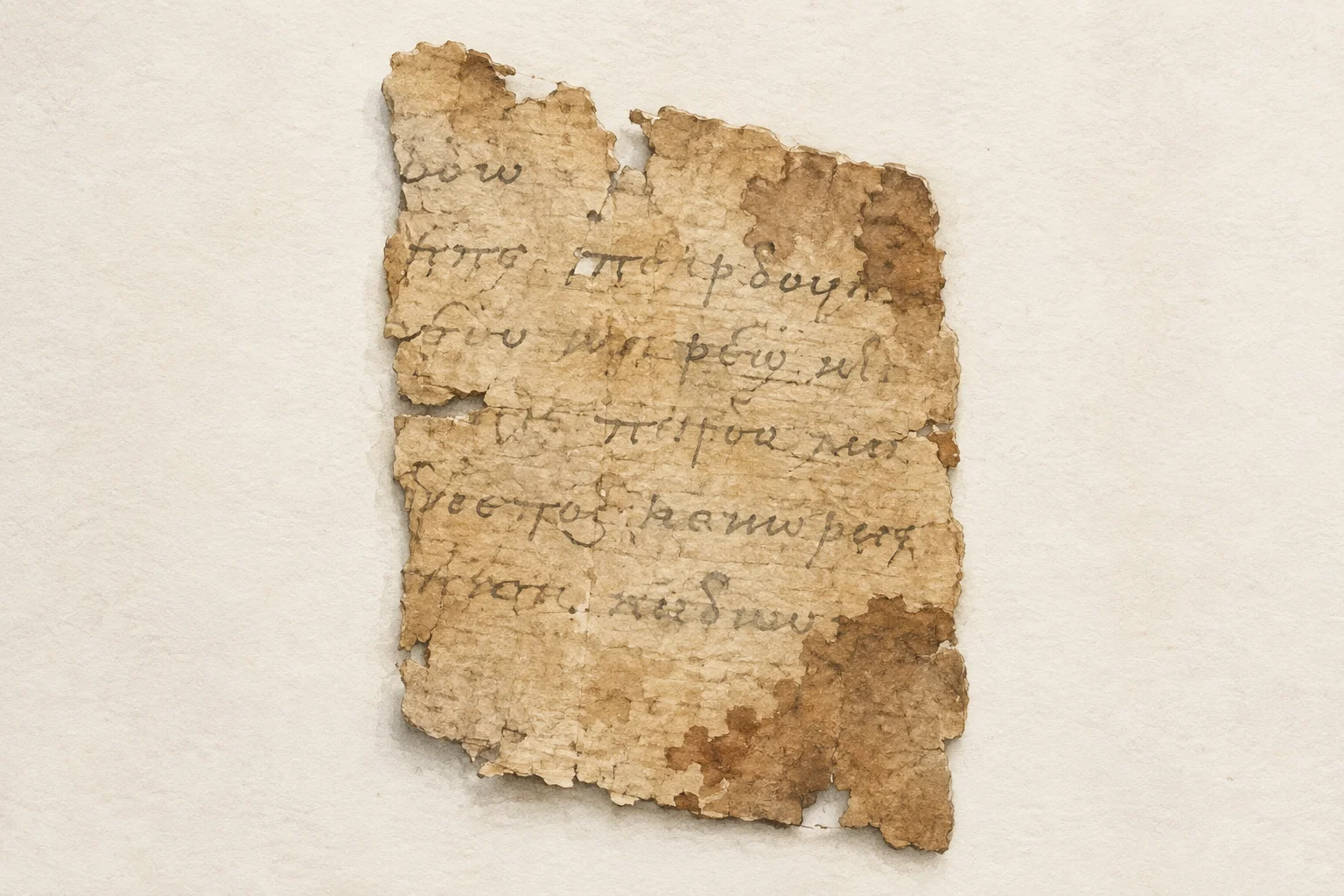
A playing-card-sized piece of parchment in a Dutch library has been identified as a roughly 1,700-year-old fragment of Homer’s Odyssey. Utrecht University says only about 30 comparable fragments of the epic from that period are known worldwide.
Greek literature researcher Mark de Kreij recognised characteristic Homeric words while examining ancient manuscripts in the university’s collection. The fragment had remained there for decades, initially regarded as a less significant seventh-century text. It has now been dated to the third or fourth century. De Kreij made the discovery in 2024, but the university has only now announced it.
Measuring 6.6 by 7.7 centimetres, the faded, moisture-stained parchment may once have formed part of a small, portable copy of the complete Odyssey. The university suggests it probably belonged to a reader living in Egypt’s Fayum oasis around AD 300. It was preserved among manuscripts the library bought in the mid-20th century, although how it entered that collection remains unknown.
The surviving verses come from Book 12, halfway through the epic’s 24 books. They concern the sun god Helios discovering that Odysseus’ companions have eaten his sacred cattle and demanding punishment. This small scrap preserves a crucial turning point in the ancient story of Odysseus’ journey home after the Trojan War.