science and discovery
Rare lunar crater discovery could help protect future Moon bases
Scientists have identified the largest known impact crater formed in recent times anywhere in the solar system, giving future Moon missions an unusually clear record of a rare hazard. The McGetchin crater is about 222 metres wide and up to 43 metres deep, with steep sides. Researchers estimate that an impact of this scale occurs on the Moon roughly once every 132 years.
Images from NASA’s Lunar Reconnaissance Orbiter indicate that the crater formed on the Moon’s near side between April 11 and May 22, 2024, when a fragment of an asteroid or comet, estimated at the size of a three- to six-storey building, struck the surface. The collision was not detected as it happened. A researcher first noticed the bright patch and dark halo in the spacecraft’s data in August 2025, before later images and analysis confirmed the find.
The impact disturbed the surface across more than 106 kilometres and produced a cold region about 6.4 kilometres wide, consistent with loosened lunar soil. Those observations offer a rare chance to study how impacts excavate and redistribute material.
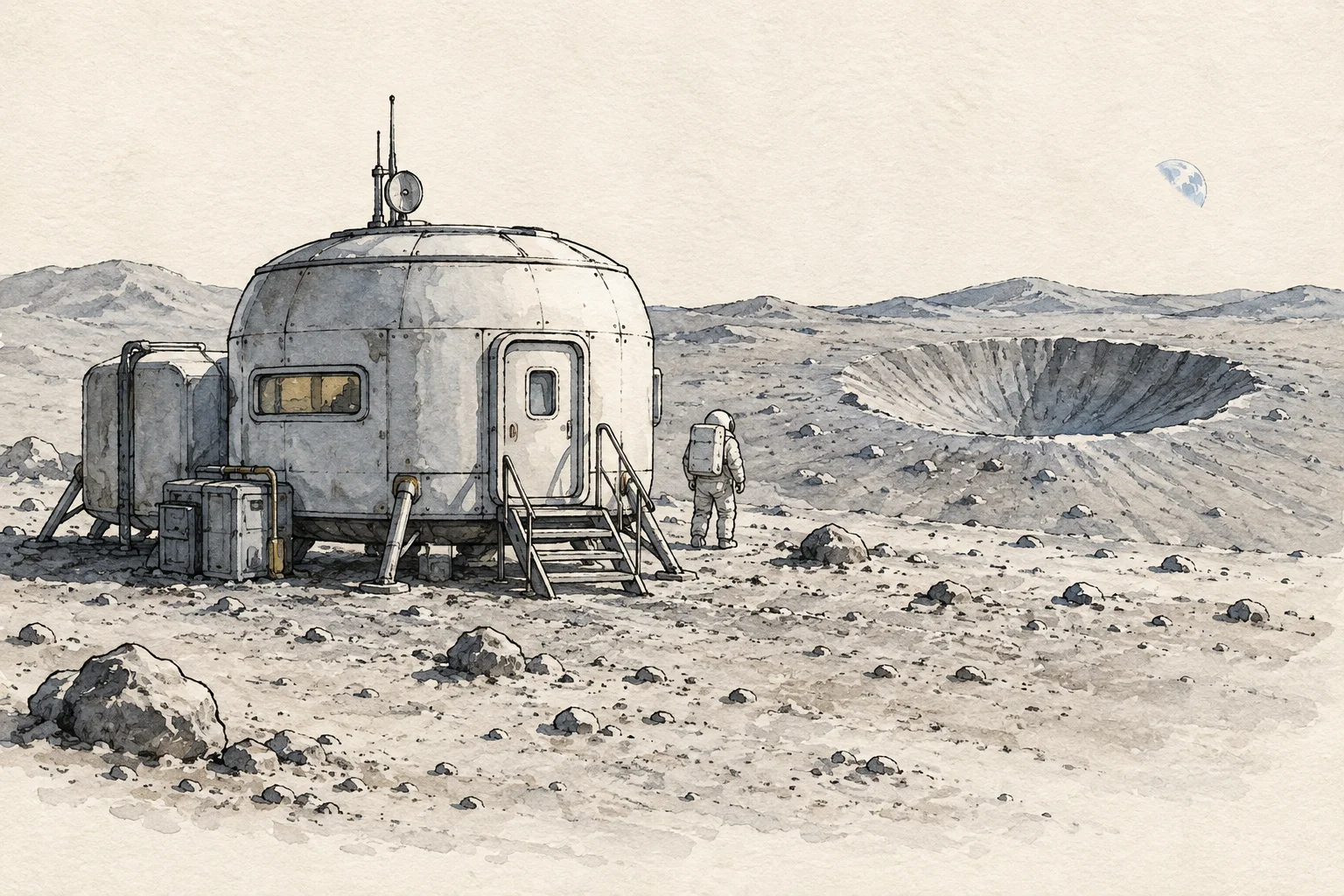
They also provide practical evidence for crewed exploration. With little atmosphere to slow or burn up incoming debris, the Moon remains exposed to impacts. Researchers now plan to estimate how material thrown from craters could affect a future base, helping engineers determine how strongly its structures should be protected.