health and healing
Real-time AI assists brain surgery in a reported world first
A patient in the United Kingdom has regained much of his vision after surgeons used real-time artificial intelligence during brain surgery, in what was reported as the first procedure of its kind on a patient.
Rhys Hibbert, 48, had an 11-millimetre, non-cancerous tumour in his pituitary gland. The growth was pressing on his optic nerves, reducing his peripheral vision and putting him at risk of blindness. During the operation in May, a London surgical team removed most of the tumour using an endoscope inserted through his nose.
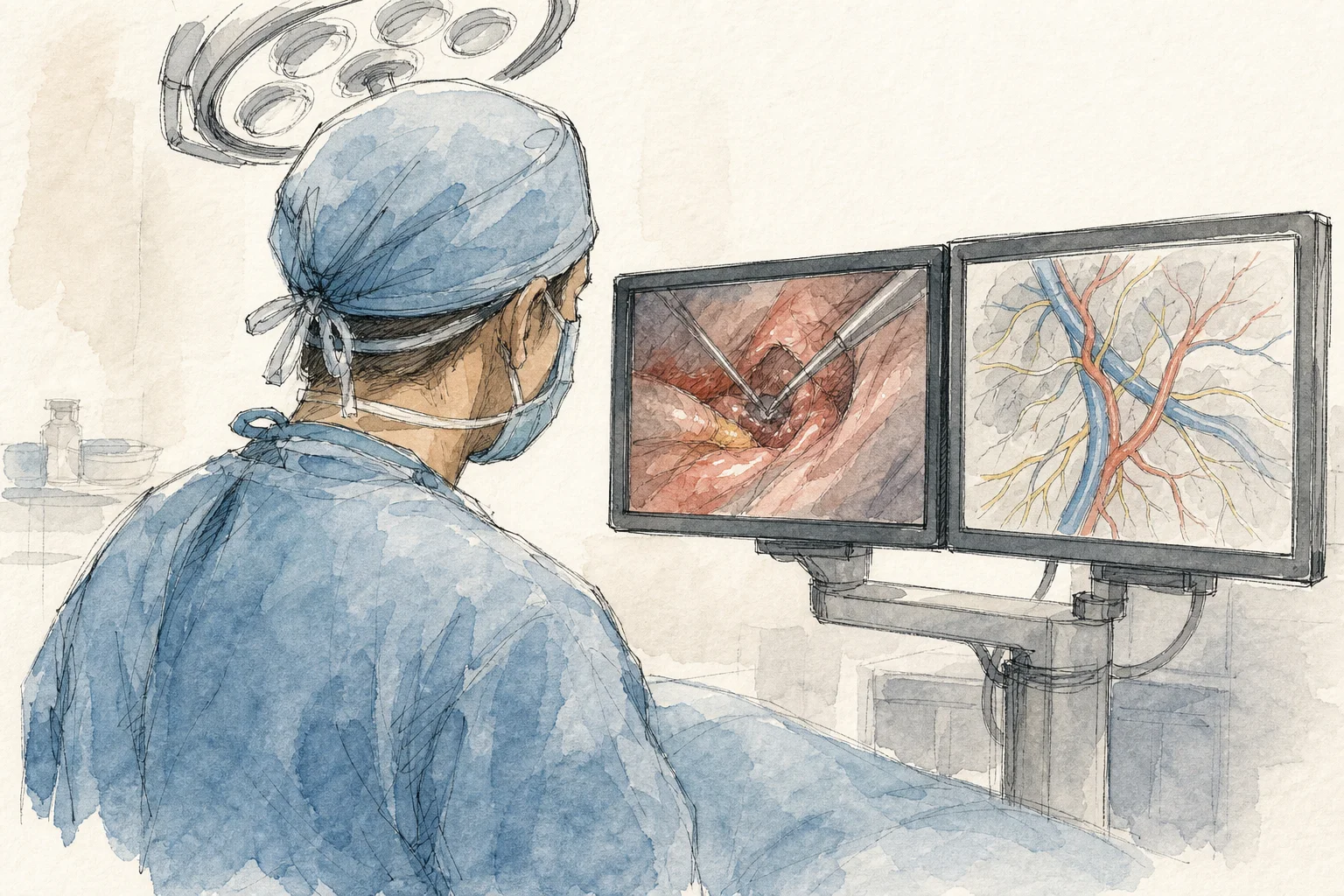
The experimental AI tool analysed the endoscope’s live video on a second screen. It tracked surgical instruments and highlighted where important blood vessels and nerves were likely to be, including structures hidden behind bone and membrane. Researchers trained the system using hundreds of annotated videos from previous pituitary tumour operations.
The technology provided guidance rather than making decisions. Surgeons remained in control and could disregard its suggestions. The team had tested the system in the laboratory for years and is now working on a larger study.
Hibbert reported that his sight improved immediately after the operation and continued to strengthen over the following eight weeks. He has also returned to work. The early result is encouraging, although broader research will be needed to establish the tool’s safety and effectiveness across more patients.