technology and innovation
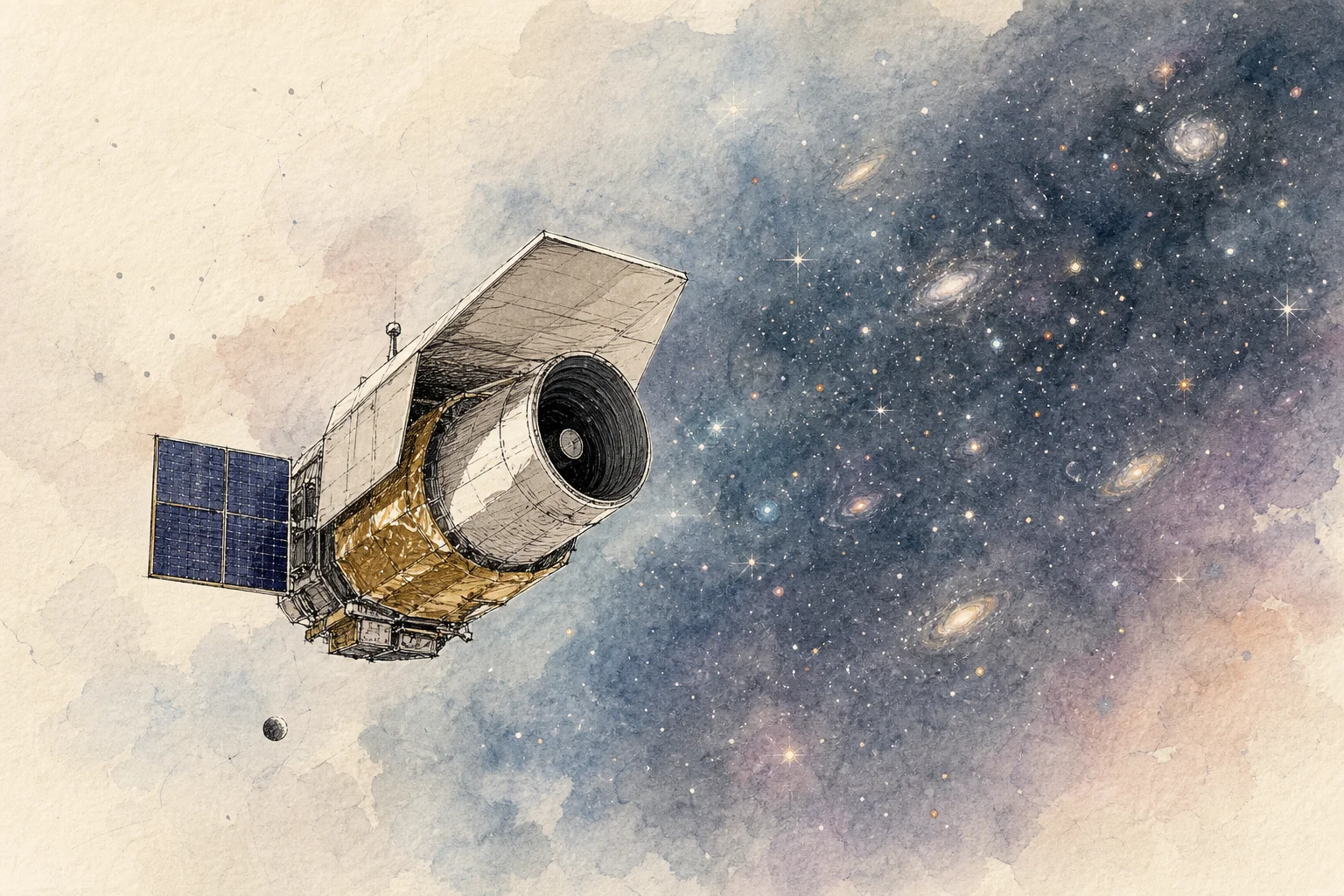
Roman space telescope launches to build a panoramic map of the universe
NASA’s Nancy Grace Roman Space Telescope has launched and successfully separated from its rocket, beginning a journey that could greatly expand humanity’s map of the cosmos. A SpaceX Falcon Heavy lifted off from Kennedy Space Center in Florida at 11:26 UTC on Sunday.
Roman carries a 2.4-metre mirror, the same diameter as Hubble’s main mirror, but its infrared camera has a field of view more than 100 times wider. That combination will let it survey vast regions rapidly, identifying galaxies, stars, planets and rare events that narrower observatories can then examine in detail. Roman is designed to complement, rather than replace, Hubble and the James Webb Space Telescope.
During a five-year primary mission, Roman will investigate dark matter and dark energy, two poorly understood components thought to make up about 95% of the universe. By measuring galaxies, supernovae and the subtle bending of light by gravity, it will help scientists trace how cosmic structure and expansion changed over billions of years.
The telescope is also expected to discover thousands of planets beyond the solar system, including through gravitational microlensing. Its launch is only the first milestone: Roman must still reach its observing location, deploy and calibrate its instruments before science operations are expected to begin in 2027.