technology and innovation
Roman’s 300-megapixel space camera comes online
NASA’s Nancy Grace Roman Space Telescope has successfully switched on its 300-megapixel infrared camera in space. Early tests show the instrument is working as expected, bringing the observatory closer to releasing its first science images in early 2027.
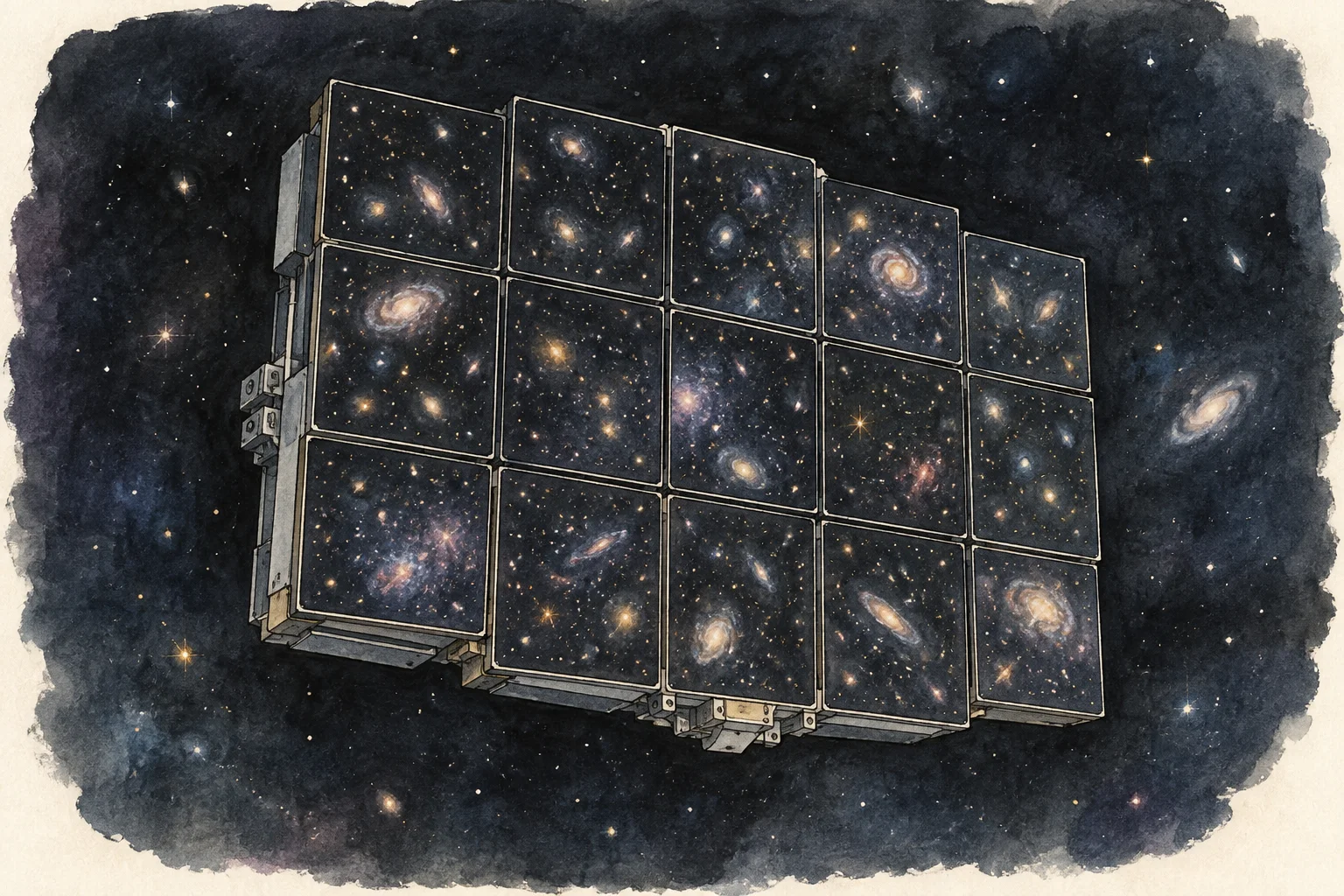
The camera, called the Wide Field Instrument, is designed to capture an area of sky larger than the apparent size of a full moon in a single image, with detail comparable to the Hubble Space Telescope. That combination will allow astronomers to survey large populations of galaxies and stars efficiently, building a broad picture of how matter is distributed across the universe.
After cooling the instrument, engineers activated its 18 detectors and began transmitting test data to Earth. They also checked mechanisms that control which wavelengths of light reach the detectors and keep images in focus.
Roman’s other instrument, a coronagraph, has passed early checks of its electronic and mechanical systems. This technology demonstration is designed to suppress a star’s glare, potentially revealing the much fainter light reflected by nearby planets.
Months of testing and adjustments remain before routine science observations can begin. Researchers plan to use Roman’s expansive surveys to investigate planets beyond our solar system and dark energy, the mysterious component linked to the universe’s accelerating expansion. For now, the achievement is practical but essential: its instruments are responding as intended in space.