science and discovery
Shark teeth reveal a rich Cretaceous sea beneath Egypt’s Western Desert
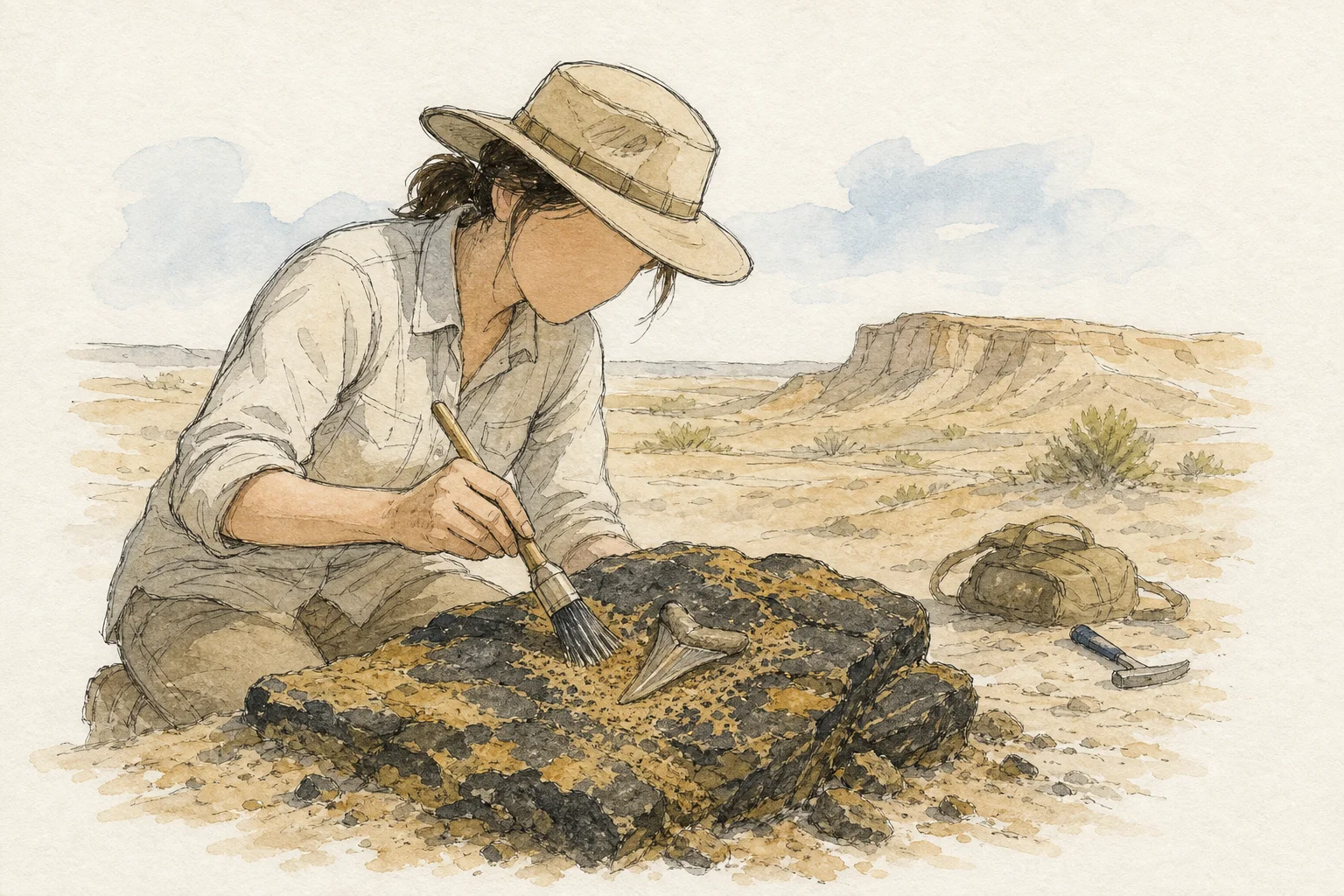
Paleontologists have expanded the known diversity of ancient sharks at Egypt’s Abu-Tartur Plateau, uncovering evidence of a productive marine ecosystem beneath today’s Western Desert. Fourteen previously unreported teeth represent five shark species not recorded at the site before, bringing the total known there to at least seven.
The fossils were recovered from the phosphate-rich Duwi Formation, which formed when northern Africa was partly submerged during the Cretaceous period, about 145 million to 66 million years ago. Two of the identified species, Serratolamna cf. serrata and Squalicorax bassanii, are new records for Egypt. Needle-like teeth attributed to Scapanorhynchus cf. raphiodon may also mark that species’ first known occurrence in Africa and its youngest appearance in the fossil record.
The varied teeth, from slender piercing forms to broad, serrated shapes, point to sharks occupying different ecological niches. Researchers propose that deep-water upwelling carried nutrients toward the sunlit surface, sustaining plankton, fish and invertebrates, and ultimately several large predators.
The deposit is not evidence that all seven species lived and died together. Because sediment accumulated slowly, the phosphate bed compressed remains from different times and marine settings into one layer. Even so, the assemblage offers a rare record of the thriving sea that once covered this now-arid landscape.