science and discovery
Simpler branched peptide shows promise against multidrug-resistant bacteria
Researchers in China have designed a relatively simple branched peptide molecule that killed a broad range of multidrug-resistant bacteria in laboratory and animal experiments. The preclinical study offers a possible route toward antibacterial medicines that are easier and less costly to produce than more complex peptide designs.
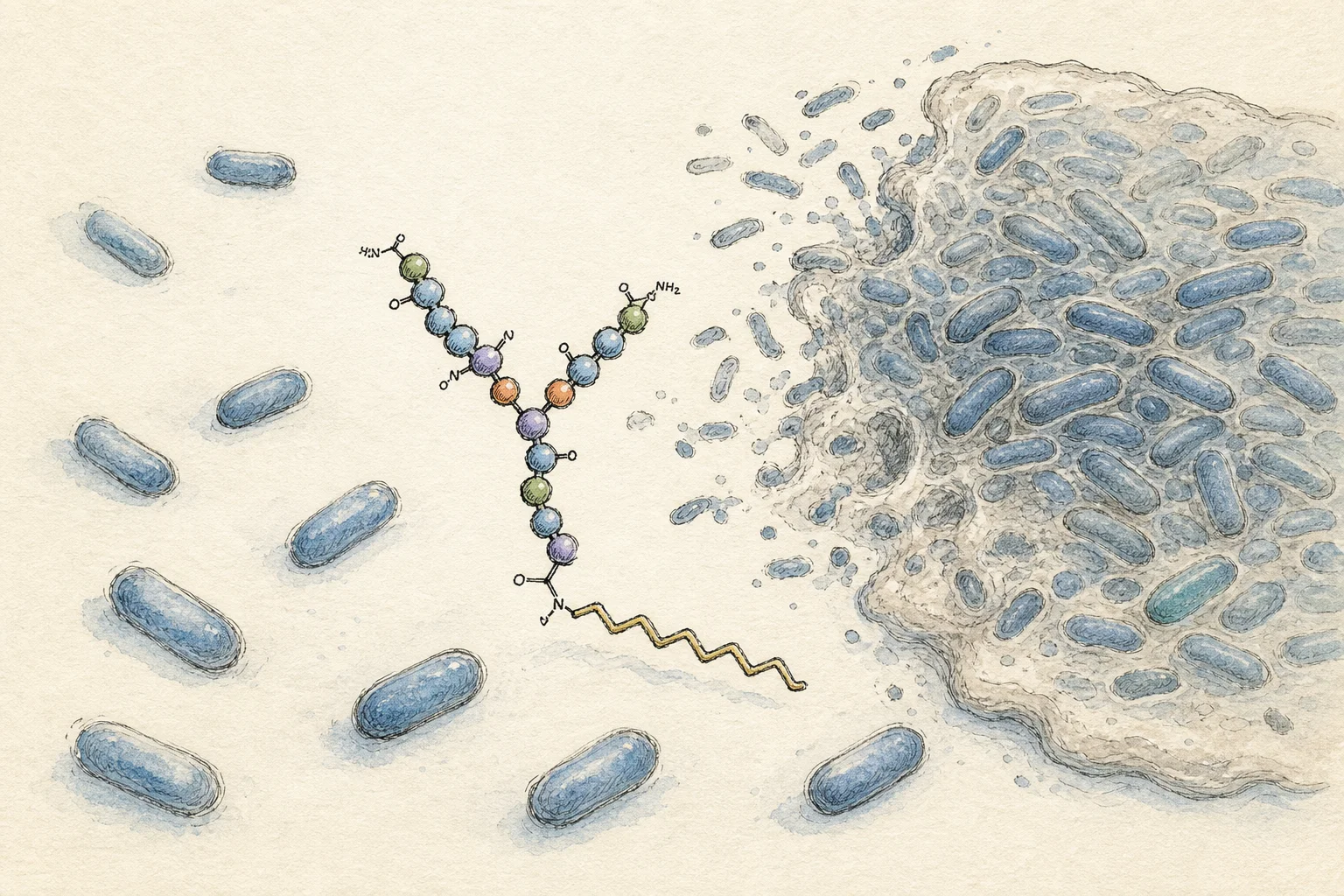
The molecule begins with a linear chain of nine amino acids, adds two seven-amino-acid branches and carries a lauric acid molecule at one end. This structure helps it assemble itself and improves its overall stability. According to the researchers, the resulting molecule matched or surpassed the antibacterial activity of more highly branched dendritic molecules while requiring a simpler synthesis process.
Experiments indicated that the peptide attacks bacteria in more than one way. It can bind to important substances on the bacterial surface and disrupt the cell membrane, while at lower concentrations it can also interfere with activity inside bacterial cells. The molecule cleared bacterial biofilms and dormant persister cells, which can contribute to chronic or recurring infections, and tests suggested it did not readily encourage resistance.
The molecule also showed favorable safety and treatment results in cell and animal studies. Its design and related applications have received an invention patent, but the evidence reported so far remains preclinical, so further development would be needed before any use in patients.