science and discovery
Tagged narwhals reveal warm Atlantic water deep inside Greenland’s fjords
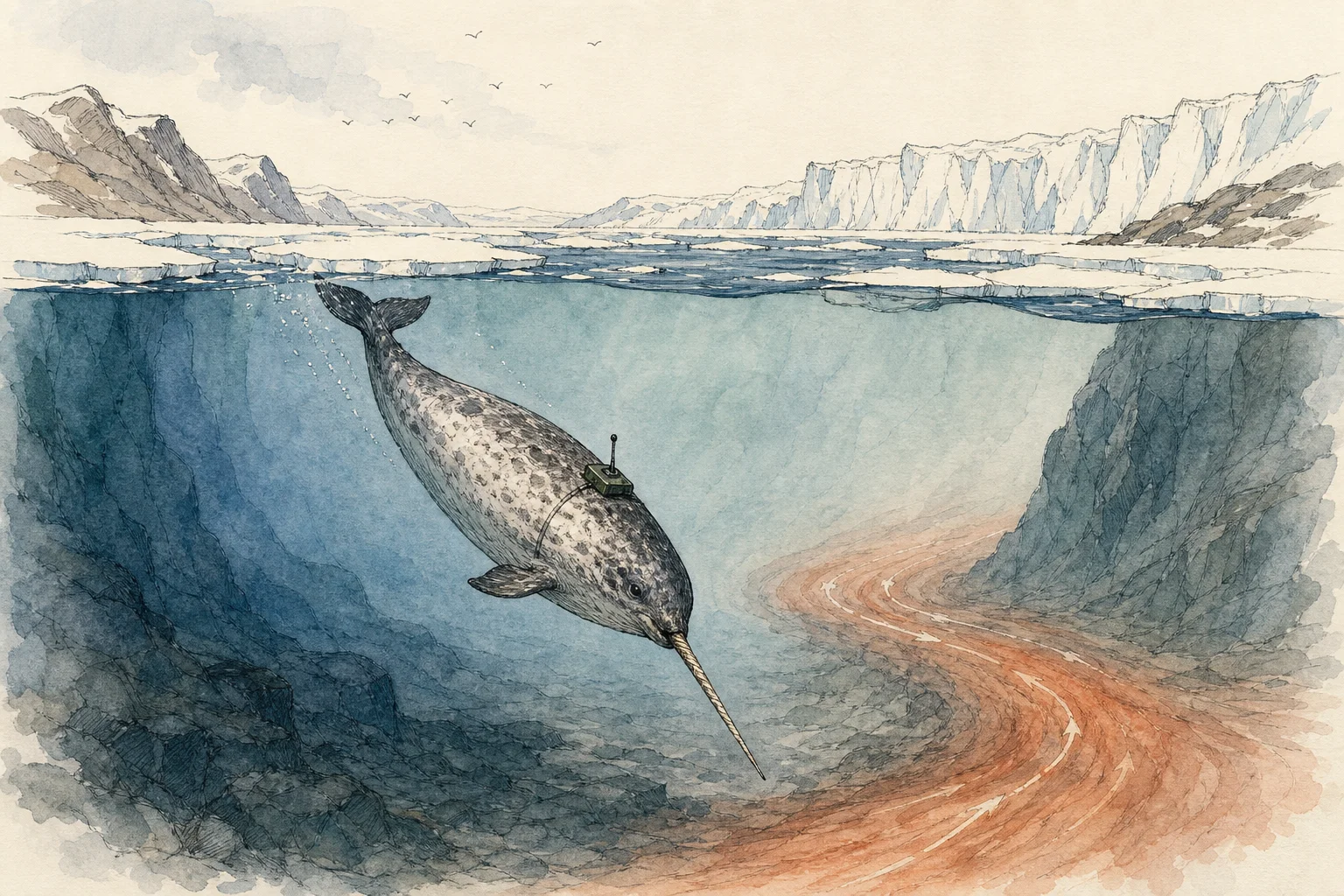
Six narwhals have helped scientists map remote East Greenland fjords that research vessels rarely reach, collecting 2,060 profiles of temperature, salinity and depth. Their measurements documented warm, salty Atlantic water extending into deep basins hundreds of kilometres inland, including waters in front of glaciers.
Working with local hunters, researchers fitted the whales with sensors that gathered data during their natural movements. Narwhals are especially useful for this work because they repeatedly visit the same areas and dive more than 1,500 metres, including beneath sea ice. Their journeys provided detailed vertical readings through entire water columns in the Scoresby Sound fjord system.
The team combined these observations with more than 2,200 historical profiles from the World Ocean Database. Its model indicates that the layer of Atlantic Intermediate Water has thickened while the colder, fresher Polar Water above it has thinned. The findings also suggest that shallower fjords can restrict warm water from reaching glaciers, potentially making those glaciers more resilient to ocean warming.
Warm Atlantic water can accelerate melting when it reaches glacier fronts, but these interactions have been difficult to represent in climate models because measurements are so scarce. Narwhal data cannot replace long-term ship records, and the animals’ diving preferences may affect coverage, but it offers researchers a valuable new view beneath the Arctic surface.