science and discovery
Tiny crystals reveal an ancient supervolcano beneath eastern England
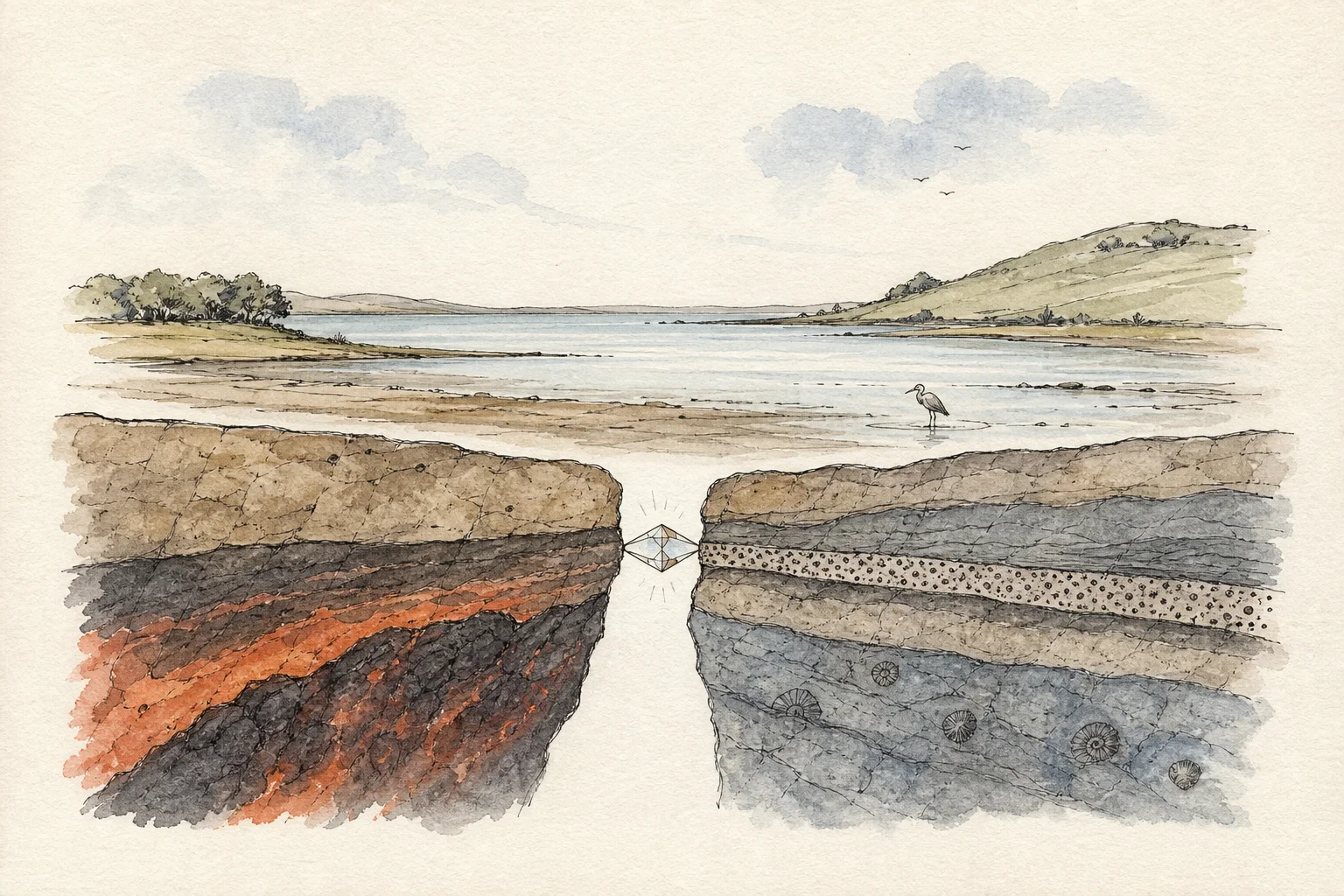
Scientists have identified the remains of a vast, long-extinct supervolcano beneath England’s east coast, resolving a geological puzzle that stretches from The Wash to Scandinavia. The buried structure measures at least 65 kilometres across and erupted about 454 million years ago, roughly 200 million years before dinosaurs appeared.
The discovery came from renewed analysis of rock cores drilled in eastern England about 80 years ago and preserved by the British Geological Survey. Using modern dating techniques, researchers examined zircon crystals about the width of a human hair. The crystals formed within magma and retained a precise chemical record of their origins.
Their ages, approximately 454.4 million years, closely matched zircon found in the Kinnekulle ash layer across Scandinavia and parts of eastern Europe. Chemical comparisons provided further evidence that ash from the enormous English eruption crossed the ancient Tornquist Sea before settling on its floor. The eruption expelled hundreds of cubic kilometres or more of material, making it one of the largest known from Earth’s geological past.
Nothing of the volcano is visible in today’s flat coastal landscape. Researchers stress that it is extinct and poses no eruption risk. Its identification reshapes understanding of Britain’s deep geology and demonstrates how archived samples can answer major questions when revisited with better tools.