science and discovery
Tiny ‘fire amoeba’ breaks a heat record for complex life
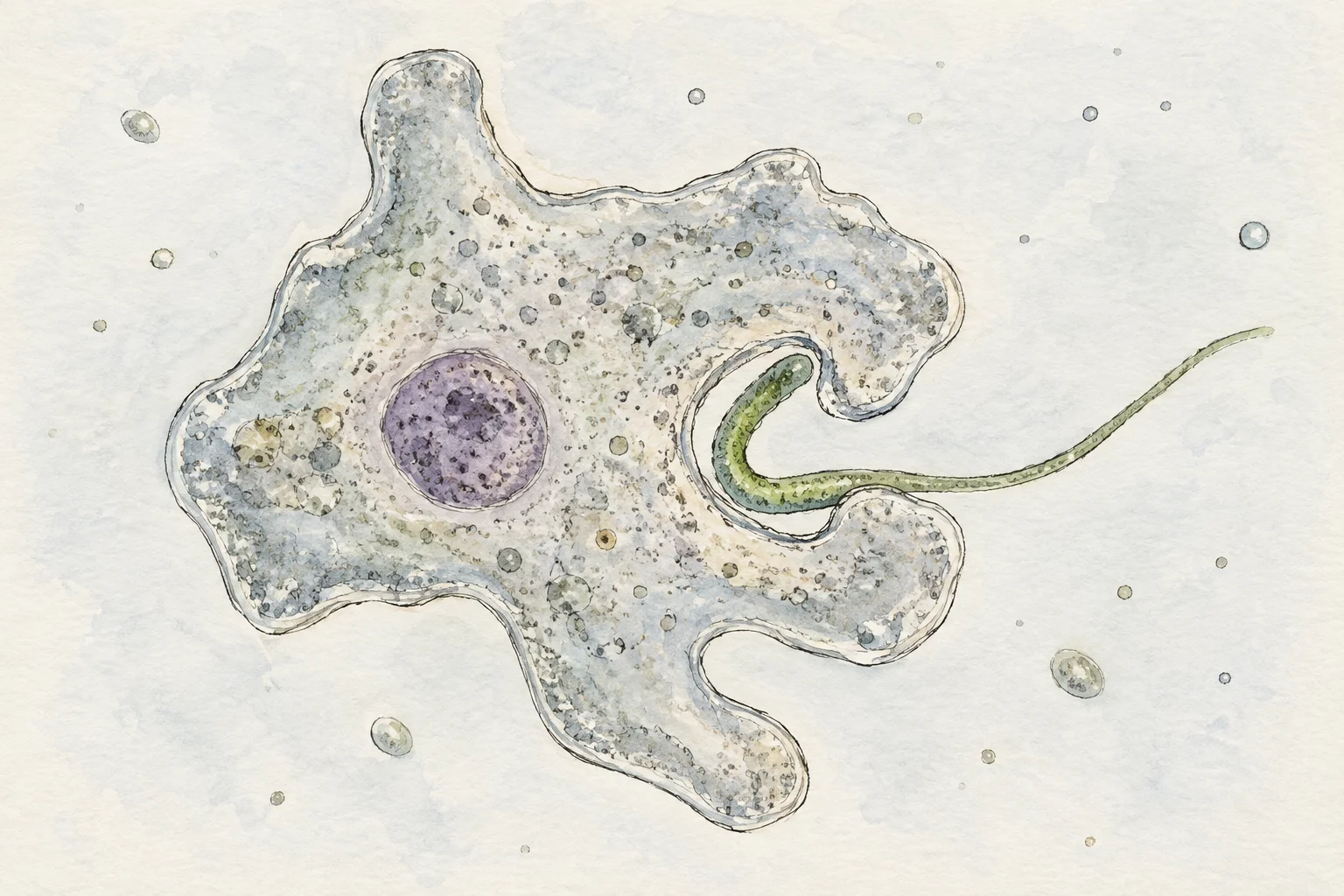
A newly discovered amoeba can feed and reproduce at 63°C (145°F), setting a heat record for organisms with complex cells. Nicknamed the “fire amoeba”, it crosses a temperature boundary long thought to limit this branch of life.
Researchers at Syracuse University found the species, Incendiamoeba cascadensis, in samples from a small geothermal stream in California’s Lassen Volcanic National Park. Back in the laboratory, they raised the temperature and watched the amoeba continue eating bacteria and multiplying. The findings were published in Cell.
The record concerns eukaryotes, organisms whose cells contain a nucleus, from single-celled amoebas to plants and animals. Their accepted growth limit had been about 60°C. Some bacteria and other simpler organisms can thrive at much higher temperatures.
The fire amoeba can also endure hotter water than it can grow in. By forming a protective cyst, it survives temperatures up to 70°C (158°F), then resumes activity when conditions cool.
Genetic comparisons suggest it has ways to keep proteins and cell membranes stable in the heat. Researchers hope those adaptations might eventually inform heat-resilient crops or medicines that tolerate a wider temperature range. Turning such discoveries into practical tools is difficult, however. For now, the achievement is clear: complex cells can thrive in hotter conditions than scientists had established.