science and discovery
Tissues scale up cellular cleanup to match their energy use
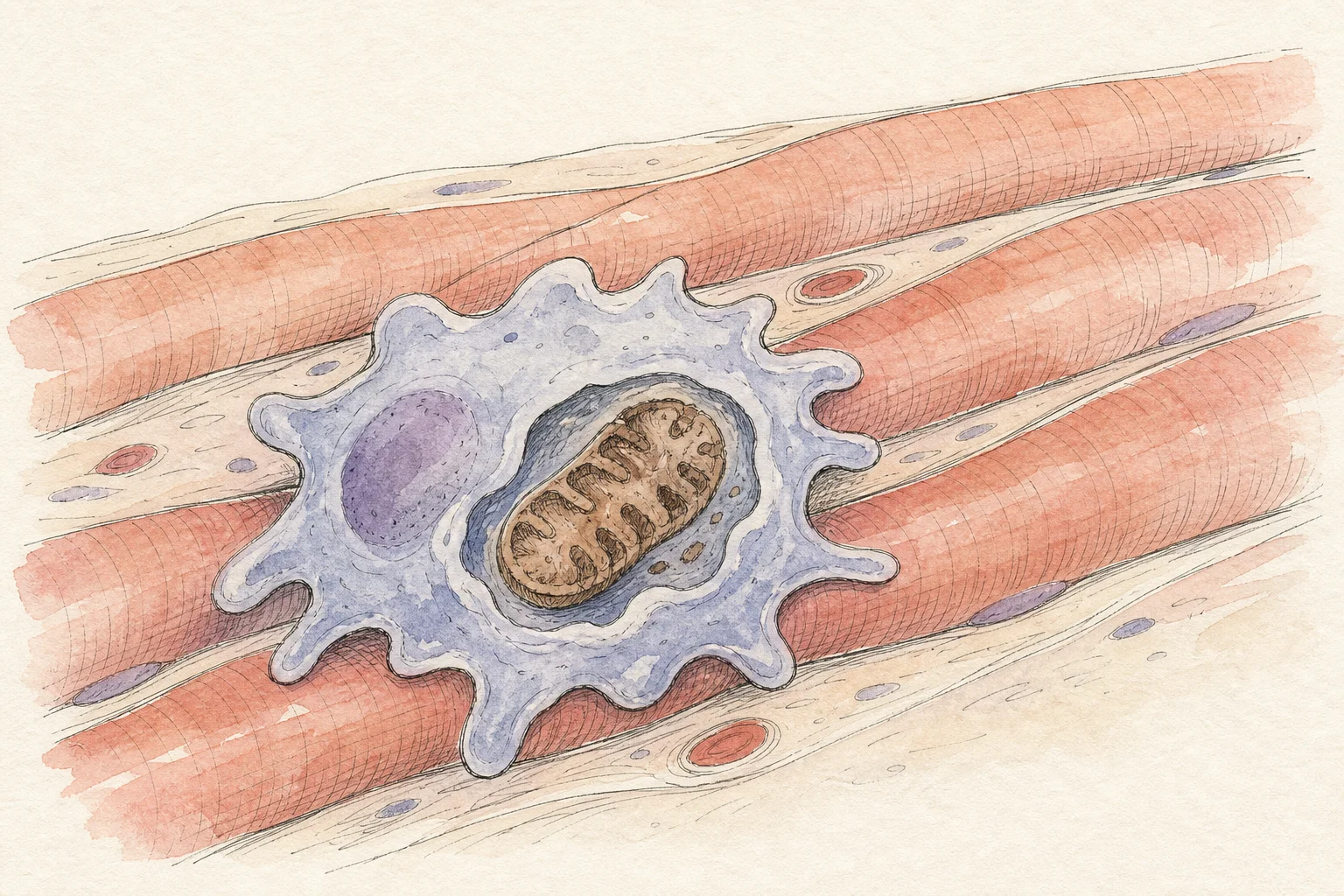
Researchers have identified a system that adjusts cellular cleanup capacity to the energy demands of different tissues. The mechanism helps the heart, skeletal muscle and heat-producing brown fat dispose of worn-out mitochondria, the structures that convert nutrients into usable energy.
In experiments with mice, the team tracked damaged mitochondria and found that they ended up inside macrophages, immune cells that engulf waste. Tissues with greater mitochondrial activity maintained larger populations of these cleanup cells. When researchers prevented macrophages from removing the waste, hearts pumped less effectively, skeletal muscles weakened and brown fat produced less heat.
The process appears to begin with fibroblasts, structural cells whose numbers rise alongside a tissue’s mitochondrial activity. They produce a signal that prompts macrophages to multiply, allowing cleanup capacity to expand as waste production increases.
The Spanish-led international study, published in Science Immunology, also examined human muscle data. There, macrophage numbers similarly rose with mitochondrial activity, although the direct functional tests were conducted in mice.
Because tissue metabolism, waste accumulation and macrophage populations change with age, the findings suggest a possible direction for future research into preserving muscle and organ function. Scientists have not yet shown that targeting this system can slow age-related decline in people.