technology and innovation
Treated sanitation waste boosts concrete’s bending strength by 42%
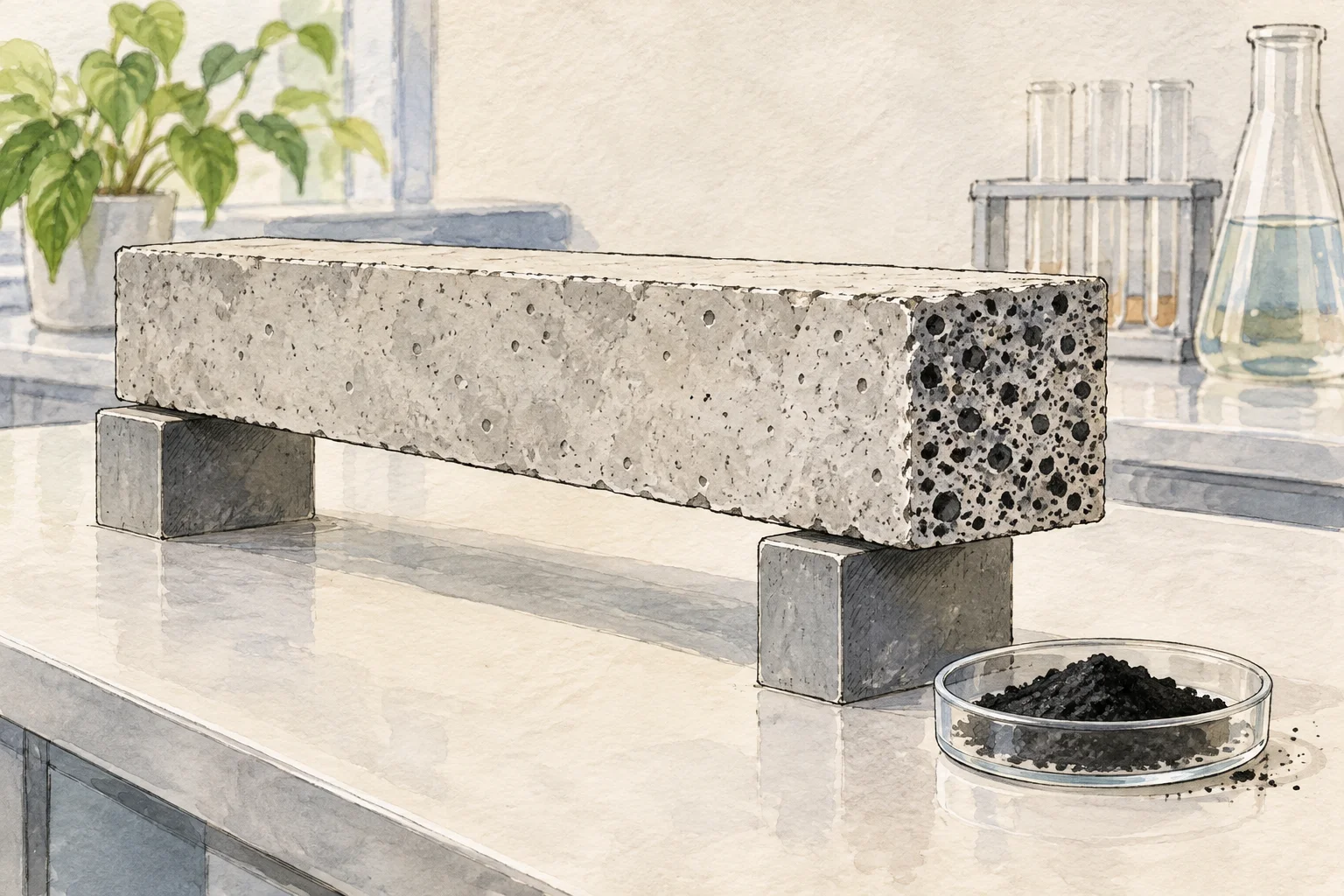
A concrete mix in which biochar made from treated faecal sludge replaced 10% of the cement became notably stronger than conventional concrete in laboratory tests. After 91 days of curing, it showed a 21% increase in compressive strength, or resistance to crushing, and a 42% increase in flexural strength, which reflects resistance to bending and cracking.
Researchers from Manipal University Jaipur and Louisiana Tech University produced the biochar from faecal sludge collected at a treatment plant in Warangal, Telangana. The sludge was dried, heated at 350°C to 450°C with limited oxygen, then ground and sieved. It was not untreated waste added directly to the mix.
Replacing 5% of cement also improved performance after 91 days, with average gains of 20% in compressive strength and 36% in flexural strength. The porous biochar may act as a tiny water reservoir, gradually supporting cement hydration. Its silica content and fine particles may also help create and pack strength-giving compounds.
The benefit had limits. At 15% replacement, strength declined, while higher biochar levels made fresh concrete less workable. Because the study used sludge from one plant, material from other regions and long-term durability under harsh conditions still need testing. A planned leaching analysis must also assess whether potentially toxic contaminants remain safely contained. Even so, the best-performing mixes point to a productive use for sanitation waste that could reduce demand for emissions-intensive cement.
Sources
- India TodayScientists turn human poop into concrete and it's surprisingly 42% stronger
- Economic TimesIndian scientists develop a new concrete using human waste to make it significantly stronger than conventional cement
- Asianet News Network Pvt LtdHuman Waste Could Make Concrete 42% Stronger, Study Finds