science and discovery
Two planets confirmed, including a possible lava world and a habitable-zone world
Astronomers have confirmed that two signals first detected by NASA’s TESS satellite are planets orbiting the same red dwarf, about 337 light-years from Earth. Follow-up observations from telescopes in Tenerife and Hawaii helped rule out alternative explanations such as eclipsing binary stars and brown dwarfs.
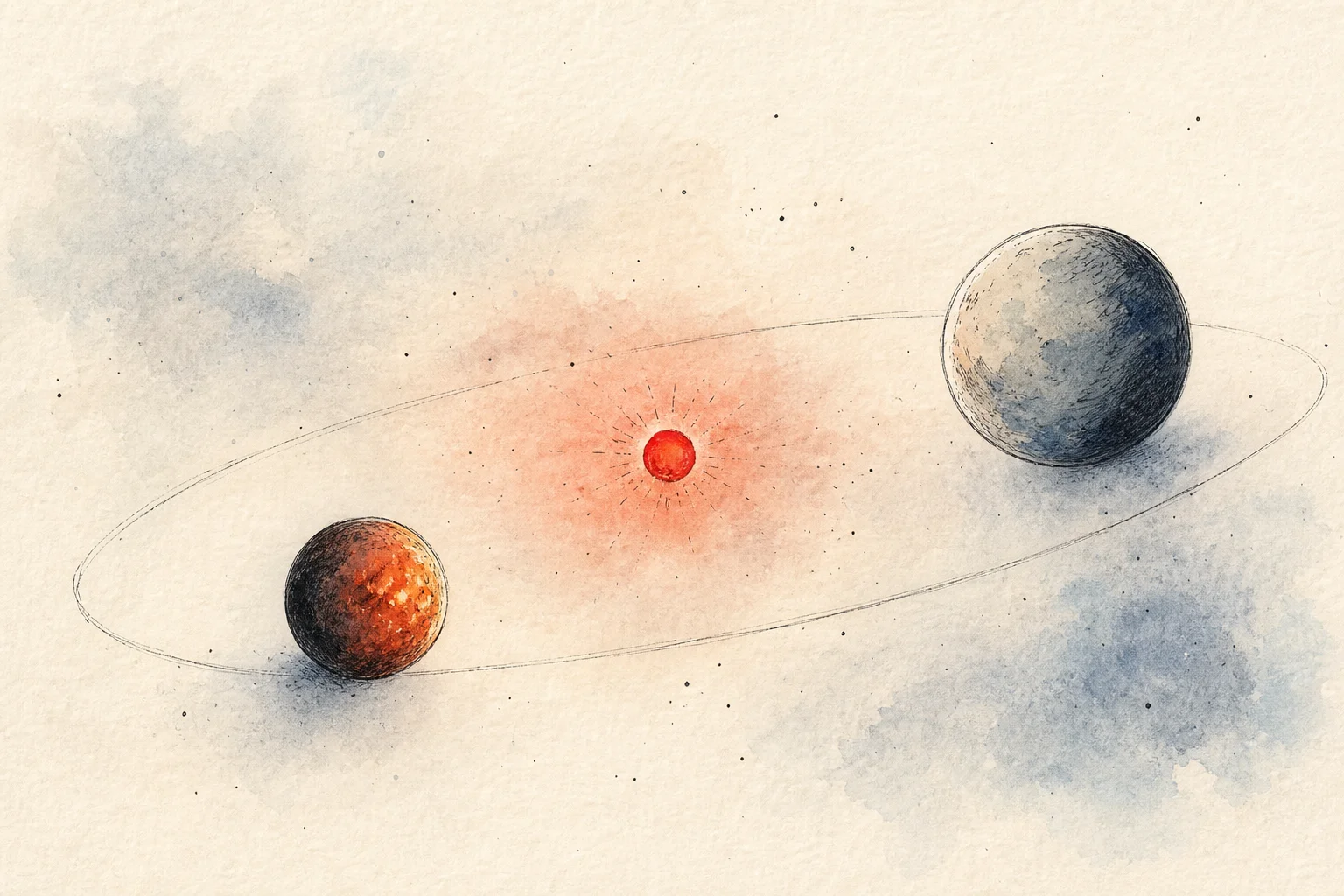
The inner planet, TOI-1752 b, completes an orbit in less than one Earth day and receives intense radiation. Researchers calculate that its star-facing hemisphere could become hot enough to keep rock molten, making it a possible lava world. Material released from its surface might also form a secondary atmosphere.
Its companion, TOI-1752 c, is between Earth and Neptune in size and lies within the star’s “optimistic habitable zone,” where liquid water could persist under certain atmospheric conditions. It receives a similar amount of stellar radiation to Earth and has an estimated equilibrium temperature of about 20 degrees Celsius. Those properties do not prove that it has water, a suitable atmosphere or life.
The findings, published in Monthly Notices of the Royal Astronomical Society, make the outer planet an appealing candidate for future atmospheric studies. Researchers suggest that instruments such as the James Webb Space Telescope could reveal more about its composition and conditions.
Sources
- EL MUNDOUn mundo de lava y otro potencialmente habitable: así son los dos exoplanetas confirmados desde el Observatorio del Teide
- eldiario.esUn sistema planetario a 337 años luz con dos planetas radicalmente distintos: uno en la zona habitable y otro de lava
- europa pressEl IAA-CSIC confirma un nuevo sistema planetario "con un posible...