science and discovery
Ultrathin diamond membranes generate voltage when bent
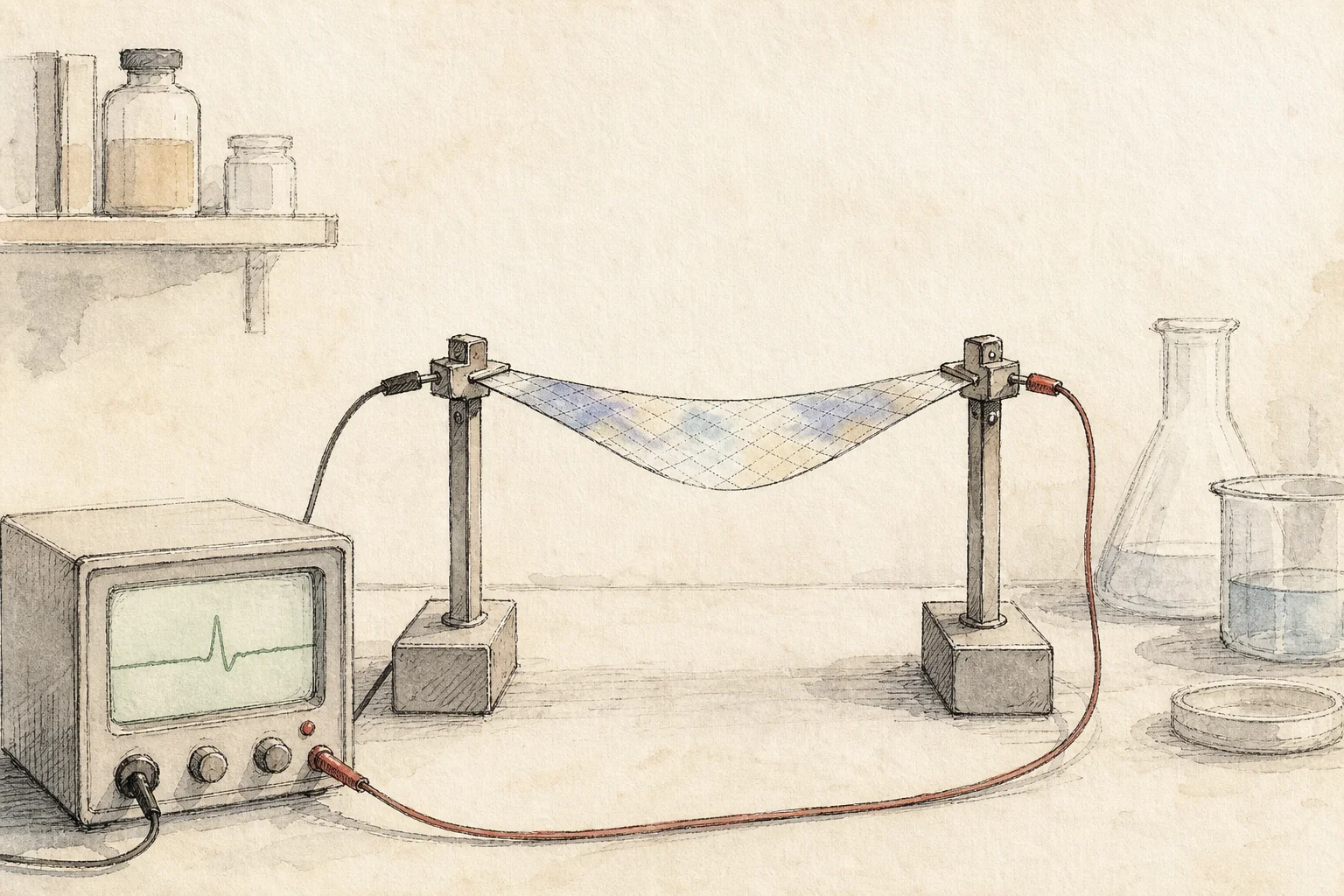
Researchers at the University of Hong Kong have shown that ultrathin, flexible membranes made from polycrystalline diamond produce a measurable voltage when bent. The repeatable result overturns the century-old assumption that diamond is not piezoelectric, meaning it cannot turn mechanical deformation into an electrical response.
The team made normally rigid diamond flexible by separating membranes only a few micrometres thick from a substrate. In controlled experiments, voltage appeared consistently during repeated bending. The researchers tested for environmental interference and triboelectricity, the charge that can arise when surfaces touch or rub, strengthening the evidence that the signal came from the membrane itself. One membrane about 5 micrometres thick generated roughly 70 millivolts at 1.4% bending strain, while samples also maintained a response through more than 7,000 cycles at a lower strain.
Calculations suggest the effect comes from asymmetry at grain boundaries, where the membrane’s many tiny diamond crystals meet. Bending changes the distribution of electrical charge around those boundaries, creating a potential difference across the material.
The output is small, and ordinary diamonds cannot replace batteries. Practical devices will require more work on efficiency, manufacturing and integration. Still, diamond’s durability, chemical stability and biocompatibility could make these membranes useful for future self-powered sensors, miniature energy harvesters or implantable devices that draw signals or tiny amounts of power from movement.
Sources
- Economic TimesFor over a 100 years, diamonds were considered incapable of producing electricity -- one new experiment in Hong Kong has changed that
- ScienceDailyScientists discover diamonds can generate electricity
- International Business Times, Singapore EditionDiamonds Can Generate Electricity When Bent, Scientists Discover After 100-Year Assumption Is Challenged