technology and innovation
Scientists use yeast to build tiny domes in simulated Martian conditions
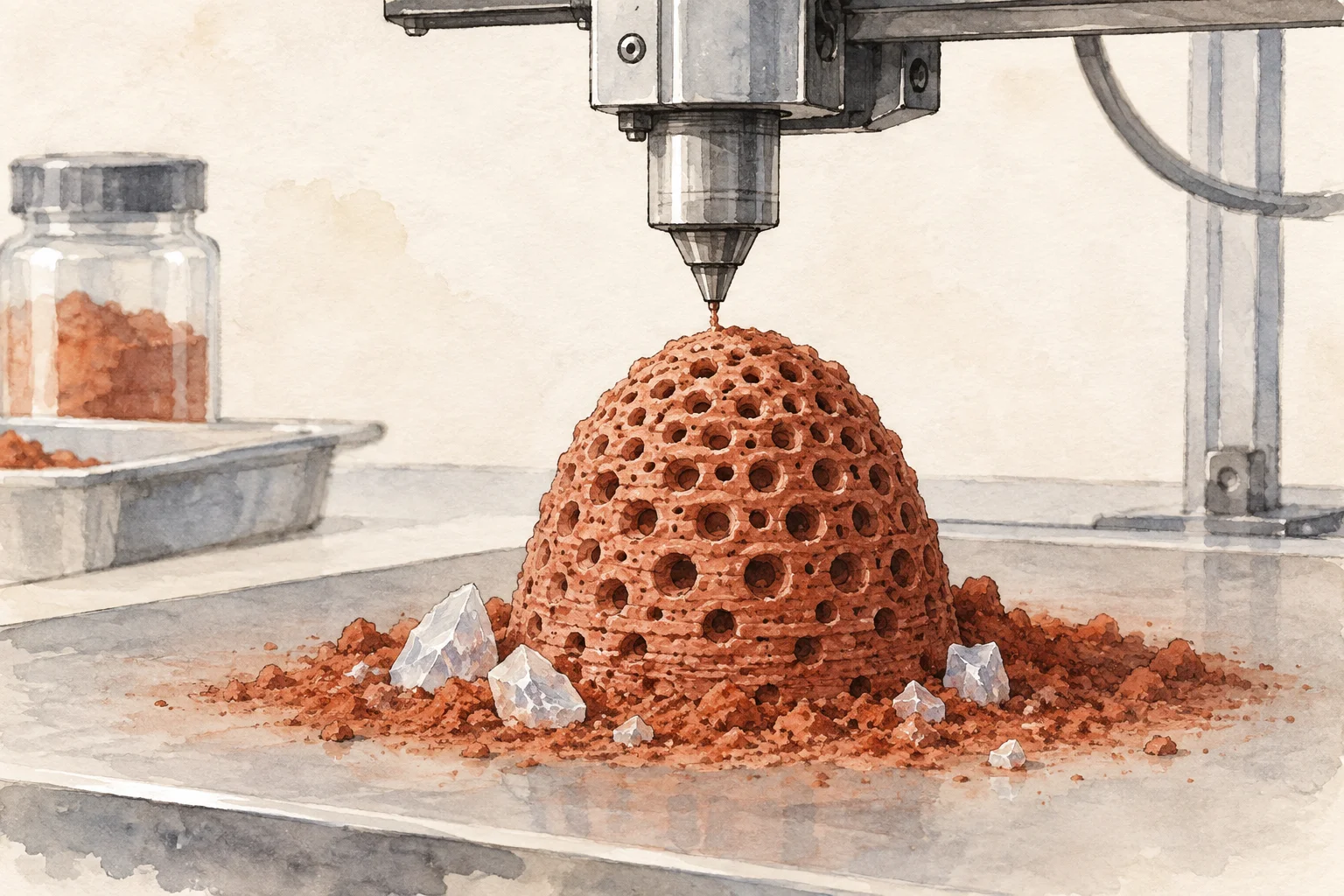
Researchers have 3D-printed tiny dome-shaped structures from mineral particles, gelatin and engineered yeast under cold, low-pressure conditions designed to mimic part of the Martian environment. The 45-millimetre-high test pieces reached a compressive strength of 10 to 12 megapascals, roughly comparable with low-strength concrete on Earth.
The engineered yeast produces mussel-inspired adhesive proteins that help bind the mineral particles, while gelatin holds the mixture together and supports the cells. After the mixture leaves the printer, water freezes and passes directly into vapor. This leaves behind a lightweight, porous foam that hardens without requiring the rock-melting temperatures used by some proposed construction methods.
The approach could eventually combine minerals sourced on Mars with biology and the planet’s own climate to reduce construction energy. If enough yeast remains alive, retired structures might also be broken down, processed in a bioreactor and reused in new material.
For now, this is a proof of concept rather than a building system. The experiments reproduced only some Martian conditions, and researchers still need to test much larger structures, long-term durability, radiation exposure and whether the yeast can survive the real environment. Gelatin and engineered yeast would also have to be transported from Earth or produced locally.