science and discovery
Youngest known planet offers a glimpse of how worlds form
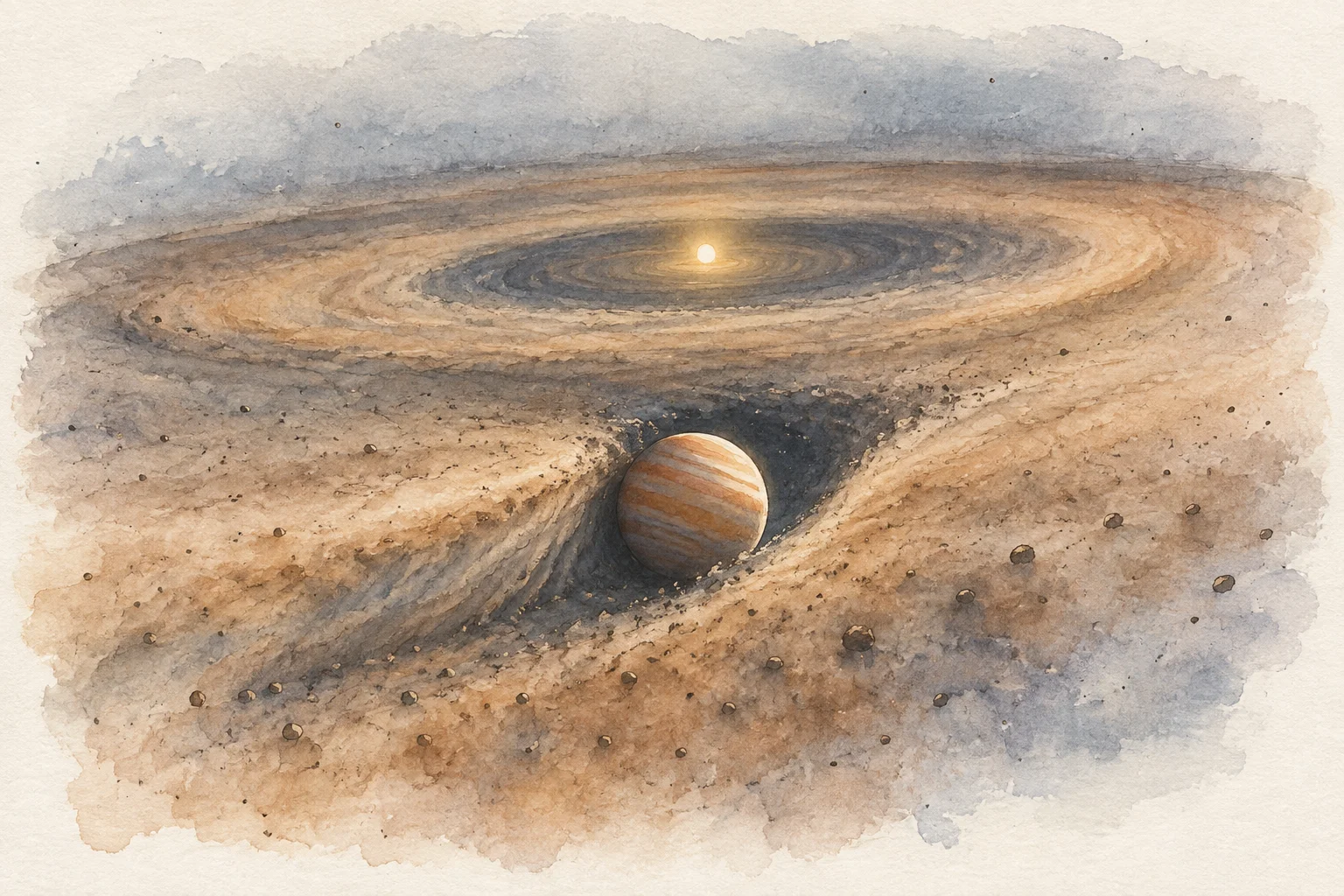
Astronomers have confirmed the youngest known planet, a world less than a million years old that is still embedded in the gas and dust around its star. Named Elias 2-24 b, it lies about 450 light-years from Earth and has roughly Jupiter’s mass.
The finding emerged from a fresh look at old observations. A team led by Andrea Bernardi, a doctoral researcher at Universidad Diego Portales in Chile, examined images taken by Hawaii’s Keck Observatory in 2018 and 2020. An instrument that blocks much of a star’s glare helped reveal the faint planet.
Earlier observations from ALMA and the Very Large Telescope in Chile had revealed a gap in the dusty disc and a possible planet inside it. Combining the telescope records allowed researchers to track the object’s movement and confirm that it accompanies the star, rather than being a distant background object or an imaging flaw.
Published in The Astrophysical Journal Letters, the study gives scientists a rare glimpse of a planet’s earliest development. It also poses a puzzle: the world orbits about 55 times farther from its star than Earth does from the Sun. Existing models struggle to explain how a giant planet could form so quickly, especially so far out. This young world offers new evidence to help refine those ideas.