Technology and innovation
A robot builds in orbit, one piece at a time
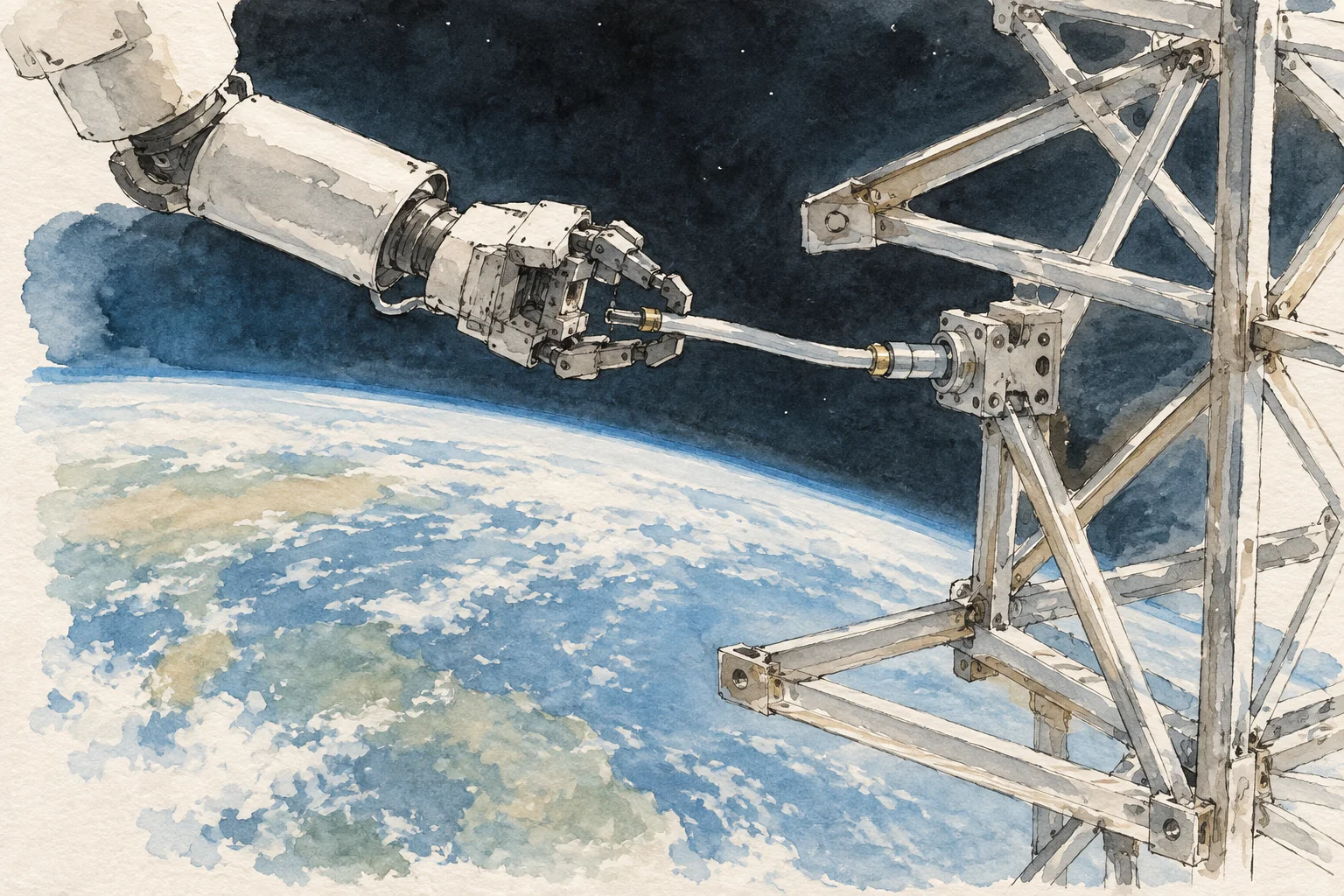
A robot has assembled a section of an antenna’s supporting framework in Earth orbit, joining separate parts without astronauts doing the building. Caltech, which designed the machine, and its funder, the US Defense Advanced Research Projects Agency (DARPA), describe it as the first automated assembly of a structure from individual components in space.
The experiment, called ASTRA, was designed to build a 1.4-metre-wide reflector antenna. Two sections of its framework launched already assembled; in orbit, the robot built a third from tubes and joints. Time constraints limited the achievement to that one new section, rather than a complete antenna.
Automation did not mean working entirely alone. Engineers on Earth sent commands and checked photographs during short daily communication windows. When problems arose, they tested solutions on a duplicate machine in their laboratory before sending instructions to orbit.
The result is a small-scale test of a potentially important alternative to launching finished structures. Large space equipment must usually fit inside a rocket, often folded for launch, or be assembled from larger sections. Building piece by piece could eventually allow much bigger telescope mirrors, communications antennas and solar arrays.
The researchers say the design still needs simplifying and refining. The orbital test nevertheless showed that their assembly method can work beyond the laboratory.