Science and discovery
Astronomers trace a star’s plunge inside a giant companion
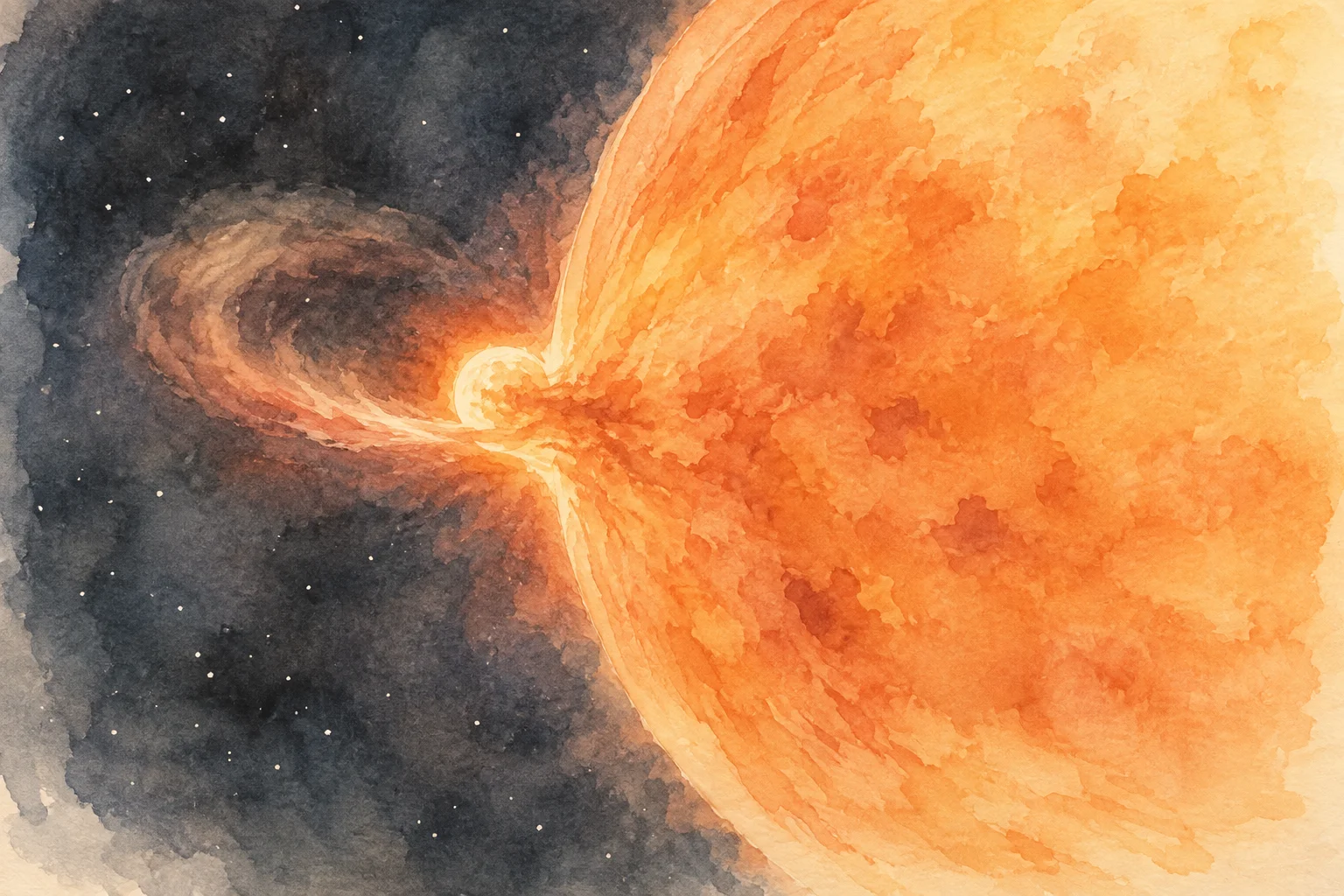
Astronomers have assembled what may be the first observations of a giant star engulfing its companion, following the encounter in the Andromeda galaxy over several years.
The international team began monitoring the system, nicknamed Bao, in 2023 after spotting unusual changes in its light. Earlier records showed it had been brightening since 2018. In October 2025, it erupted.
NASA’s James Webb Space Telescope observed Bao 47 days after the eruption peaked. Combined with other telescopes’ records and computer models, its data helped researchers reconstruct the encounter. The findings were published in Nature on 18 November 2026.
The team estimates that the giant had about seven times the Sun’s mass and was 350 times as wide. Its smaller companion had roughly 70% of the Sun’s mass. No telescope can see directly inside a star, but the gradual brightening fits a smaller star spiralling through the giant’s gas for about seven years. As the gas slowed the companion, friction generated heat that reached the surface.
The eruption points to the smaller star reaching the giant’s core and merging with it. However, the study’s lead author says another outcome remains possible: both stars surviving in a much tighter orbit. Continued monitoring should help establish what remains after this extraordinary encounter.