technology and innovation
SMILE satellite begins science mission with panoramic aurora views
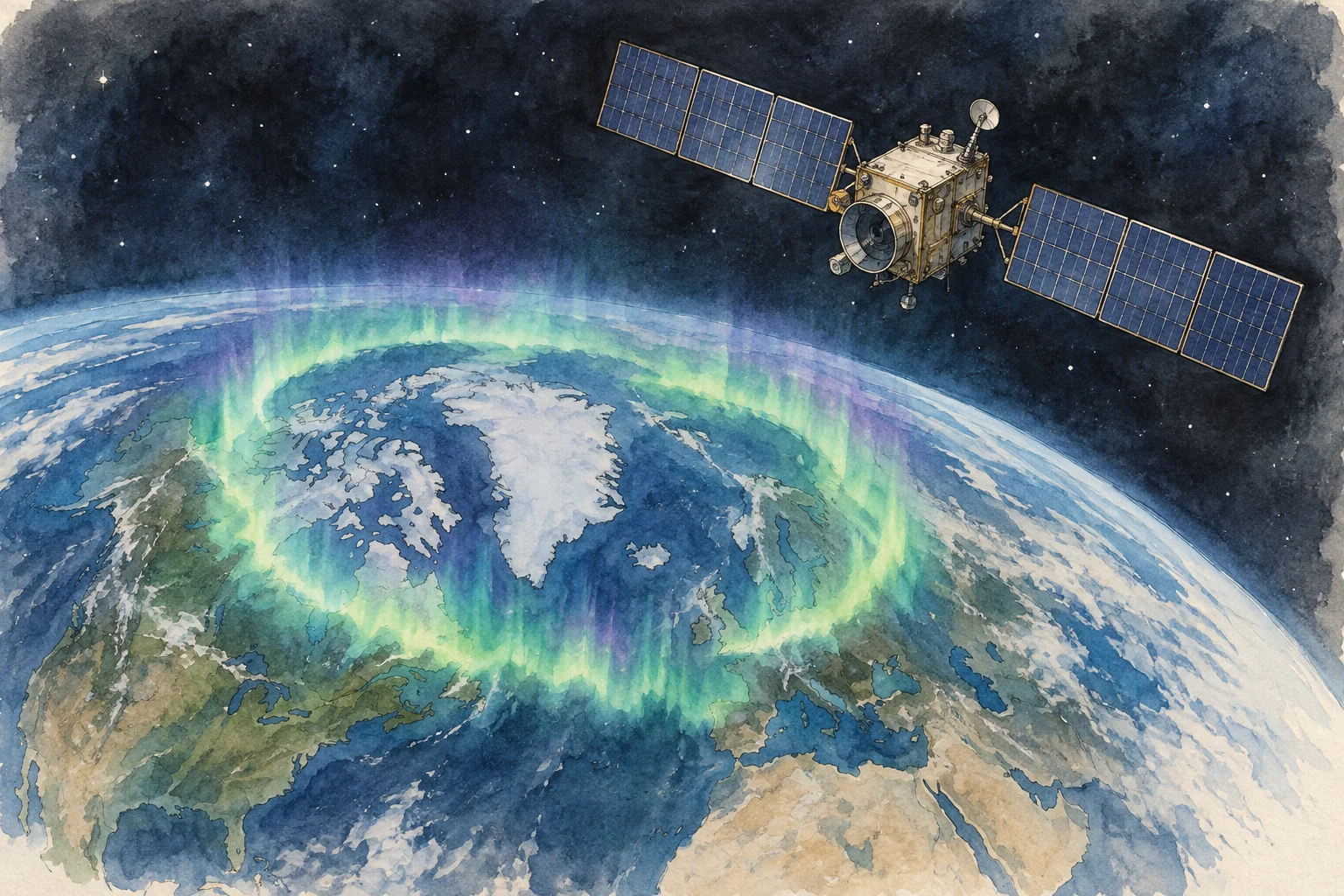
The joint Chinese-European SMILE satellite has passed its in-orbit tests and entered scientific operations, with all four instruments working as expected. Its first images and measurements, released on 30 September 2026, include uninterrupted panoramic views of the northern hemisphere’s auroras.
Developed by the Chinese Academy of Sciences and the European Space Agency, SMILE launched from French Guiana in May. Its mission is to reveal how the solar wind, a stream of charged particles from the Sun, interacts with the magnetic environment around Earth, known as the magnetosphere.
The satellite’s ultraviolet camera can watch auroras continuously for up to 44 hours and take images as frequently as every five seconds. Its X-ray camera has also captured the remains of an exploded star in the Large Magellanic Cloud. During scientific operations, that camera will look for X-rays produced when solar particles meet the edge of Earth’s magnetosphere.
Two other instruments measure magnetic fields and charged particles. Combined with observations from the ground and other spacecraft, SMILE’s measurements aim to build the first panoramic picture of the solar wind’s interaction with Earth’s magnetosphere. That would help researchers follow a connected process as it unfolds, rather than observing only individual parts.