Science and discovery
A trapped antimatter particle opens a new test of physics
Physicists at Northwestern University in the United States have kept a single particle of antimatter trapped for months and controlled its energy in tiny, measurable steps. The achievement creates a new way to test how closely matter and antimatter mirror each other.
The particle, called a positron, has the same mass as an electron but the opposite electric charge. When the two meet, they annihilate, releasing energy. Keeping a positron available for study therefore means isolating it from ordinary matter.
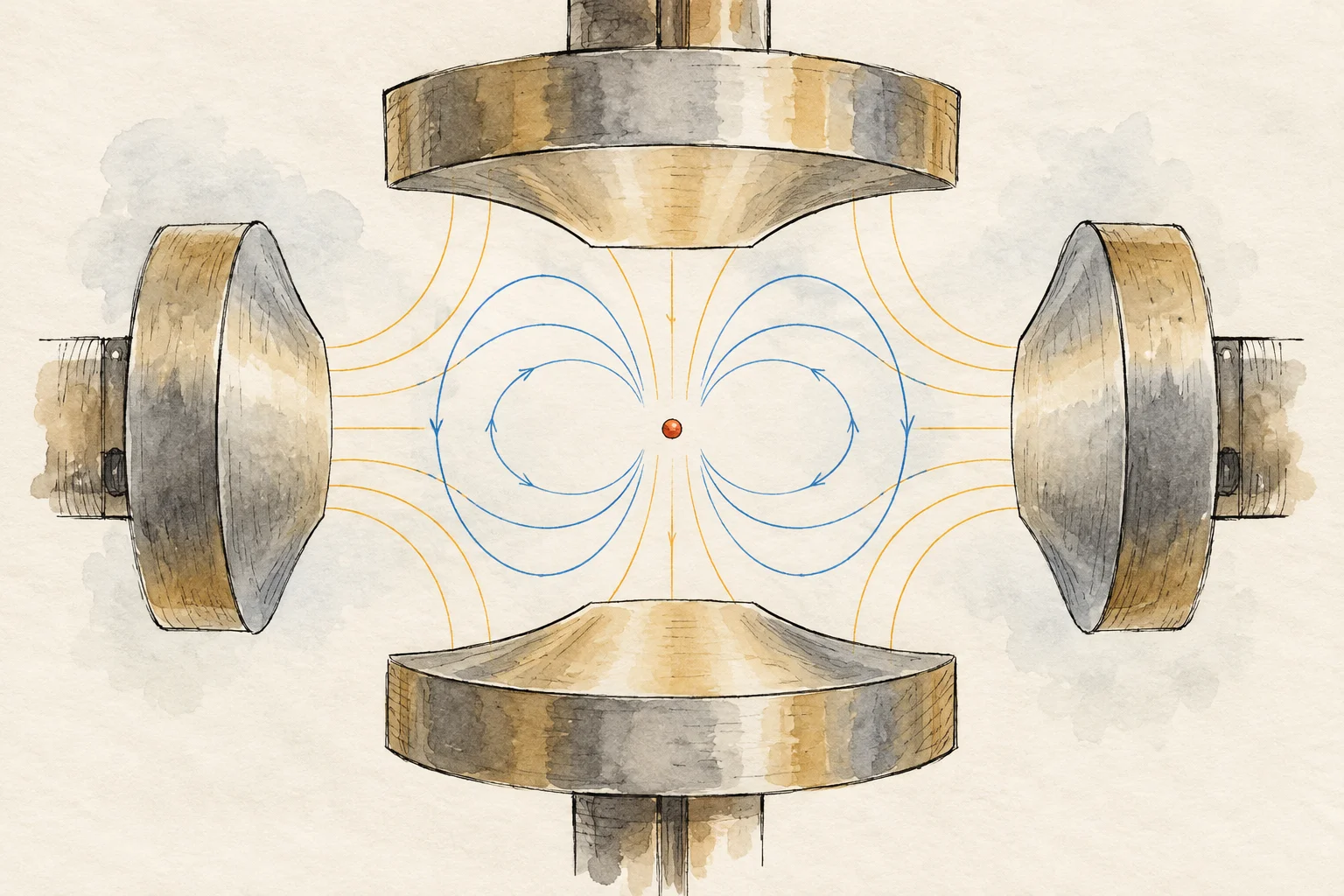
Led by Gerald Gabrielse, the team slowed positrons produced by radioactive decay and captured one using electric and magnetic fields. These held it away from the trap’s walls in a near-perfect vacuum, cooled to just 0.3 degrees above absolute zero.
The researchers brought the positron’s circular motion to its lowest possible energy state, then used microwaves to move it between energy levels and detected those changes. Their study appeared in Physical Review Letters on October 21.
Next, the team aims to measure the positron’s magnetic properties and compare them with the electron’s. Theory predicts matching magnetic strengths. A mismatch could point to missing physics and offer clues to why the universe contains so much more matter than antimatter. That comparison is still under way.
Sources
- NatureA single antimatter particle in a cage opens door to 'revolutionary' physics
- ScienceAlertPhysicists Trapped a Particle of Antimatter And Kept It Caged For Months
- New ScientistA single antimatter particle was held in a trap for months | New Scientist
- news.northwestern.eduScientists trap and tame a single particle of antimatter for months