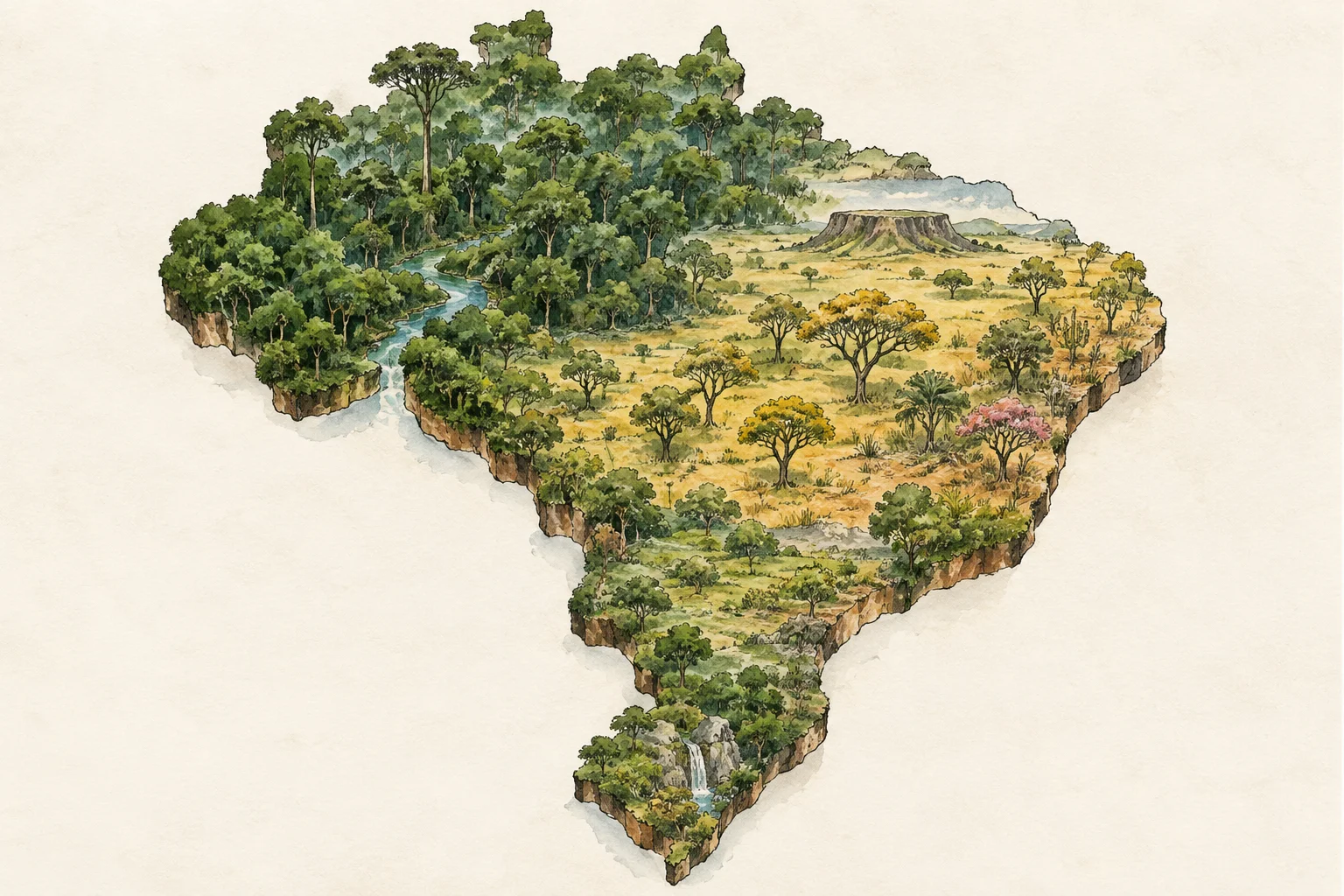
Nature thriving
Less deforestation helps Brazil cut emissions for a third year
Brazil’s greenhouse gas emissions fell 6% in 2025, marking a third consecutive annual decline and the lowest gross total in eight years. The country has now cut its gross emissions by about a quarter since 2022.
Estimates from SEEG, a monitoring initiative of Brazil’s Climate Observatory, put the 2025 total at 2.06 billion tonnes of carbon dioxide equivalent, a measure that compares the warming effects of different gases. Gross emissions count gases released before subtracting carbon absorbed by vegetation.
The main driver was reduced clearing of native vegetation, particularly in the Amazon and Cerrado. Researchers linked the improvement to policies controlling deforestation. Emissions from changes in land use, which include clearing forests and other natural landscapes, fell 15% in a year. Keeping vegetation standing helps prevent the carbon it stores from entering the atmosphere.
Progress remains uneven. Emissions from agriculture and livestock were virtually unchanged, while those from waste rose. Brazil also missed its 2025 Paris Agreement target: after accounting for carbon absorbed by regenerating vegetation and protected areas, net emissions were 1.41 billion tonnes, above the 1.32 billion-tonne limit.
The sustained decline is a substantial turnaround, but researchers warn that meeting future climate commitments will require both continued protection of native landscapes and emissions cuts across other parts of the economy.