Science and discovery
An ancient whale’s lopsided skull hints at life on the seabed
Researchers have identified a previously unknown species of pygmy sperm whale whose strikingly uneven skull offers clues to an unusual feeding strategy in ancient coastal seas. Named Scaphokogia huachafo, the animal lived around six million years ago and measured about 2.7 metres long.
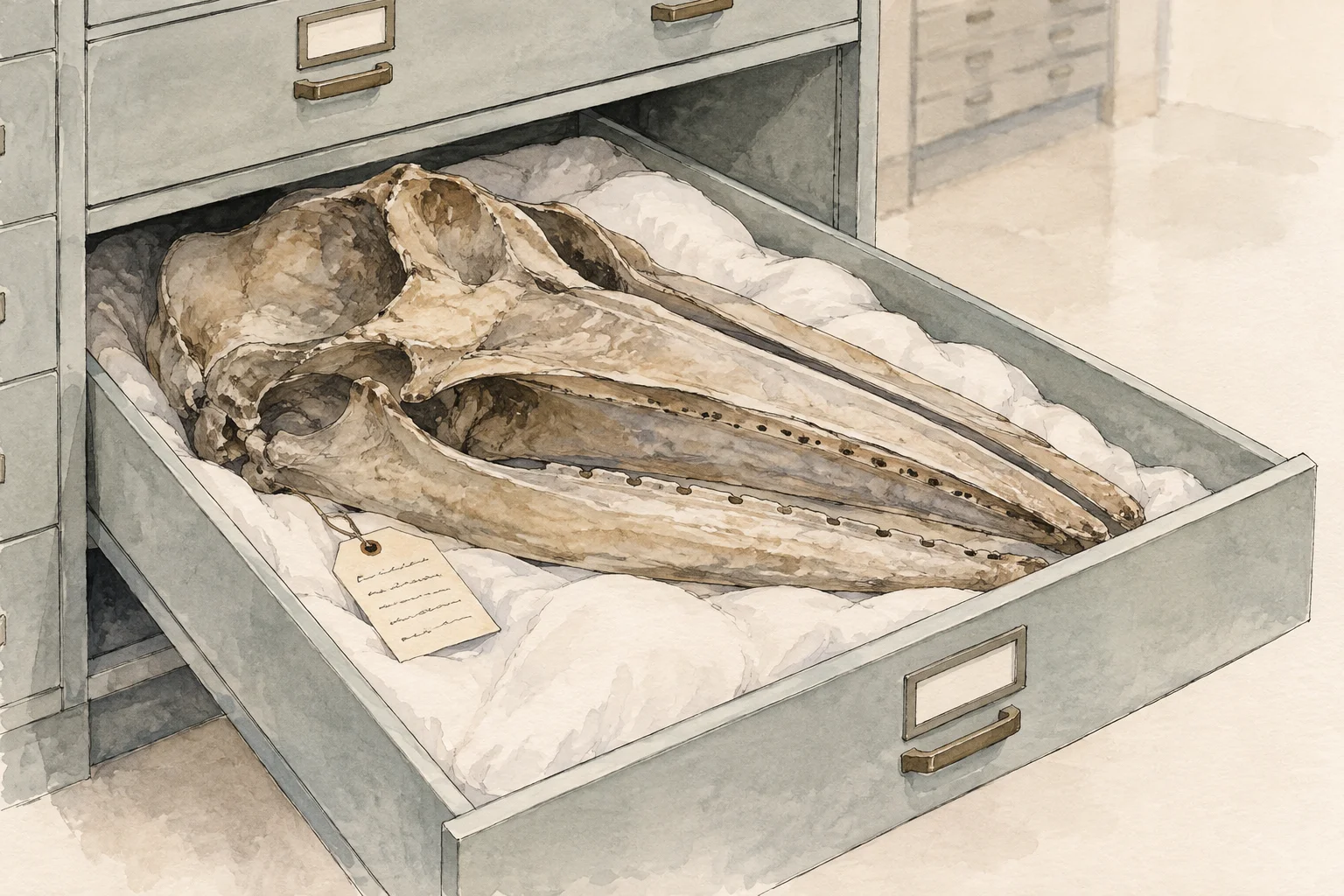
Its nearly complete skull was unearthed in southern Peru in the mid-1990s. Lead researcher Aldo Benites-Palomino encountered it in 2015 while studying at Lima’s natural history museum. Both bony nostril openings sit to the left of the skull’s centre line, and the bones around its eyes differ markedly. Researchers checked whether burial had distorted the fossil, but found no signs of damage or deformation elsewhere that would explain its crooked shape.
Uneven skulls are normal among toothed whales, whose forehead structures help produce sound. But this animal went much further. A comparison using 3D facial measurements from 31 species placed its group, Scaphokogia, as the most asymmetrical in the sample. The findings appeared in Communications Biology.
The whale’s heavy, dense snout also angled downward by about 31 degrees. That anatomy suggests it fed close to the floor of shallow coastal waters. Researchers propose that it may have used echolocation, locating prey through returning sound echoes, to search soft sediment for food. The sound-producing soft tissues were not preserved, so that explanation remains a hypothesis rather than a confirmed account of how it hunted.