Science and discovery
Stone tools reveal ancient ingenuity in a greener Arabia
Microscopic traces on ancient stone tools have helped researchers reconstruct how people made hunting weapons and processed plants in a part of Arabia now dominated by desert.
An international team collected more than 5,500 stone tools and toolmaking fragments at ‘Uruq Aljelibah, beside a vanished lake in southern Saudi Arabia’s Empty Quarter. Fossils of hippos, buffalo and gazelles point to freshwater and nearby grasslands.
The team dated lake and shoreline deposits to about 125,000 years ago. An archaeologist not involved in the study cautions that the tools, collected from the surface rather than dated layers, could be younger.
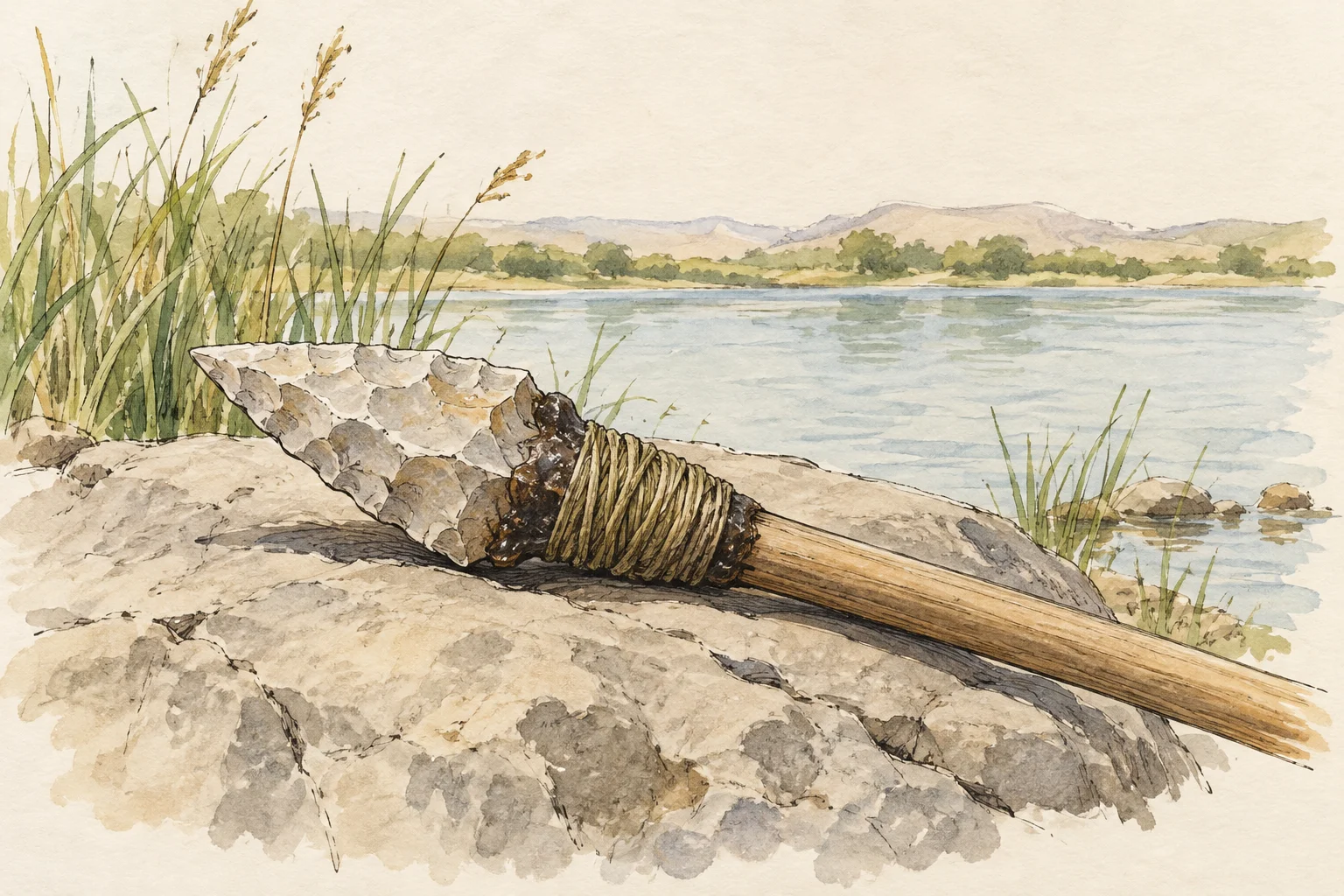
Resin and plant fibres near the base of one stone point suggest it was glued and bound to a shaft. Animal residues near its tip, together with impact damage on several points, support their use as hunting weapons.
Other tools preserved traces of wood, leaves and fibres, with wear suggesting people cut or shredded plants. Chemical traces linked to a poisonous tree also hint at poison-assisted hunting, although deliberate application has not been established.
These tiny remnants reveal parts of ancient technology that usually decay, including possible bindings and wooden shafts. Together with the animal fossils, they offer an unusually detailed view of how people used the resources around an Arabian lake before deserts returned.
Sources
- The ConversationDiscoveries from a 125,000-year-old lakeshore reveal life in a greener Arabia
- ZN.UAКаменные наконечники из Аравии возрастом 125 тысяч лет: самое древнее свидетельство охоты с использованием яда
- news.griffith.edu.auAncient lakeshore reveals how early humans lived in Arabia - Griffith News