Technology and innovation
Atomic swaps create key transistor parts in one ultrathin film
Researchers in South Korea have built working transistors by swapping selected atoms in an ultrathin material, forming key components within a single film rather than assembling separate layers of different materials.
The team at the Institute for Basic Science reported the work in Science. Transistors, the tiny switches used in electronic circuits, need a semiconductor, insulation and electrical contacts. Combining these parts is particularly difficult with atomically thin materials: coatings can be uneven, and attaching metal contacts can damage the surface or impede current.
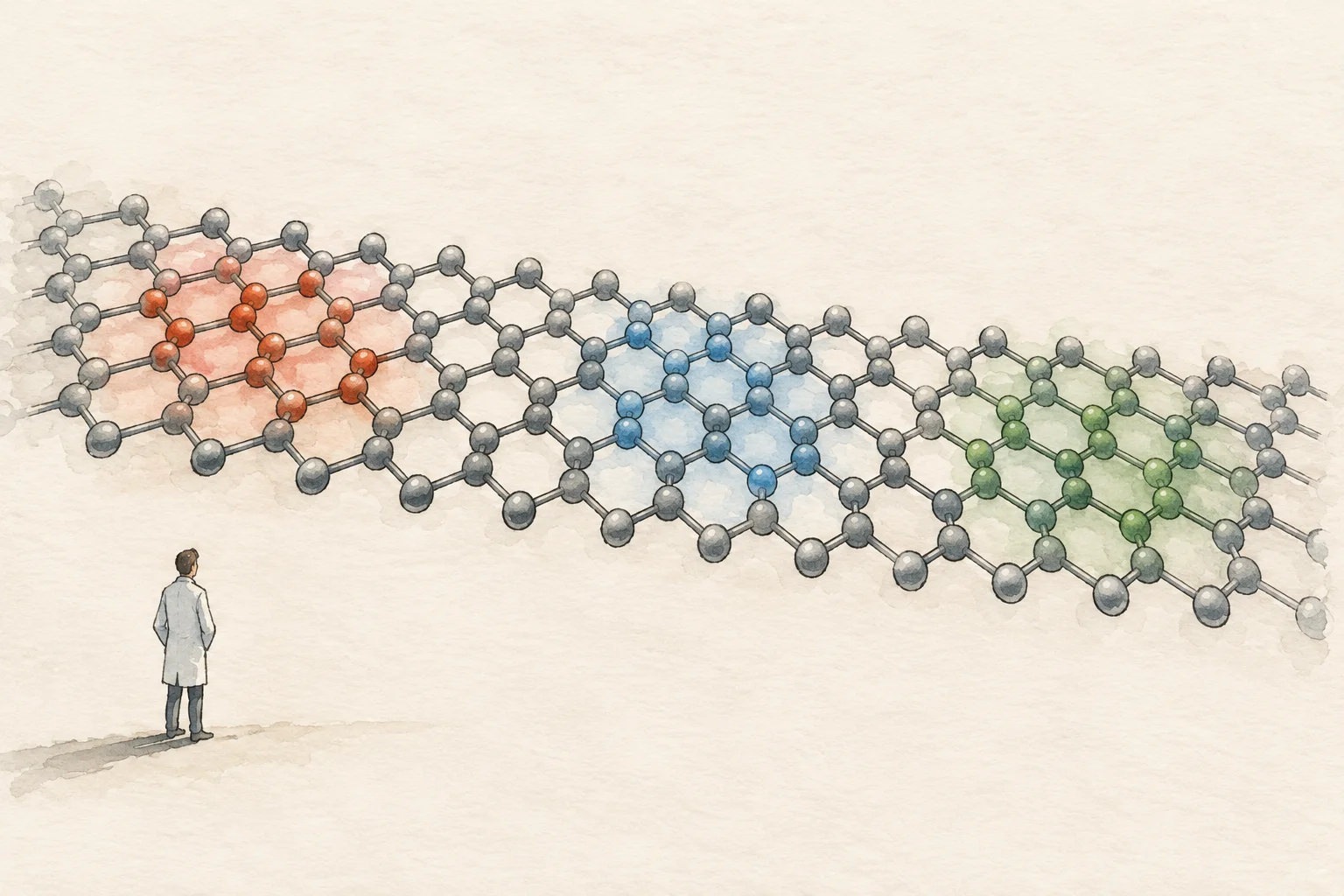
The researchers started with a film containing tungsten and selenium. Keeping the tungsten in place, they replaced selected selenium atoms to create insulating regions, a different semiconductor and highly conducting contact layers. They controlled the changes one atomic layer at a time, each about 0.7 nanometres thick, less than a billionth of a metre.
In tests, the resulting transistor needed a voltage change of 61.3 millivolts to change its current tenfold, close to the roughly 60-millivolt theoretical minimum for conventional transistors at room temperature. The team also stacked two transistor types to build a basic signal-reversing circuit that operated at one volt.
The approach could simplify the manufacture of smaller, lower-power electronics. Before that can happen at scale, researchers must show that the atomic substitutions work uniformly and reliably across the large surfaces used in chip production.