Science and discovery
Scientists identify three new species of bone-eating worms
Scientists have described three new species of bone-eating worms in waters around the Iberian Peninsula, revealing previously unrecognised diversity among animals that feed without a mouth or gut.
The worms belong to Osedax, a group that colonises animal bones on the seabed. Root-like structures penetrate the bones and harbour bacteria that help break down the organic material inside, making its nutrients available to the worms.
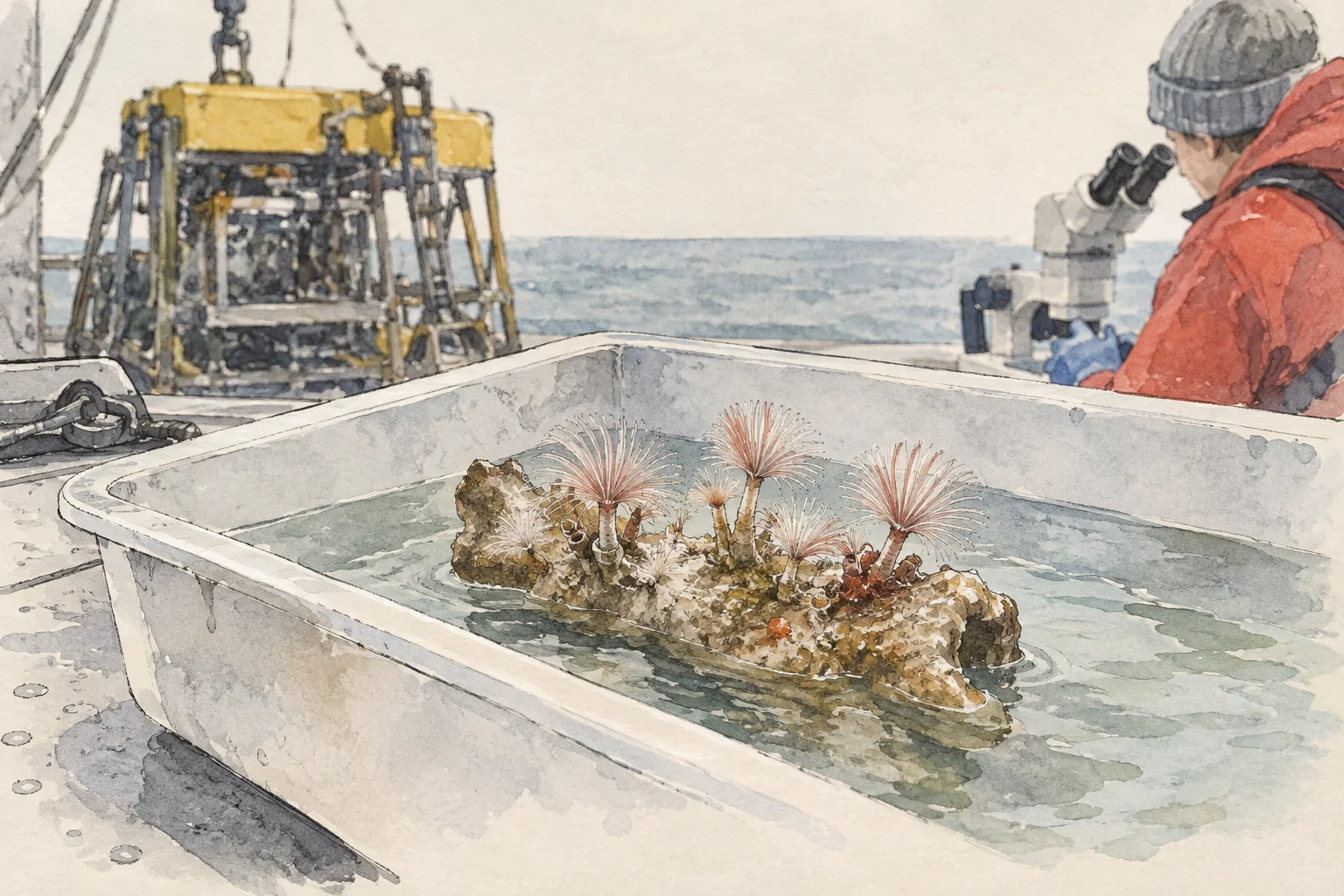
To find them, researchers from Spain’s National Museum of Natural Sciences and Spanish Institute of Oceanography placed cow and pig bones at nine sites using specially designed underwater platforms. After several months on the seafloor, the devices were recovered during expeditions between 2022 and 2024. The team examined the worms’ physical features and DNA, with the findings published in the Zoological Journal of the Linnean Society.
Osedax emmae was found in El Cachucho, a protected area in the Cantabrian Sea. Osedax teoi, collected more than 1,200 metres deep off Mazarrón on Spain’s Mediterranean coast, has a distinctive green patch not previously described in the group. Osedax martini was identified in both the Mediterranean and the Gulf of Cádiz.
Together with their bacterial partners, these animals help recycle organic material, returning nutrients to seafloor ecosystems.