Technology and innovation
La Palma completes giant telescope quartet to catch cosmic flashes
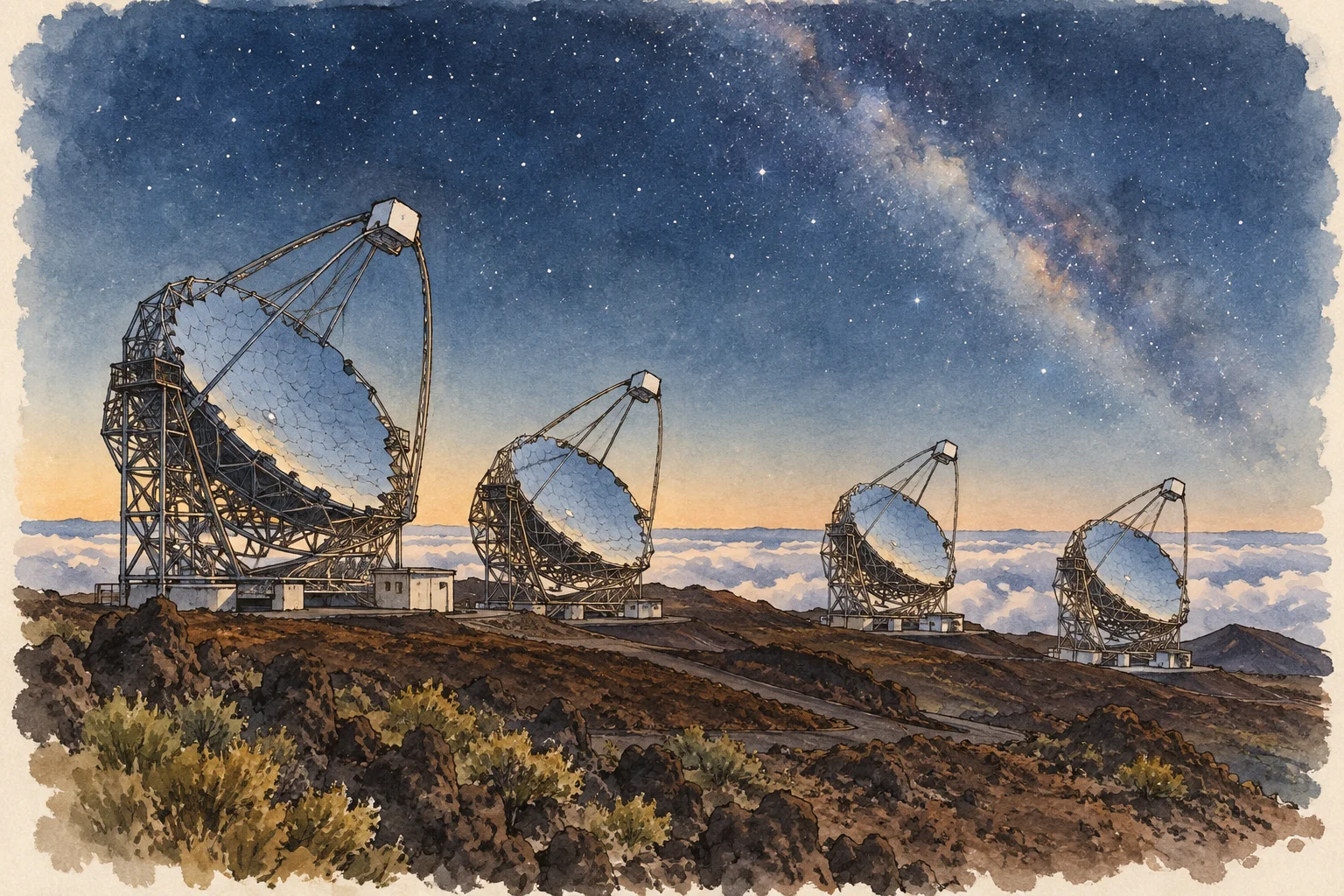
The installation of four giant telescopes on La Palma is complete, marking a major step towards studying cosmic explosions in greater detail. The set was inaugurated on 15 October at the Roque de los Muchachos Observatory, following a construction effort involving 11 countries.
Each telescope has a mirror 23 metres across, yet is designed to turn towards a new target in about 20 seconds. That speed will help researchers respond to alerts from other observatories and catch short-lived events before their signals fade.
The instruments will study gamma rays, an extremely energetic form of radiation produced by phenomena including stellar explosions and matter falling into black holes. These rays do not reach the ground directly. Instead, the telescopes capture faint, fleeting flashes created when gamma rays interact with Earth’s atmosphere. Comparing views from all four instruments will help scientists determine where the radiation came from and how much energy it carried.
The first telescope was inaugurated in 2018 and has already carried out scientific tests. With the other three installed, the quartet will undergo further testing and integration into the wider Cherenkov Telescope Array Observatory. That planned network will have sites on La Palma and in Chile, allowing researchers to investigate gamma-ray sources from both hemispheres.
Sources
- infobaeCientíficos sitúan La Palma a la cabeza de la astronomía gamma tras los nuevos telescopios
- eldiario.esEl Observatorio de El Roque inicia "una nueva era" en la exploración del universo extremo con los cuatro telescopios LST
- RTVE.esLa Palma inaugura los cuatro grandes telescopios Cherenkov que estudiarán los fenómenos más energéticos del universo
- Der TagesspiegelAstronomie: Was vier Riesenspiegel auf der Insel La Palma suchen