science and discovery
Clues point to a planet born after its star died
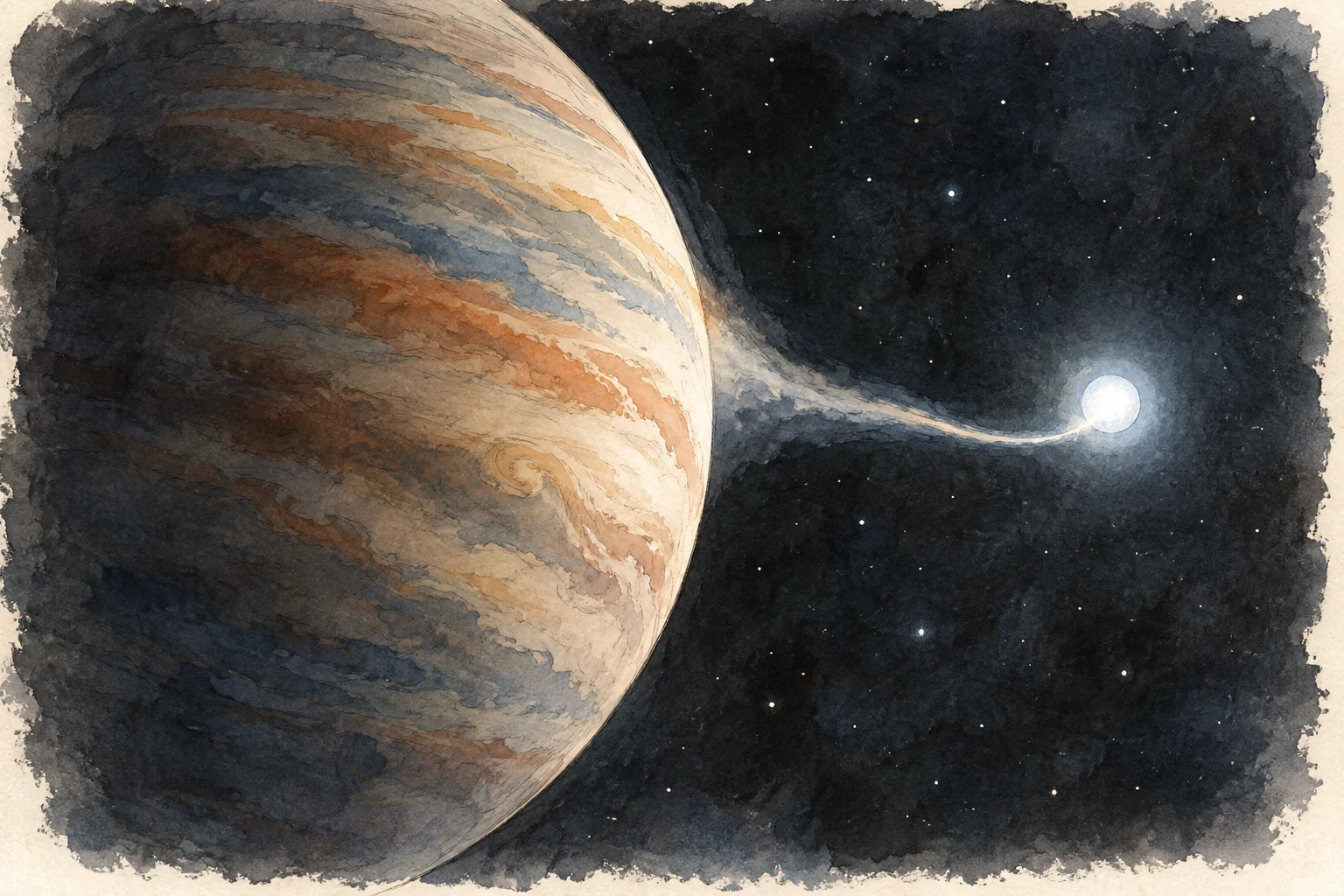
Astronomers have detected chemical and light signals that could point to a planet formed after its star died. If confirmed, it would be the first known “second-generation” planet around a white dwarf, the dense, hot core left behind by a sunlike star.
The study, published in Nature Astronomy, focuses on HS 0209+0832, about 270 light-years away. Observations revealed unusual amounts of heavy elements on its surface, including niobium, never previously identified in a white dwarf. The chemical mix resembles material produced by stars near the end of their lives.
NASA’s TESS satellite also recorded a faint change in the star’s brightness repeating every 4.4 days, consistent with a giant planet orbiting nearby. Researchers propose that material shed by the dying star gathered into a disc and formed a new world. In this scenario, the white dwarf’s intense radiation strips gas from the planet. Some of that material then falls onto the star, explaining its unusual surface chemistry.
Neither the planet’s existence nor its origin is confirmed. The team plans further observations with Hubble and NASA’s Chandra X-ray Observatory, and has requested time on the James Webb Space Telescope to gather more evidence.