science and discovery
New frog species in Ecuador has two strikingly different looks
Scientists have identified a new species of tiny poisonous frog in southern Ecuador, resolving a puzzle posed by two populations with remarkably different colours.
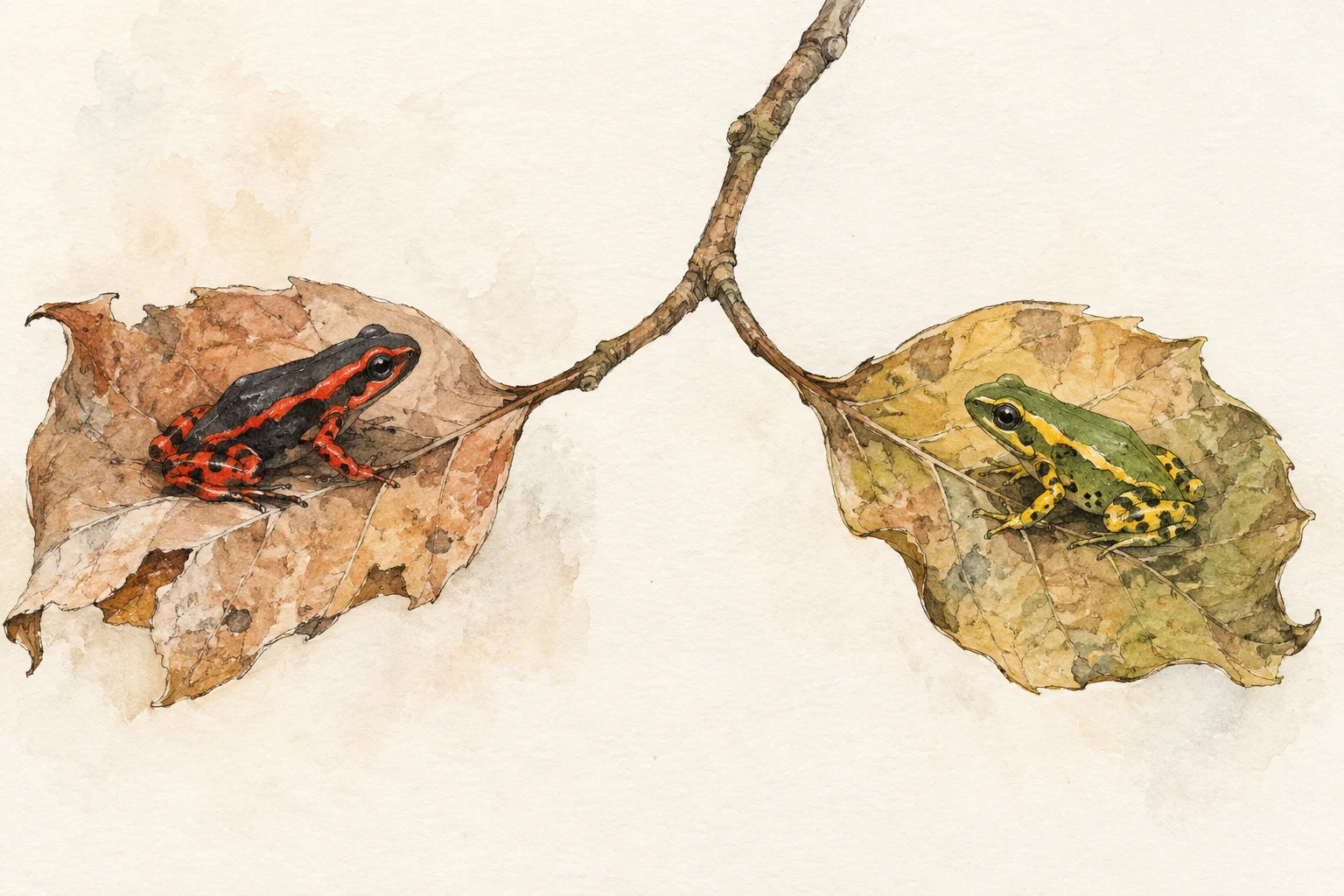
Named Excidobates perplexus, the frog measures just 15.1 to 18.3 millimetres long, less than two centimetres. Frogs found in the Paute River basin have scarlet markings on black backs. The known specimen from the Cordillera del Cóndor, meanwhile, has a green back with yellow markings. The two populations live about 65 kilometres apart.
Their contrasting appearance initially led researchers to suspect they were separate species. But comparisons of their physical features, DNA, calls and habitats showed that both populations belong to one species. The name perplexus, meaning perplexing or confusing, reflects that unexpected finding.
The study, published in Zootaxa, adds a fourth known species to a small group of poison frogs whose diversity remains incompletely understood. The newly described frog inhabits well-preserved forests, where males call from hiding places beneath logs, among fallen leaves or near tree roots.
The discovery also brings urgent conservation concerns into focus. Researchers warn of threats from mining, hydroelectric development and illegal wildlife trading. The Cóndor population lies within large mining concessions. The study’s authors recommend listing the species as Critically Endangered on the International Union for Conservation of Nature’s Red List, rather than reporting an existing classification.