Science and discovery
Deep Earth movements may explain a billion years of missing rock
Australian researchers have used supercomputer simulations to develop a possible explanation for a 150-year-old geological puzzle: why some rock formations are missing more than a billion years of Earth’s history.
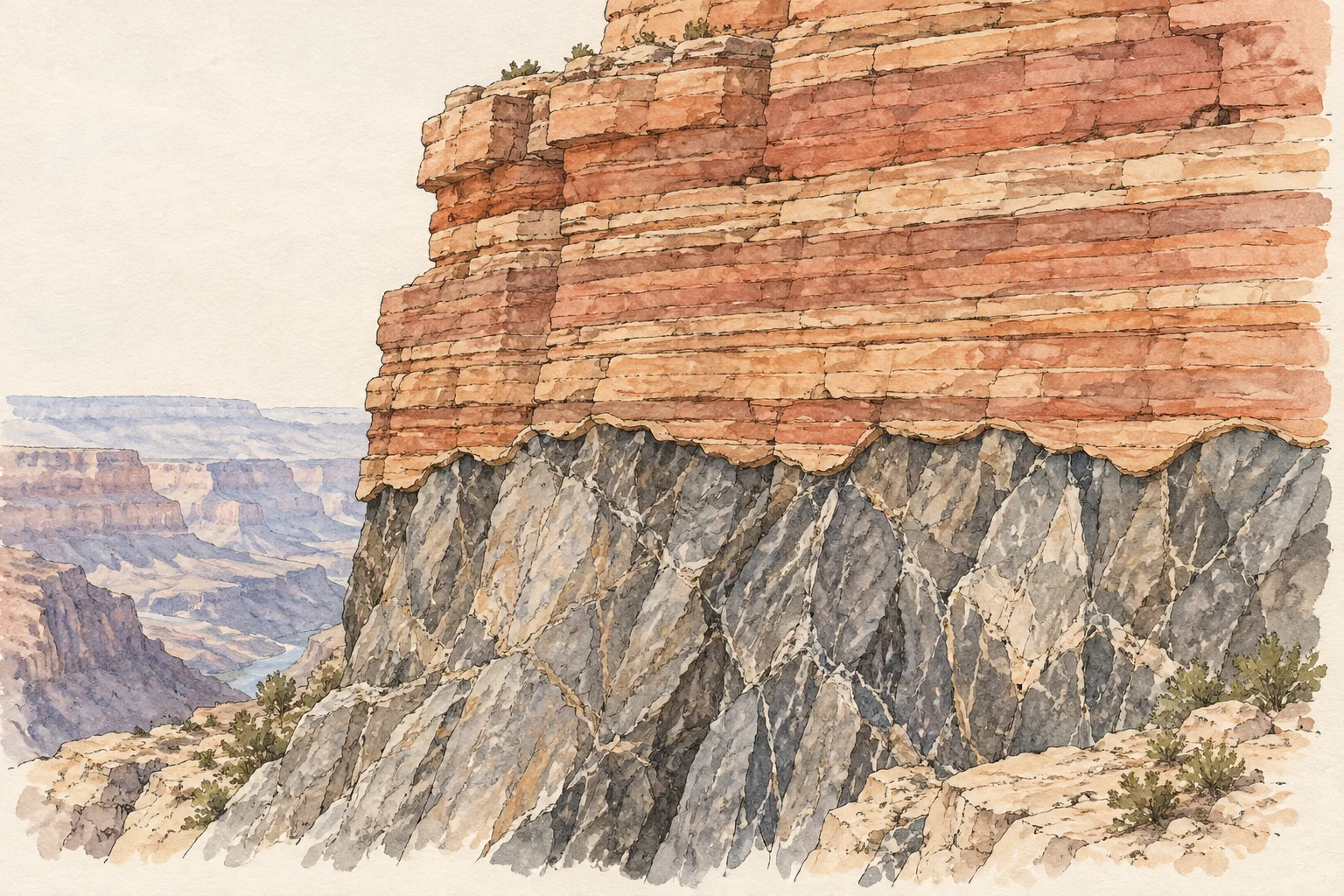
Known as the Great Unconformity, the gap is striking in the Grand Canyon, where younger sedimentary layers sit directly on much older crystalline rock. Similar gaps occur across much of North America and parts of northern Europe and northern China, but are not equally evident worldwide.
In a study published in Nature, University of Wollongong researchers Santosh Dhungana and Nicolas Flament used Australia’s Gadi supercomputer to model movements in Earth’s mantle, the thick layer of hot, slowly moving solid rock beneath the crust.
Their simulations suggest that these deep movements lifted ancient continental blocks for hundreds of millions of years. That uplift overlapped with Snowball Earth, a period of extreme glaciation roughly 720 million to 635 million years ago.
Moving ice could then have ground away rock across the raised land. When the continents later sank, fresh sediment could cover the worn surface, preserving the gap in the geological record.
The models also found different patterns of rising and sinking in Australia and South America, where there is little evidence of the Great Unconformity. That geographical match strengthens the proposed explanation, without making it a final answer.