Nature thriving
Rescue records confirm Bangka slow loris is still alive
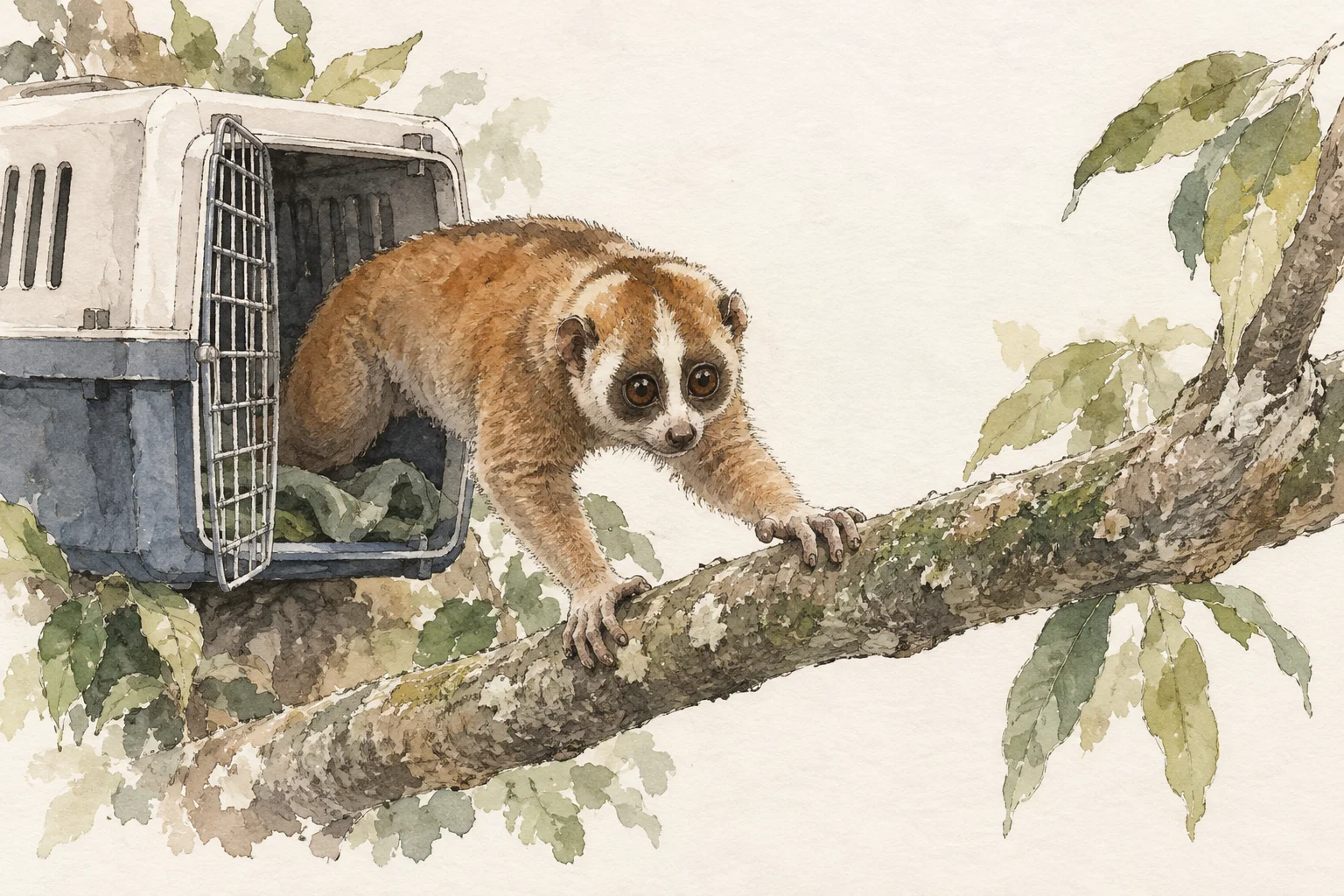
More than 90 Bangka slow lorises have been documented on their Indonesian island home, confirming that a primate feared extinct survives in several areas. Of the rescued animals, 86 were returned to suitable natural habitats.
The evidence comes from a study published in the journal Spixiana, drawing on Alobi Wildlife Rescue Center records from 2015 to 2025. Residents across Bangka, off Sumatra, contacted the centre after finding lorises in gardens, near homes, on power lines and along roads. Their knowledge and the centre’s work helped fill a long gap in scientific understanding.
The small, night-active primate, with reddish-brown fur and large eyes, had been absent from scientific literature since the 1930s. In 2020, the International Union for Conservation of Nature classified it as critically endangered and possibly extinct. Yet it had not disappeared from the lives of people sharing its island.
Confirmation of its survival is not evidence that the species is recovering. Tin mining and clearing for oil palm plantations have reduced its forest habitat, while some rescued animals suffered severe injuries from electrical wires. Researchers say the priorities are to protect Bangka’s remaining natural forests and conduct systematic surveys to establish where the lorises live and how many remain. The rescue records provide a valuable starting point.