Science and discovery
Supercomputer simulation traces the rise of the first galaxies
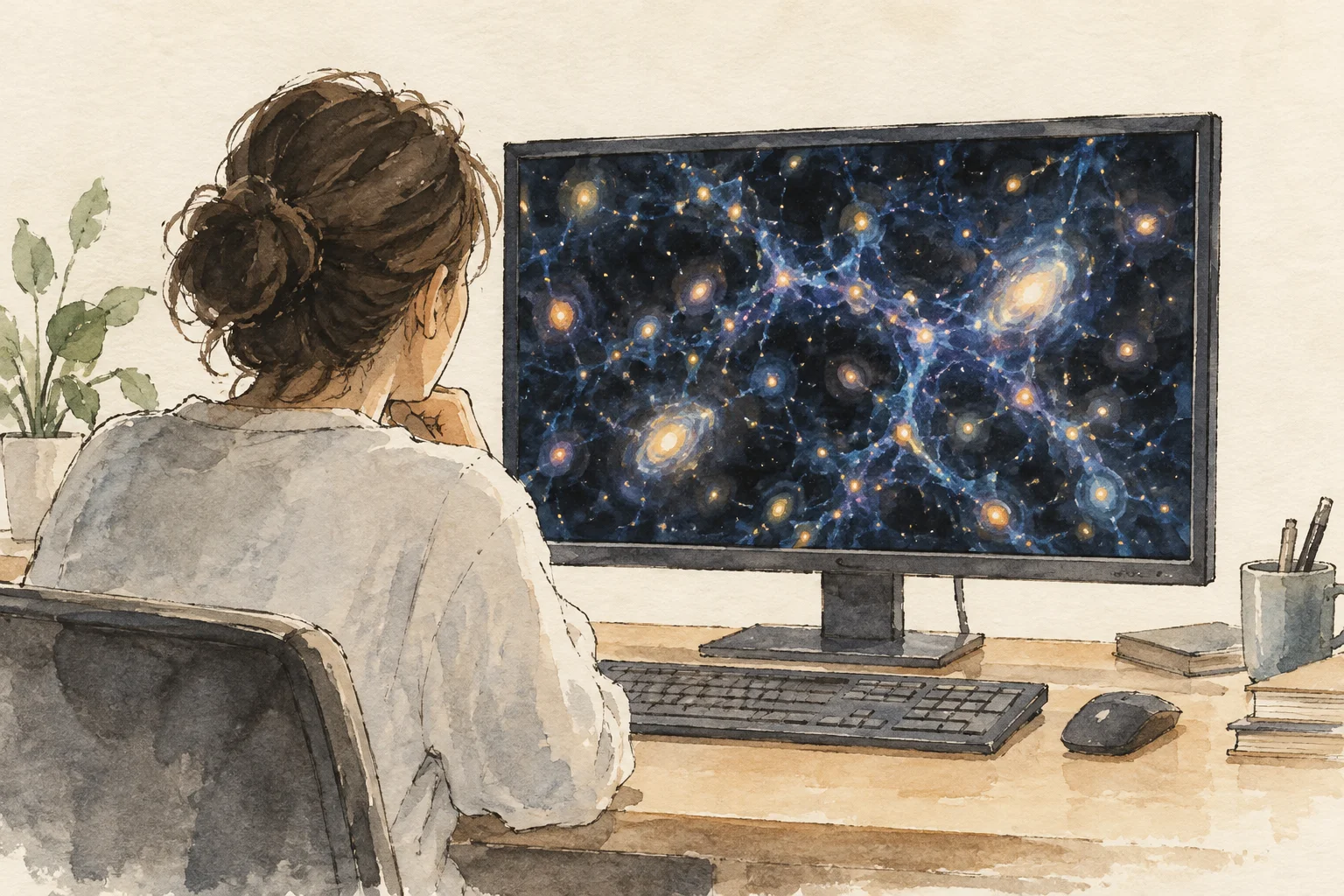
Scientists have built a computer simulation that follows about 2 billion years of the young universe, tracing how the first stars and galaxies formed and changed the gas around them. Called Lumina, it combines a vast cosmic view with enough detail to study individual developing galaxies.
Created by researchers at MIT, Harvard, the Smithsonian and partner institutions, the model ran on the Frontier supercomputer at Oak Ridge National Laboratory in Tennessee, United States. It tracks dark matter, gas, stars and radiation across a volume about 100 times larger than earlier comparable simulations.
A key achievement is modelling changes in both hydrogen and helium as radiation strips electrons from them, a process known as reionization. In the simulation, light from early stars and galaxies drives the hydrogen transformation, while more energetic radiation associated with actively feeding supermassive black holes drives the helium changes.
These are predictions, not direct observations. The team is making Lumina available to other scientists so they can compare its simulated galaxies with observations from telescopes such as James Webb and future surveys. Those comparisons can test explanations of how the earliest cosmic structures formed and reveal where existing theories need work.