Human achievement
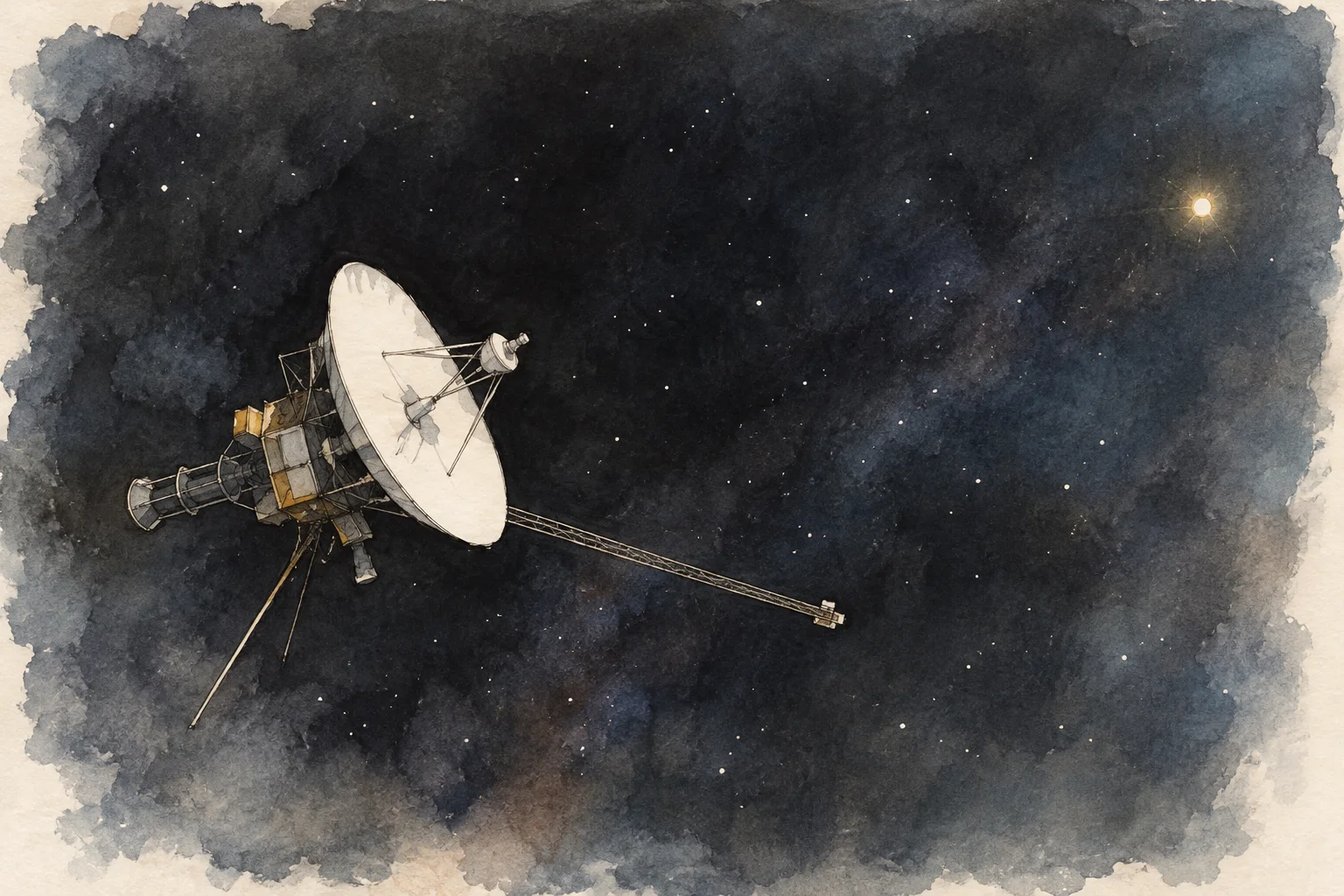
Voyager 1 reaches one light-day from Earth after 49 years
On November 18, NASA’s Voyager 1 became the first human-made object to reach one light-day from Earth. Confirmation came the next day, when a radio antenna in Madrid picked up the probe’s signal. The signal had taken 24 hours to cross about 26 billion kilometres. Engineers sending a command now have to wait at least two days for a reply.
Launched in 1977, Voyager 1 flew past Jupiter, where its cameras revealed a previously unknown ring, and then past Saturn. In 2012, it crossed the boundary of the vast bubble of particles and magnetic fields that the Sun creates. Its twin, Voyager 2, crossed that boundary in 2018.
One challenge for engineers now is keeping Voyager 1 warm enough to work as its power supply dwindles. In September, they switched on three lower-power devices at the same time as they shut off the three those devices replaced. The swap kept heat where it was needed while saving power for the probe’s two remaining science instruments. Although Voyager 1 had stopped transmitting science and engineering data by the time it reached the milestone, it remained in radio contact. Project manager Suzanne Dodd said she expected those transmissions to resume.
Sources
- Al Jazeera OnlineNASA's Voyager 1 hits record one light-day distance, 50 years after launch
- science.nasa.govVoyager 1: What Is a Light-Day - NASA Science
- ddindia.co.inNASA probe achieves light-day milestone and is 'not done yet' - DD India
- www.jpl.nasa.govNASA’s Voyager 1 Conserves Power, Resolves Brief Communications Pause