Technology and innovation
A little disorder helps engineered materials withstand impacts
Engineers have 3D-printed materials that withstood impacts and compression better than conventional patterned designs in laboratory tests, by replacing regular internal grids with networks inspired by nature.
Researchers at MIT and Northeastern University drew on patterns found in leaf veins and dragonfly wings. Their study, published in Nature, explores metamaterials: engineered materials whose performance depends partly on the arrangement of tiny structures inside them.
Usually, those structures repeat like a honeycomb. That consistency can become a weakness: when one section buckles, nearby sections may fail in the same way. The new designs instead use interconnected beams of different lengths and thicknesses, helping spread damage and absorb energy while reducing the risk of the whole structure failing.
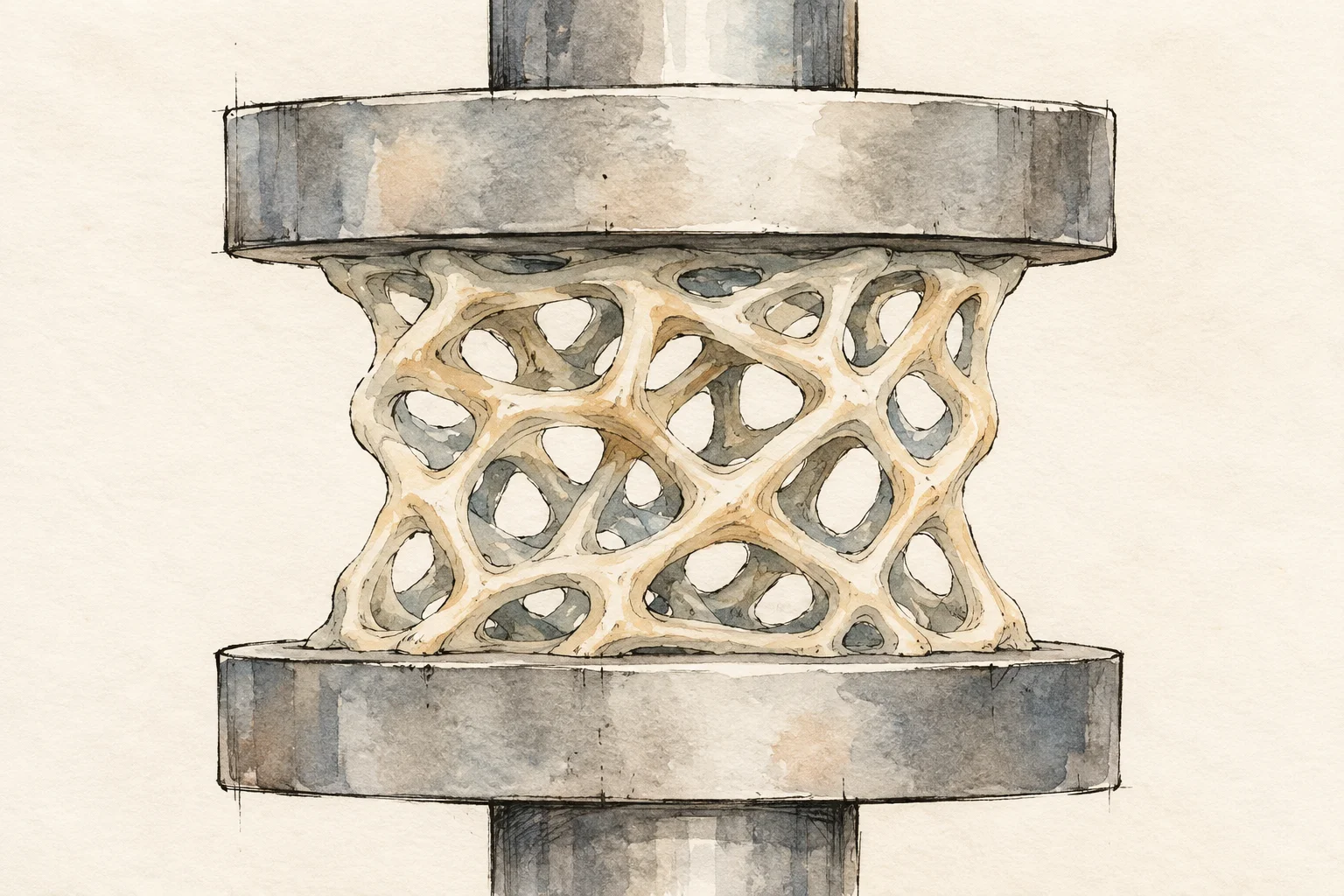
A computer algorithm generated the networks, which the researchers turned into polymer samples about the size of a credit card using 3D printing. Tests included dropping a heavy weight onto them and squeezing them with increasing force. Adjusting the network design also allowed the team to tune how stiff the material was.
In another demonstration, a design inspired by a pomelo’s thick rind cushioned and protected a fragile object at its centre.
The evidence comes from test samples, but the approach could help designers develop better helmets, protective packaging and other impact-absorbing materials.