Science and discovery
Euclid reveals 900 million galaxies to help map the universe
The European Space Agency’s Euclid telescope has released data on more than 900 million galaxies, giving researchers a vast new resource for building a detailed three-dimensional map of the universe. The release draws on about 13 months of observations and covers just 14% of the sky area the mission plans to survey.
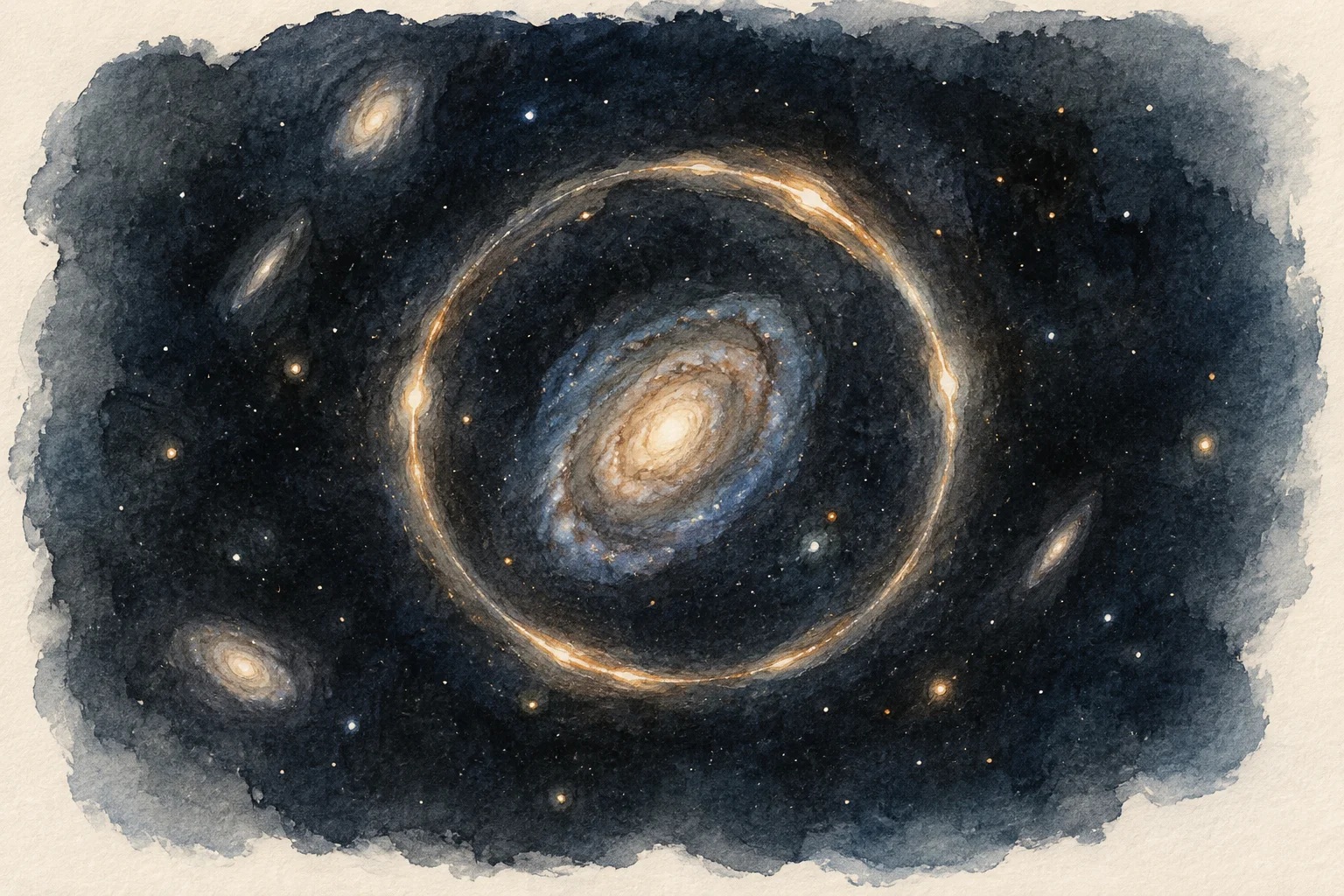
Among its most promising finds are around 15,000 potential examples of strong gravitational lensing. This happens when a foreground galaxy’s gravity bends and magnifies light from a more distant galaxy, sometimes producing bright arcs or rings.
Because invisible dark matter adds to a galaxy’s gravitational pull, these patterns can help scientists work out how that matter is distributed. Comparing the results with competing theories could narrow down what dark matter is, though no breakthrough is guaranteed.
Machine-learning tools and thousands of volunteers helped identify the lens candidates. Found using the same telescope and methods, they offer researchers a way to study these rare systems in large groups rather than as isolated discoveries.
Euclid combines detailed images with coverage of huge areas of sky. Its wider goal is to investigate dark matter and dark energy while tracing 10 billion years of cosmic history. Further data, including measurements of subtler distortions in distant galaxies, are expected in mid-2027.