Science and discovery
Tiny fingerprints reveal children’s role in ancient clay art
Researchers have found rare evidence that children helped shape and decorate clay figures in some of the Levant’s earliest village communities. The objects date back as far as 15,000 years, placing this creative tradition thousands of years before farming became established in the region.
The study, published in PLOS One, identified 15 recognizable figures and 139 fragments thought to belong to others at three archaeological sites. Their makers belonged to the Natufian culture, hunter-gatherers who lived in permanent or semi-permanent settlements. Birds dominated the collection, alongside two human figures, a gazelle and another mammal.
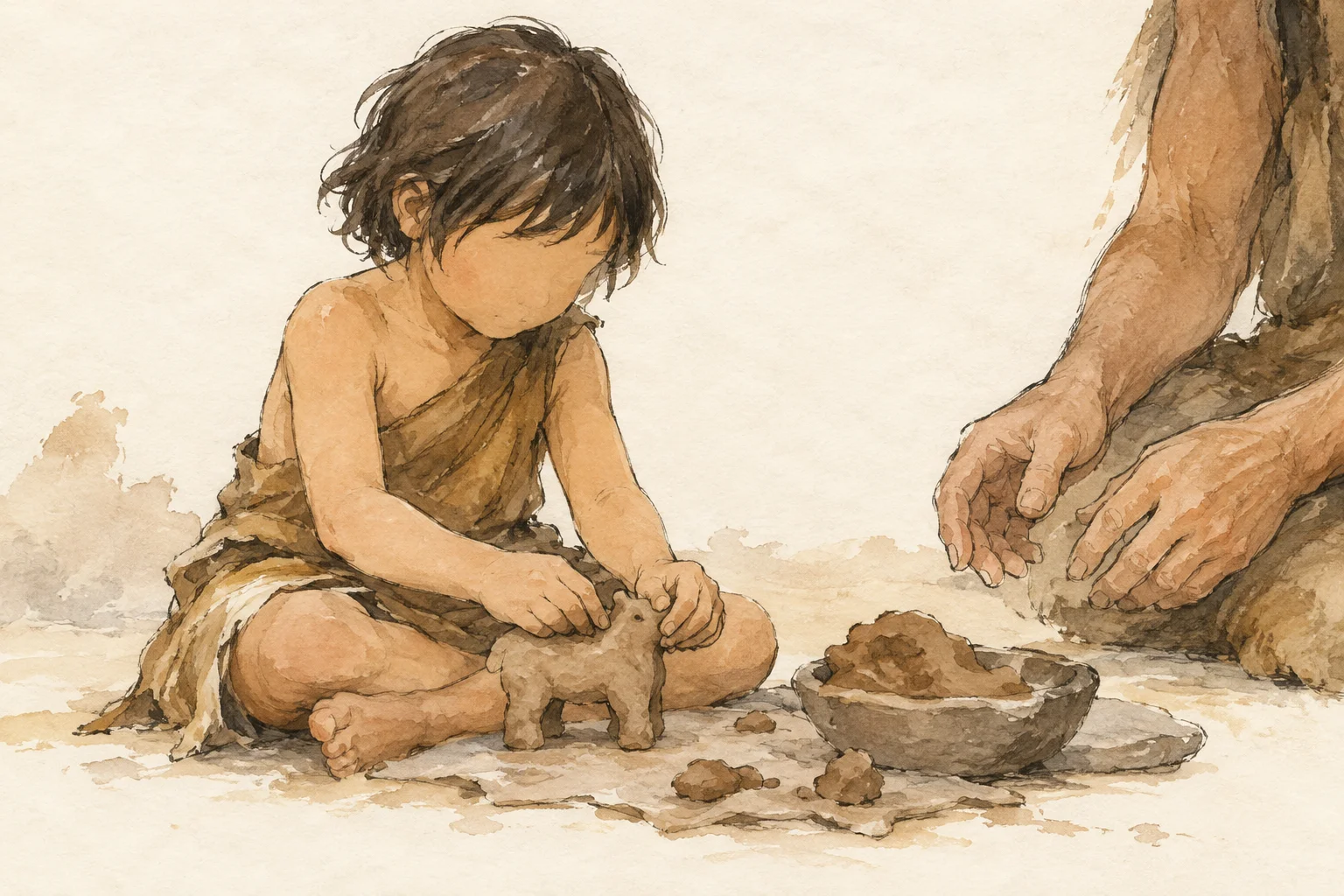
By examining the spacing between fingerprint ridges preserved in the clay, researchers found evidence that some makers were children likely younger than 10. On one human-shaped figure, overlapping adult and child fingerprints suggest the object passed between them while it was being made. That could preserve a moment of hands-on teaching, although it cannot establish exactly what happened.
The figures’ purpose also remains uncertain. Some birds have tilted heads that may depict duck courtship displays, raising the possibility that the objects helped people share knowledge about wildlife or tell stories.
Together, the finds reveal an established clay-art tradition before agriculture and give researchers an unusually direct glimpse of children participating in the creative life of early villages.