Science and discovery
First black hole image passes an independent test
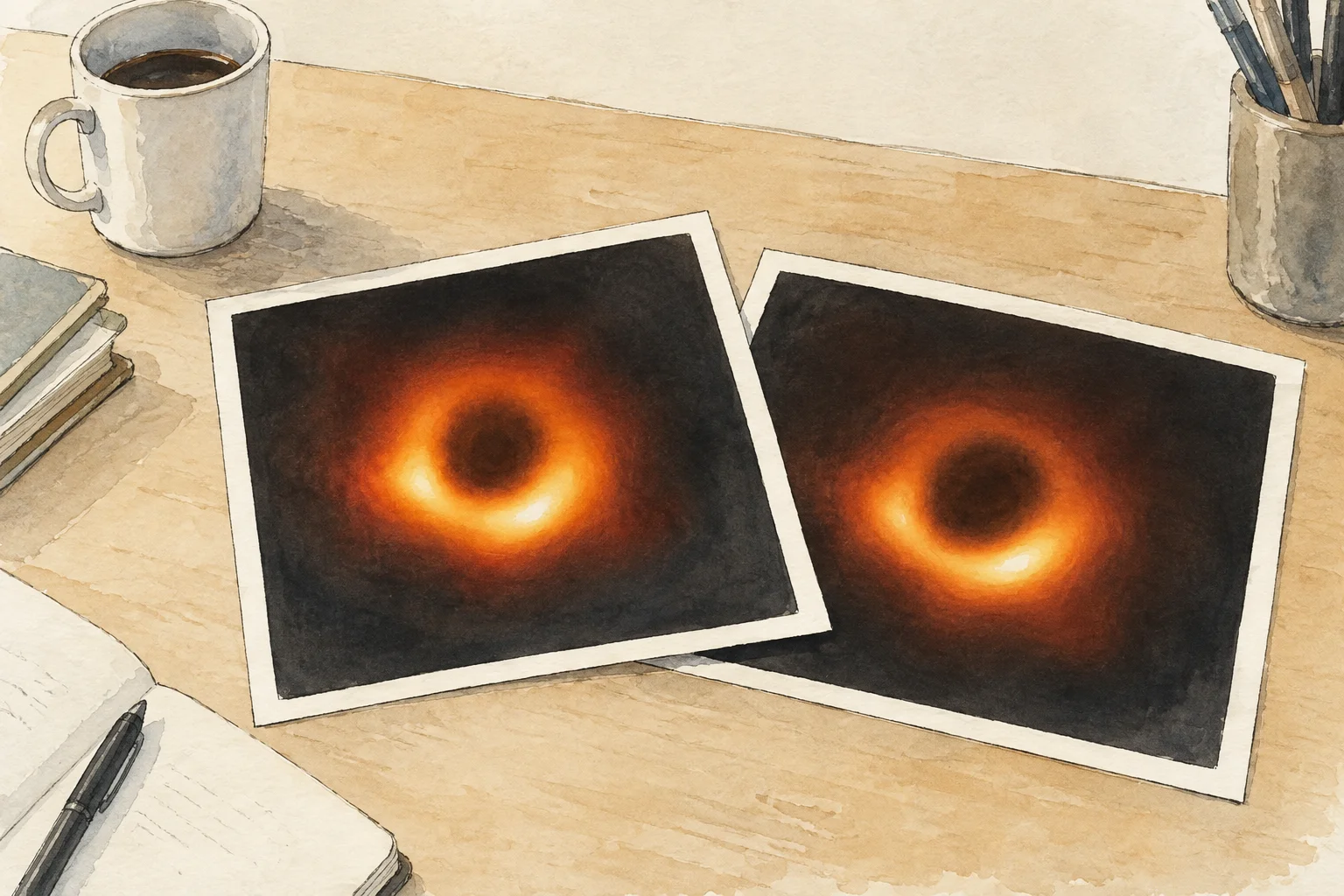
The glowing ring in the first image of a black hole’s shadow has held up to an independent test. Researchers at CSIRO, Australia’s national science agency, reanalysed the original telescope data using new methods and recovered the same overall structure.
Released in 2019, the Event Horizon Telescope image showed a bright ring surrounding a dark centre in galaxy M87, about 55 million light-years away. The global network of radio telescopes acts like an Earth-sized instrument, but gaps in its measurements make reconstructing an image difficult. Some researchers questioned whether the ring came from the image-processing methods rather than the object itself.
The CSIRO team tackled that concern in two ways. It combined measurements from three telescopes at a time, rather than the usual pairs, to reduce errors caused by instruments and Earth’s atmosphere. It also developed a machine-learning imaging tool trained on everyday pictures, including cats, dogs and cars, rather than black holes, to reduce bias towards an expected shape. A separate method using traditional statistics supported the ring structure too.
The findings, published in Nature, agree with the original image’s ring diameter and overall orientation. Some finer details, including the ring’s width and how brightness varies around it, differ. The result strengthens the evidence that the ring is a genuine feature around the black hole, while leaving room to refine the picture.
Sources
- NatureIconic first image of black hole holds up to scrutiny
- The ConversationIs this iconic black hole image accurate? New study delivers an independent result
- Perth NowPerth scientists confirm famous black hole image using AI
- New ScientistRe-analysis of black hole data proves iconic ring shape really is there | New Scientist
- www.csiro.auNew CSIRO technique confirms iconic black hole image