science and discovery
A tiny chemical feature helps RNA gather without cells
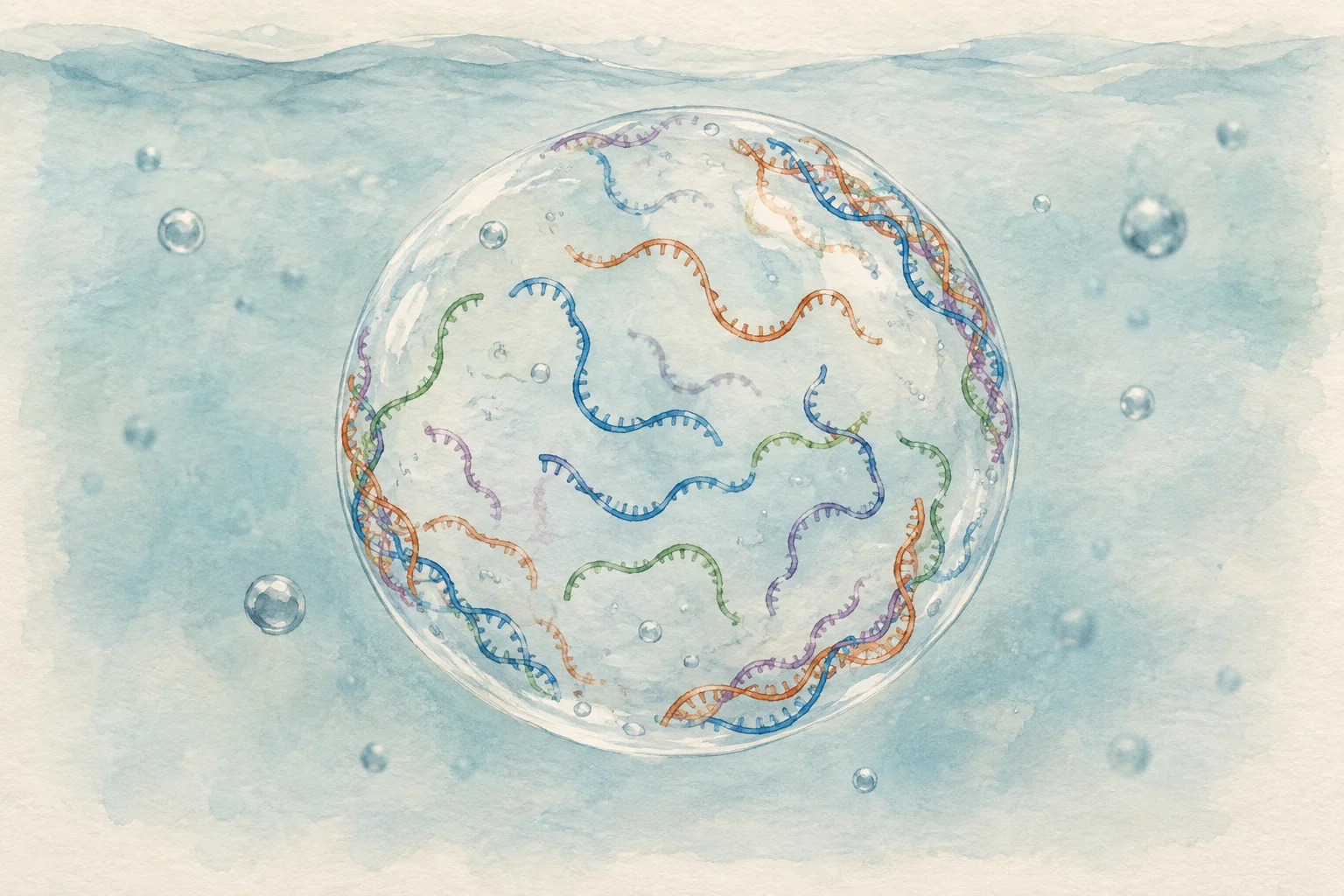
Scientists have identified a tiny chemical feature that helps RNA gather into droplets without a surrounding membrane, offering a new clue to how molecules could have organised themselves before the first cells existed.
In a study led by the University at Buffalo with Princeton University, researchers compared RNA with single-stranded DNA carrying essentially the same genetic sequences. Under the laboratory conditions, RNA began forming droplets at temperatures about 10°C lower than DNA. It was also more likely to form connected networks that made the droplets gel-like.
The key appears to be an oxygen-containing group attached to RNA’s sugar units that DNA lacks. Microscopy, X-ray measurements and computer simulations suggest this feature changes how RNA interacts with water and magnesium, helping strands come together as temperatures rise. Chemically modifying the group reduced RNA’s tendency to form droplets.
The finding matters because RNA can both carry genetic information and help drive chemical reactions. One influential hypothesis places it near the beginning of life, but explaining how fragile RNA could gather and survive without cells remains a challenge.
The study, published in Nature Communications, does not establish that these droplets helped create life. It does give researchers a clearer mechanism to investigate, including whether gel-like RNA compartments could have offered protection in harsh conditions.