science and discovery
Bat family tree points to European origins 65 million years ago
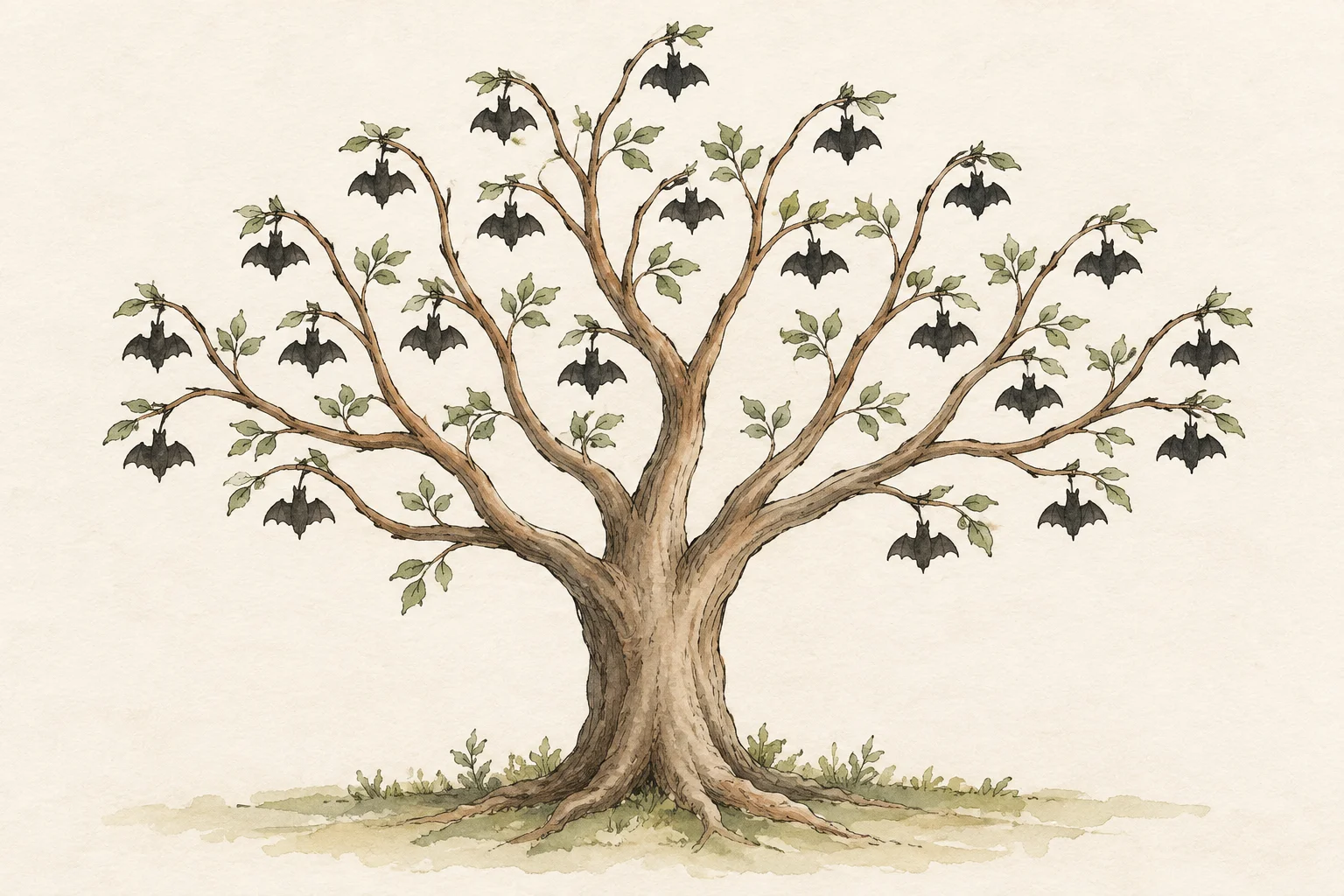
Scientists have built a new family tree covering all 21 living bat families, offering a clearer picture of where these unusual mammals began. Their study suggests bats first evolved in Europe around 65 million years ago.
Published in Nature, the international study combined genetic data from 103 living bat species with evidence from 44 fossil bats. It also found that echolocation, the ability to navigate using sound echoes, developed early in bat evolution. Sparse fossils and millions of years of movement across the planet had previously made their origins difficult to trace.
The research is part of Bat1K, a project aiming to sequence the genomes, or complete sets of DNA, of all roughly 1,500 living bat species. The new genetic data is publicly available, giving other scientists a valuable resource for investigating bats’ exceptional longevity for their size and resistance to some viral diseases.
Those investigations could eventually inform human health research, although bat-inspired treatments are not expected in the immediate future. The data could also support conservation: researchers hope it will help identify bat families with lower genetic diversity that may warrant priority protection. It could also help scientists explore susceptibility to white-nose syndrome, a fungal disease that has killed millions of bats in North America.