science and discovery
Watch, then practise: How young orangutans learn to eat
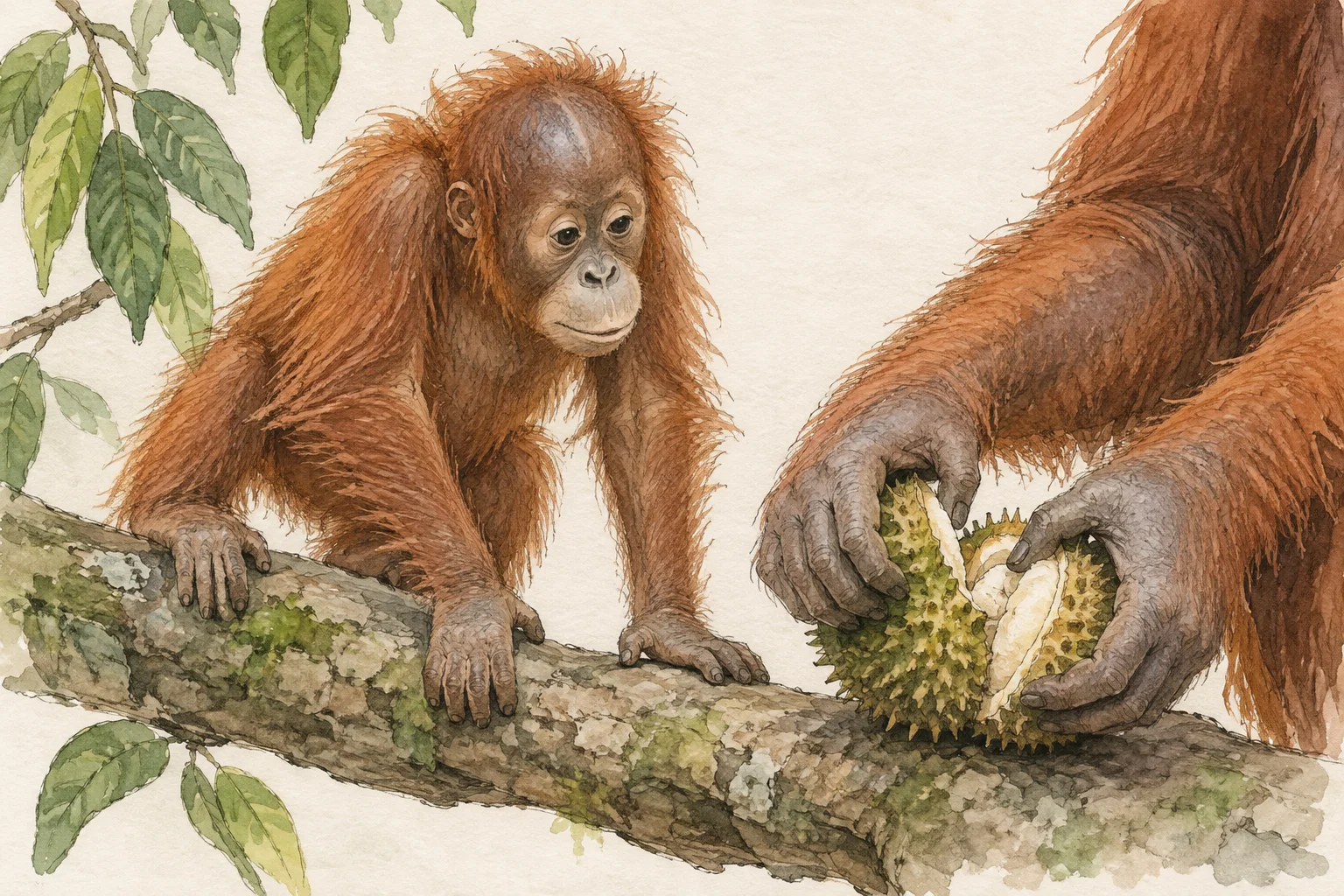
Young orangutans can partly compensate for doing little independent exploration by watching other apes, helping them learn to eat a wider range of foods, researchers have found.
The study, published in Science, drew on nearly 7,000 records of learning among 21 wild young Sumatran orangutans at Suaq Balimbing in Indonesia. Researchers also used feeding observations from 13 of the youngsters to estimate the range of foods they had learned to eat by independence, at around eight and a half years old.
Learning to feed themselves is a demanding task. Orangutans must work out which foods are safe, where to find them and how to reach edible parts, sometimes hidden inside tough fruit.
The youngsters varied in how often they watched others or explored on their own. Those that frequently did both developed the broadest diets. Close observation of a mother or another orangutan was also followed by increased exploration for up to about two and a half hours, suggesting that watching encouraged practice.
The findings reveal how shared knowledge and individual effort work together over years to build feeding skills. They do not yet show whether broader diets improve survival or reproduction, questions the team plans to investigate.