Science and discovery
Farmer’s find leads to remains of a giant Ramses II statue
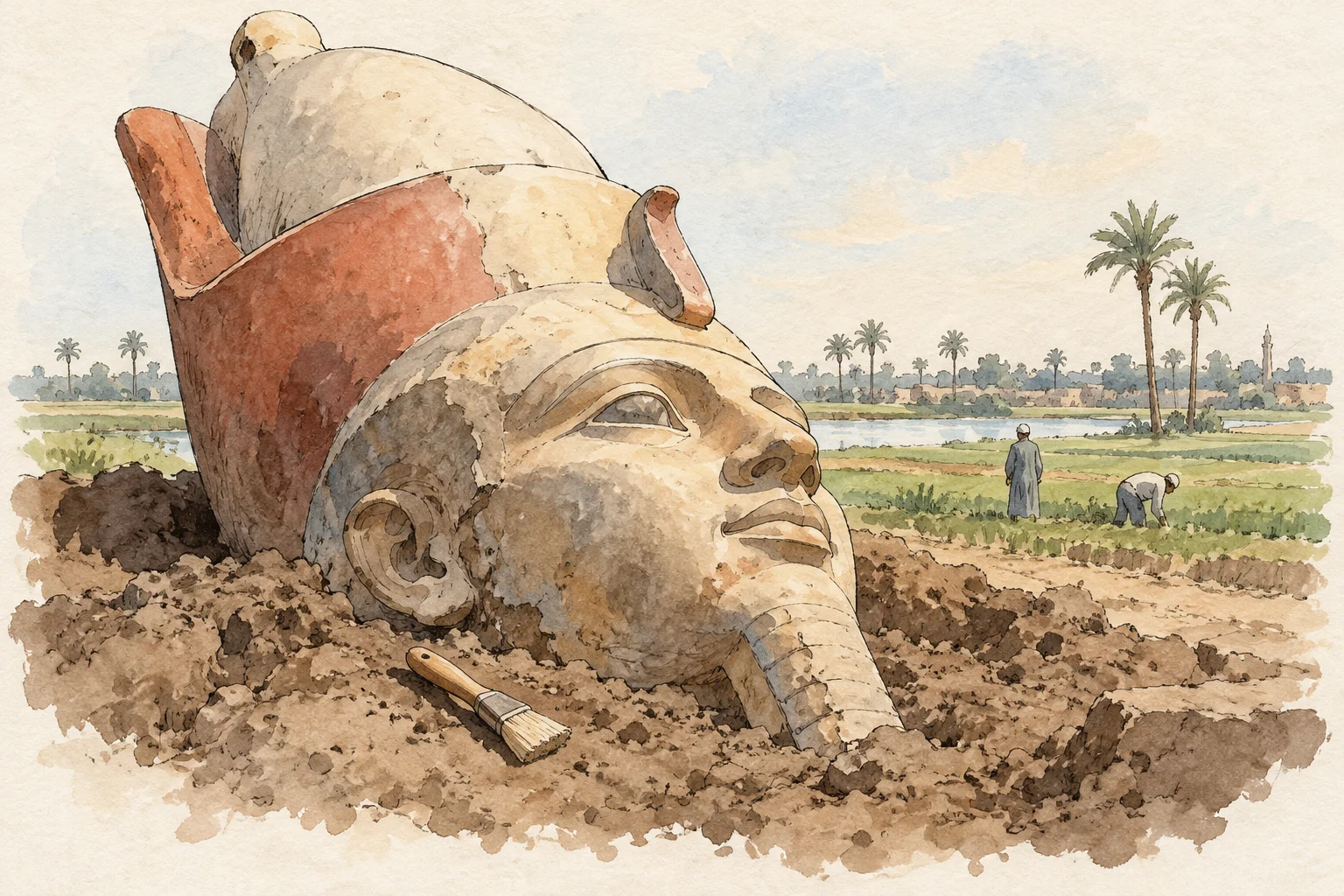
Archaeologists in Egypt’s Nile Delta have uncovered the head of a giant statue of Ramses II after a farmer reported an unusual stone on his land. The 1.6-metre-high head suggests the complete monument, including its base, once stood about 8.5 metres tall.
Farmer Khaled al-Shahat alerted the authorities after spotting the stone in Behbeit al Hegara, north of Cairo. It proved to be a pink granite block bearing two royal titles of Ramses II: King of Upper and Lower Egypt, and Son of Ra. Egypt’s tourism and antiquities minister later visited the village to honour al-Shahat for reporting the discovery.
The newly uncovered head shows the king wearing the double crown, a symbol of the unification of Upper and Lower Egypt. Archaeologists also found part of the statue’s rear supporting pillar and remains of a second royal statue, believed to depict the same ruler. Its facial features are well preserved, according to Egypt’s antiquities ministry.
Ramses II ruled Egypt from 1279 to 1213 BCE. The village is already known for the remains of a monumental temple dedicated to the goddess Isis. Excavations and studies are continuing to establish how the newly discovered pieces relate to one another and to the site’s architectural history.