science and discovery
Amateur Find Leads to Recovery of 934 Roman Silver Coins
A hoard of 934 Roman silver coins has been recovered from a field near Wesseling, Germany, after an amateur detectorist called in archaeologists. Presented at Bonn’s LVR State Museum on 22 September, it is Germany’s largest known coin hoard from Emperor Hadrian’s era, according to the regional archaeology office.
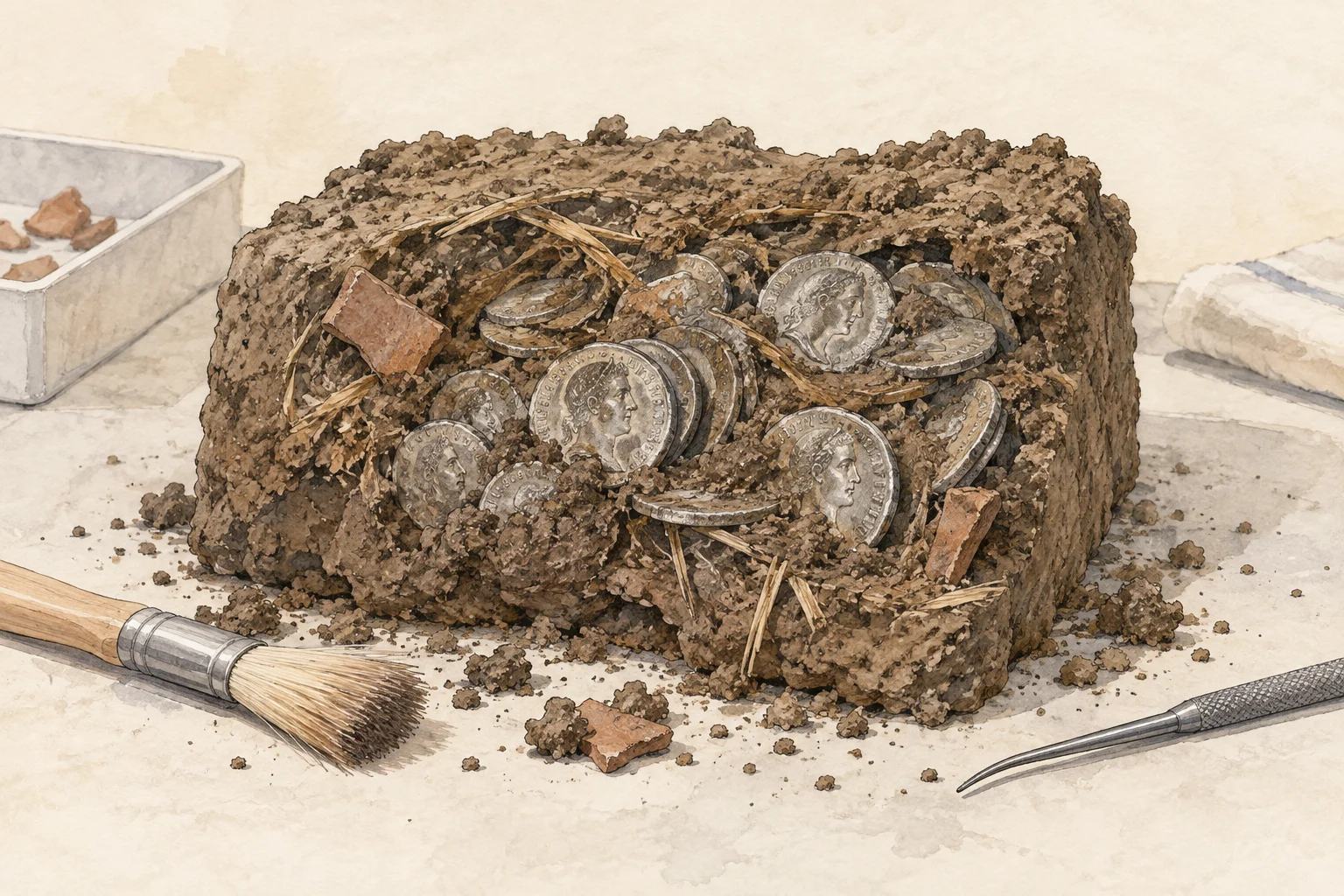
Oliver Riedl found the first coins last year. Even after he had uncovered 15, his detector kept sounding. Rather than dig further, the licensed detectorist contacted specialists, who recovered the hoard in a block of soil for careful examination.
That decision preserved more than the coins. Pottery fragments and traces of straw suggest they were buried in a straw-lined pot. Researchers believe someone deliberately hid the hoard between about AD 125 and 150, perhaps for safekeeping. Who owned it, and why it was never retrieved, remain unknown.
Most of the coins were minted in the first century AD, but the oldest dates to 148 BC. It was already more than 270 years old when buried, yet was still valid currency.
The sum was substantial: a Roman legionary would have needed to save roughly six years of the pay remaining after deductions for food and equipment to accumulate it.