science and discovery
Half a gram of Bennu dust points to its ancient birthplace
Researchers at ETH Zurich have used half a gram of asteroid Bennu material to identify a likely birthplace for its parent body: a zone in the young Solar System where water vapour froze into ice.
The sample came from material brought to Earth by NASA’s OSIRIS-REx mission in 2023. The team measured forms of iron, titanium and chromium called isotopes, which differ slightly in mass and together provide a chemical fingerprint. Bennu’s fingerprint closely resembles those of asteroid Ryugu and a rare group of primitive, carbon-rich meteorites, suggesting they formed from the same reservoir of dust.
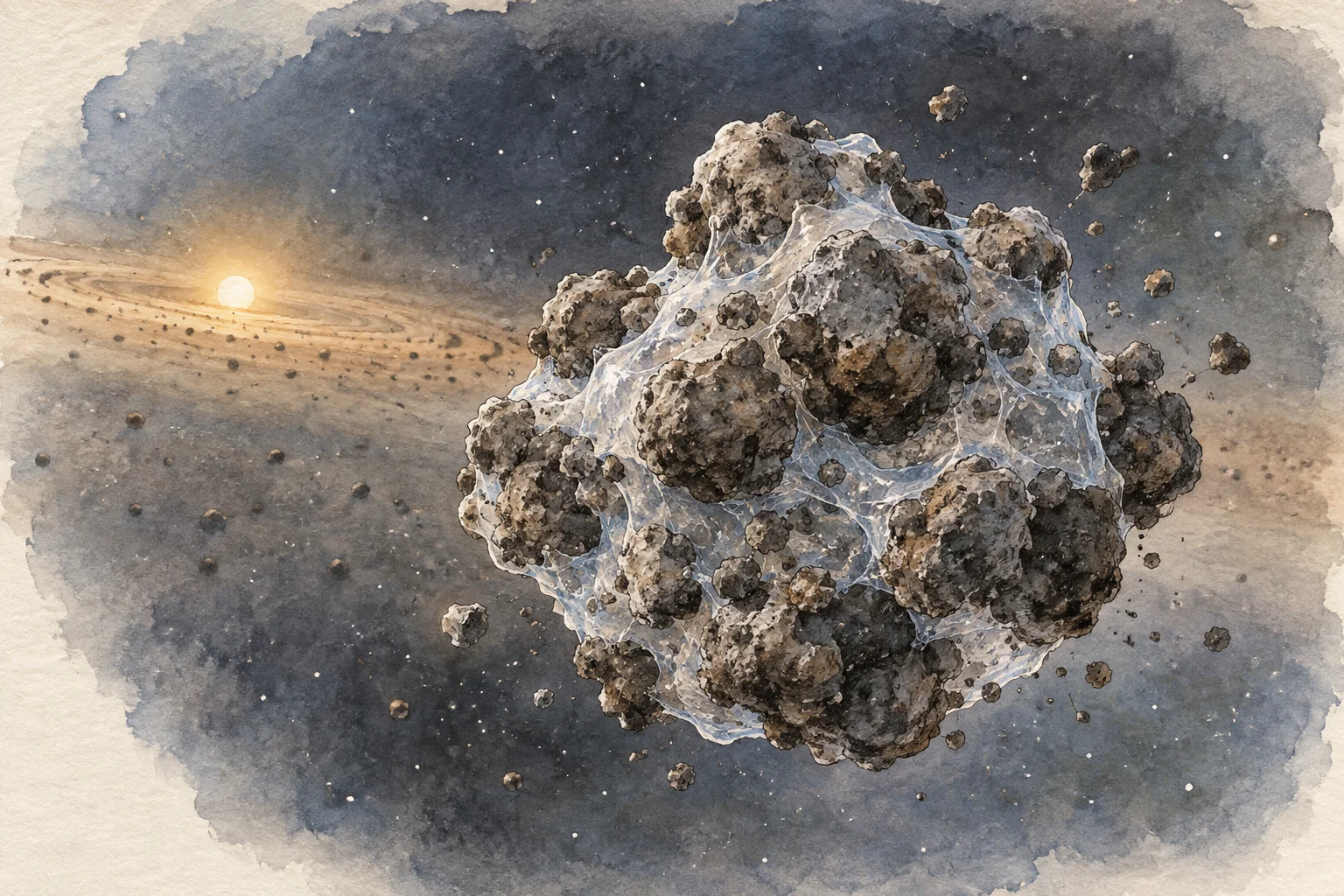
Published in Science Advances, the findings challenge the idea that Bennu’s parent body formed relatively late and far out in the Solar System. Instead, the researchers propose that it emerged around 4.5 billion years ago near the water-ice boundary, where dust from inner and outer regions mixed and ice helped bind the grains together.
Their proposed explanation gives the growing Jupiter a role: it could have blocked coarser material while allowing fine dust to pass and mix. How strongly Jupiter influenced the process remains uncertain.
The tiny sample offers a window into the raw ingredients of planets. Bennu’s material, rich in water and organic compounds, may also help explain how the young Earth acquired the building blocks of life.