science and discovery
Astronomers measure a planet’s surprising backward orbit
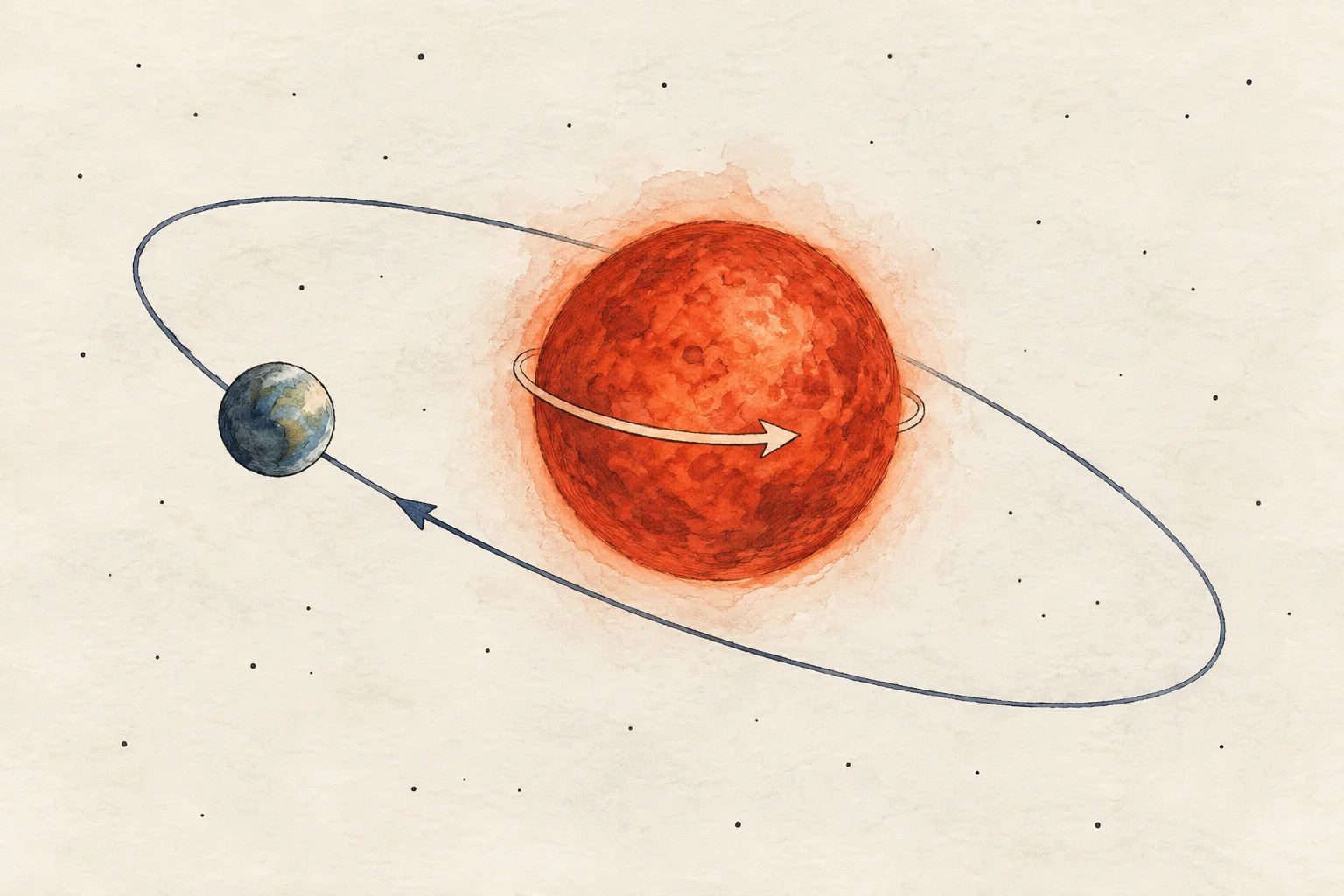
Astronomers have measured a surprising planetary orbit: GJ 3090 b travels around its star in the opposite direction to the star’s rotation. The finding offers a new test for ideas about how planetary systems form.
An international team led by the University of Geneva studied the planet, which circles a red dwarf, a star smaller and cooler than the Sun. First detected by the TESS space telescope, the planet has 2.2 times Earth’s radius and 4.5 times its mass.
The researchers used NIRPS, an instrument that analyses infrared light on a telescope at Chile’s La Silla Observatory, to confirm the planet, measure its mass and determine its unusual orbital orientation. They also detected two other planets in the system. The results were reported in Astronomy & Astrophysics.
Stars and planets form from a shared, spinning cloud of gas and dust, so planets are expected to orbit in the same direction that their star turns. All eight planets in our solar system do so.
What makes this case especially puzzling is that researchers found no evidence of a massive companion, such as another star or giant planet, that could explain the unusual orbit. One possibility is that the star later gathered a second disc of material spinning the other way, from which planets formed. For now, that remains a hypothesis.