health and healing
FDA clears blood test to aid Alzheimer’s assessment across US clinics
Doctors in the United States have gained a less invasive tool for evaluating possible Alzheimer’s disease. The Food and Drug Administration has cleared Elecsys pTau217, a blood test developed by Roche with Eli Lilly, for people aged 55 and older who have signs, symptoms or concerns involving cognitive decline.
The test measures phosphorylated tau 217, a blood biomarker associated with amyloid plaque in the brain. It provides positive, intermediate or negative results to help clinicians assess whether Alzheimer’s-related amyloid pathology is likely or unlikely. In an evaluation of its intended patient group, the test showed high agreement with amyloid PET imaging, according to Roche.
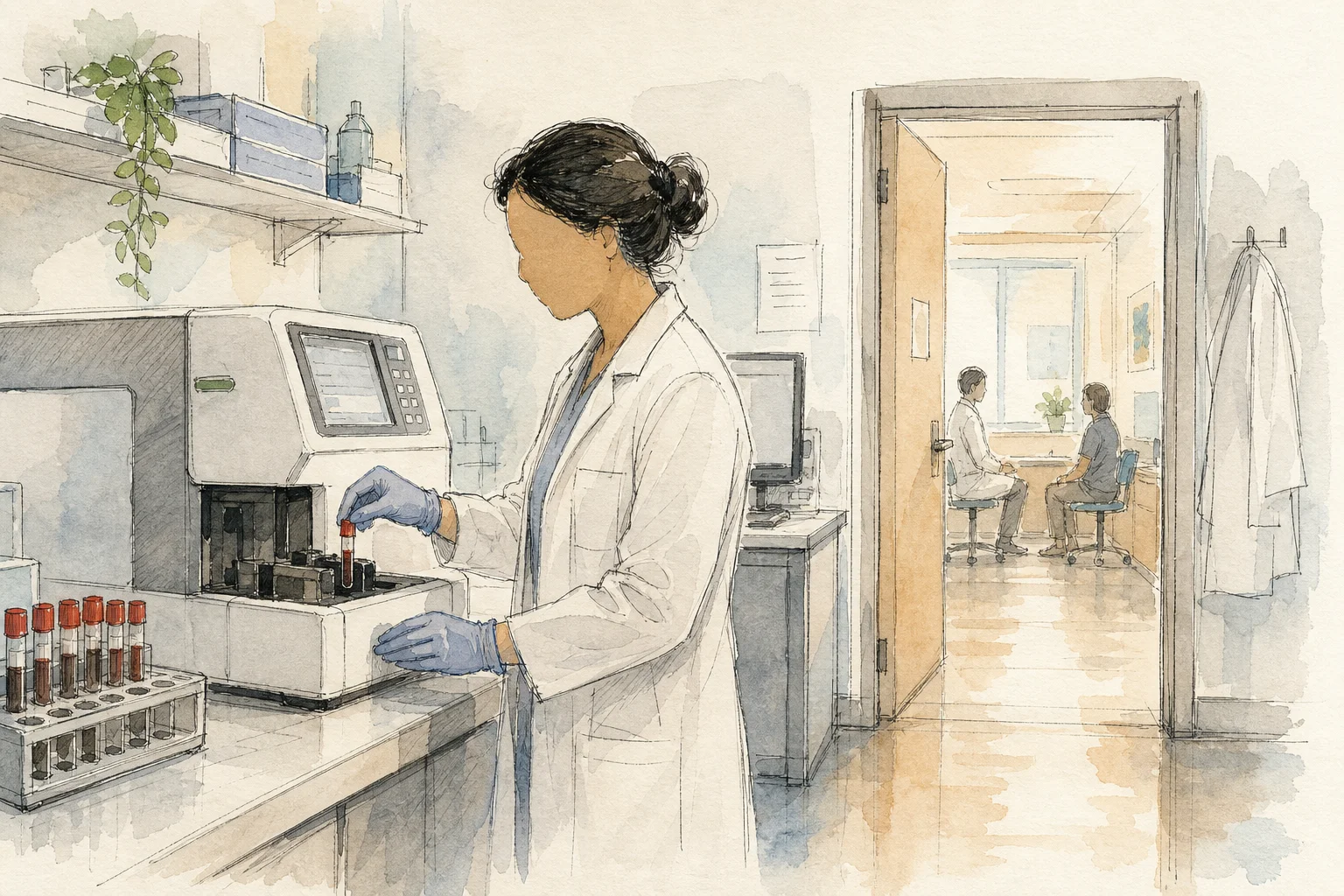
Access could be relatively broad because the assay is designed to run on more than 4,500 Roche laboratory instruments already installed across the country. Labcorp and Quest Diagnostics have also said they plan to offer services using the test through their laboratory networks. The same assay received European clearance earlier in 2026.
The blood test does not diagnose Alzheimer’s on its own. Its results must be considered alongside symptoms, clinical history and other relevant findings. Still, it may help doctors decide more efficiently who needs further evaluation, while reducing reliance on methods such as PET scans and cerebrospinal fluid testing, which can be costly, invasive or difficult to access.
Sources
- 360DxRoche pTau217 Alzheimer's Blood Test Receives FDA Clearance
- The Straits TimesFDA clears Roche and Eli Lilly's Alzheimer's blood test
- FierceBiotech - free daily biotech briefingRoche, Eli Lilly net FDA approval for first-of-its-kind Alzheimer's biomarker blood test
- The HillFDA approves new blood test for Alzheimer's disease