science and discovery
Telescopes study record-setting gamma rays from 8 billion light-years away
Astronomers have characterized the most distant blazar yet observed in very-high-energy gamma rays, using a signal that travelled for about 8 billion years before reaching Earth. The findings offer new evidence about both the history of cosmic light and the extreme physics surrounding a supermassive black hole.
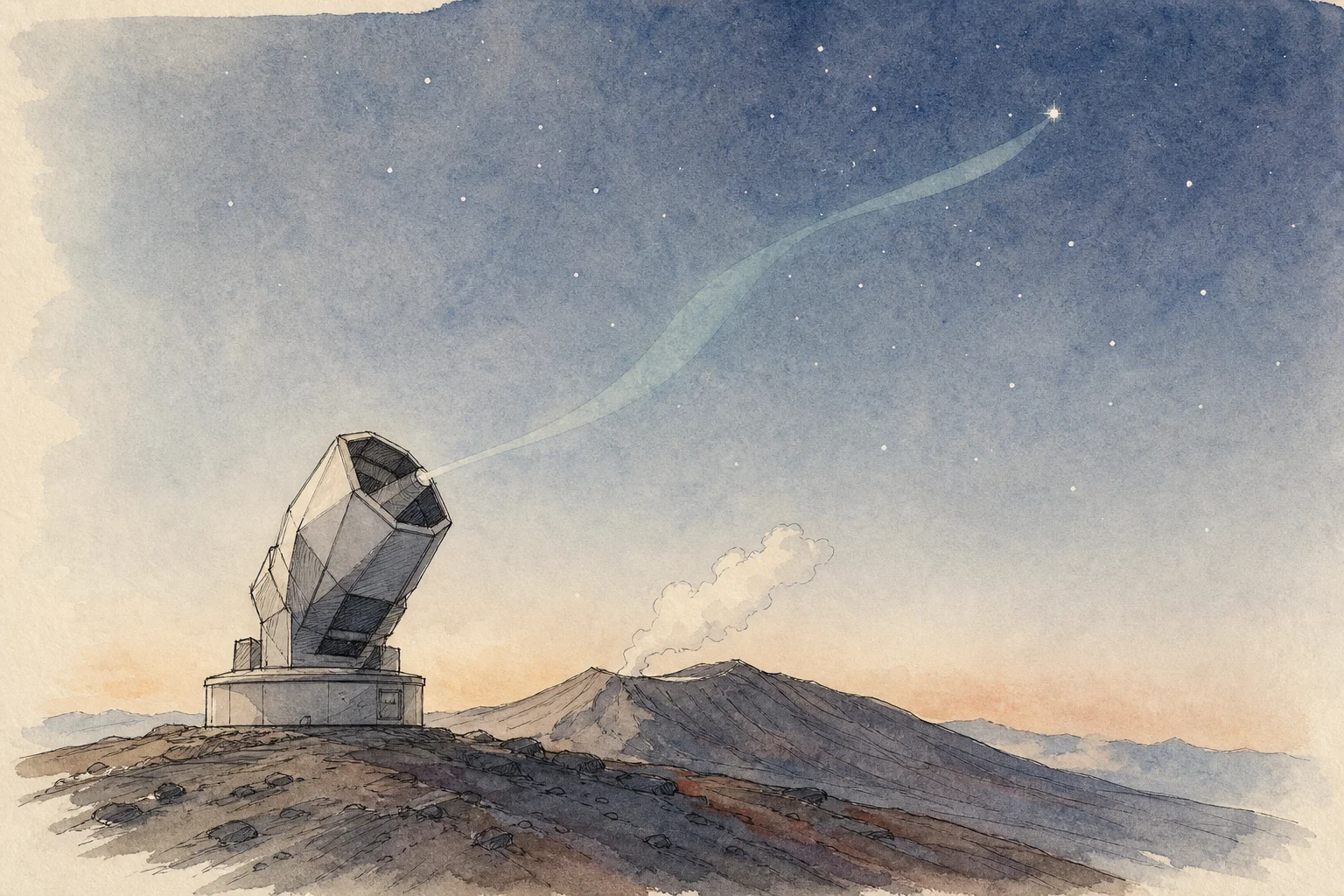
The source, OP 313, is an exceptionally bright active galactic nucleus whose central black hole powers a vast plasma jet. After the LST-1 telescope first detected its very-high-energy emission in December 2023, researchers combined observations from LST-1 and the MAGIC telescopes on La Palma with lower-energy measurements from other instruments. Their analysis, published in Astronomy & Astrophysics, constrained the density of the extragalactic background light, the accumulated radiation emitted by cosmic objects over the universe’s history.
That background light gradually weakens gamma-ray signals by converting some photons into electron and positron pairs. Measuring this effect across such a great distance gives scientists a way to investigate the light that filled the intervening universe.
The observations also indicate that OP 313’s gamma rays were produced by a dense population of electrons accelerated to nearly the speed of light within its plasma jet. Those electrons transferred energy to lower-energy photons, boosting them into the very-high-energy range. Detecting this distant source while LST-1 is still being commissioned also demonstrates the reach of a new generation of gamma-ray observatories.
Sources
- 20 minutosCientíficos baten el récord de distancia en la observación de energía muy alta: un blázar a 8.000 millones de años luz
- Canarias7Detectan con telescopios en La Palma radiación de hace 8.000 millones de años luz, la más distante hasta la fecha | Canarias7
- eldiario.esLos telescopios LST-1 y MAGIC del Roque captan la fuente de rayos gamma más distante "jamás observada
- Diario de SevillaUna señal de hace 8.000 millones de años revela los secretos del universo extremo